
One of the integral parts to my program is the weekend trip to the capital of Shaanxi province, Xi’an. While the trip is not mandatory, I knew even before coming to China that I would definitely be participating—how could I pass up on an opportunity to see a new city, nonetheless one of the oldest cities in China?
As one of China’s oldest cities, preserving the culture and historical sites in Xi’an is of utmost importance. During the Chinese Tang Dynasty (618-907), Chang’an, now Xi’an, was the capital of the empire. I took particular interest in Tang Dynasty China my sophomore year of college after I took a class that focused on Tang Dynasty poetry, recognized as the “Golden Age” of art and culture, especially poetry.
I watched the history of Xi’an unfold in front of my eyes as if it jumped right out of the pages of the textbooks I read in my classes. We were only in Xi’an for a total of about 36 hours, most of our weekend actually spent on the overnight train (which I’ll go in depth on later), however, I felt as though I got to see a good portion of the city and even see what life outside of the city looked like.
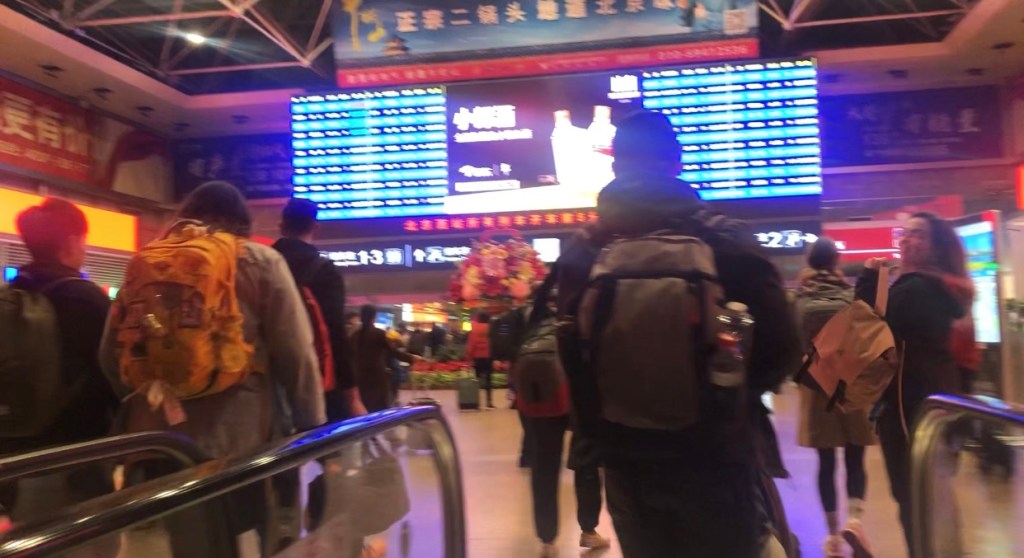
On Thursday at 6:30 p.m., our large group of students and teachers took off from our dorm towards the subway station near our school. From there, we made our way towards the Beijing East Railway Station, a really large and impressive train station. It was packed full of people, even on a Thursday evening—so full that there were perpetually not enough seats in our departure waiting room, some people resorting to sitting on the floor or on top of their bags outside the waiting room.
After our teachers handed out our tickets (which included our room/bed assignments), we had some time to roam around before we boarded our train, so some friends and I went to China’s most distinguishing restaurant—KFC! KFC in China is extremely popular, and also pointedly different from KFC in the U.S. My favorite (and many other students’ favorite) is their 辣鸡腿堡 (la ji tui bao), a pretty standard spicy chicken sandwich. Perhaps most exciting about Chinese KFC is the crinkle-cut fries that taste amazing when made fresh, and also the ambiguous “orange drink,” as we all call it.
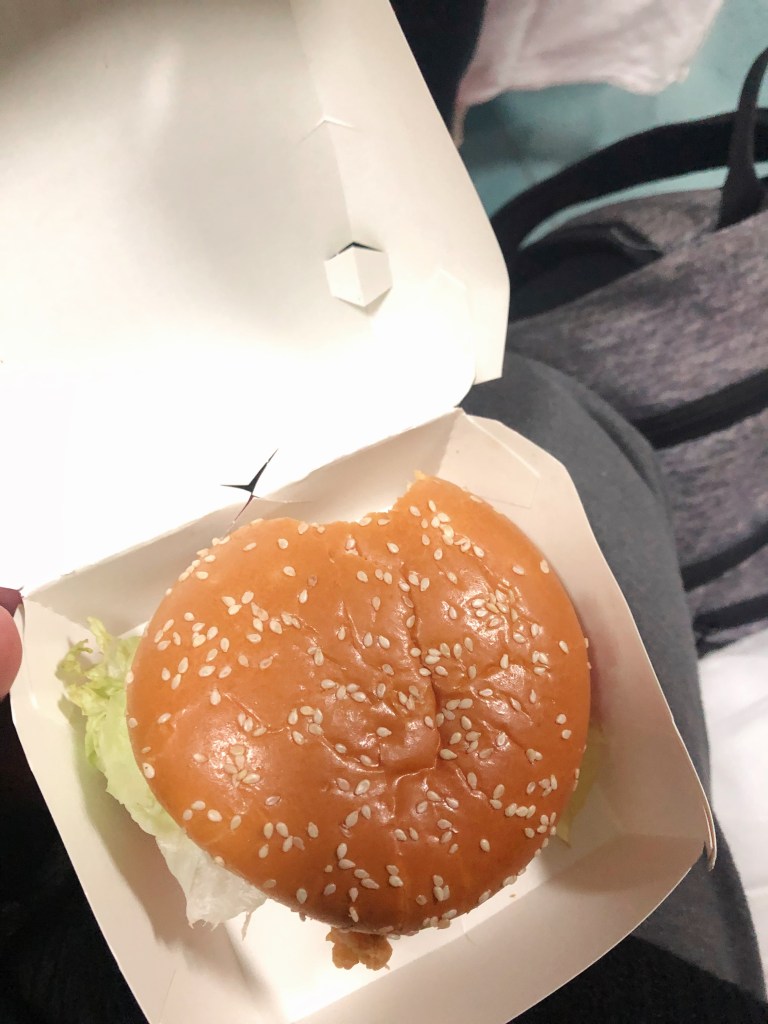
After getting our KFC, my friends and I sought out a “seat” in the vicinity of our waiting room but turns out you can’t sit near the fire extinguisher (fair enough). We moved a few feet to the right of it and had no problems. Some of my friends even ventured into the train station bookstore, coming out with the Chinese version of a Magic School Bus book. By the time we were lining up to board the train, I was already a bit irritated by all of the stares we were receiving, and I was just ready to sleep.
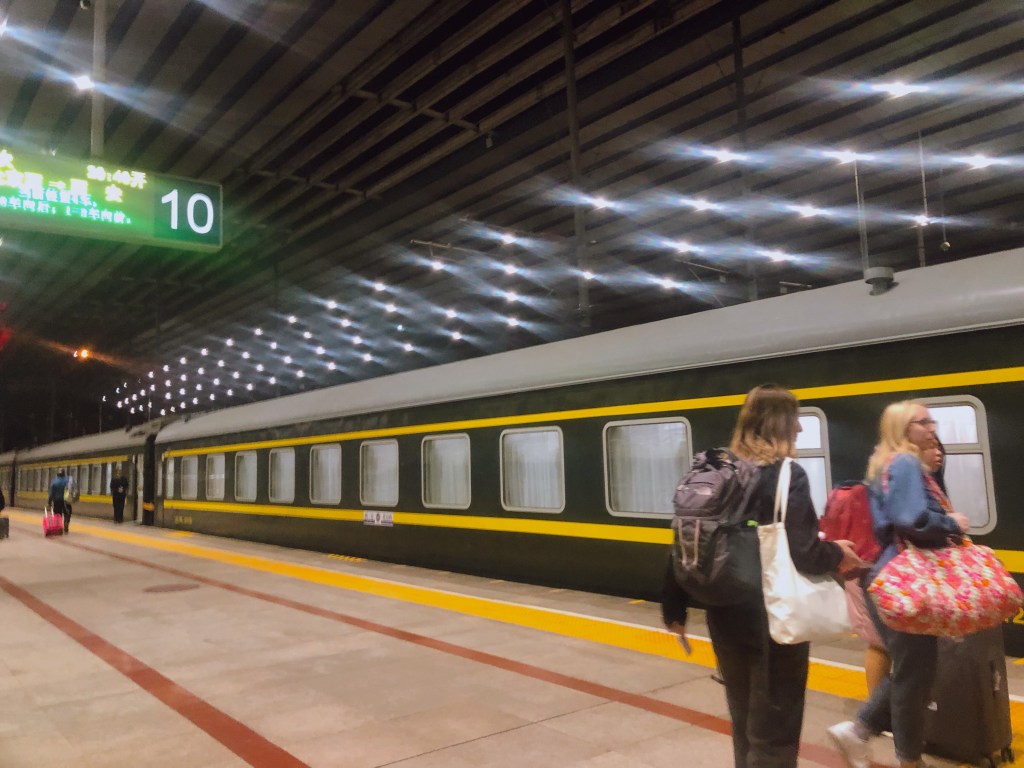
I luckily received a good bed assignment. On Chinese overnight trains, there are two kinds of train cars: soft sleepers and hard sleepers. Soft sleepers either consist of two beds or four beds total. These beds are just as the name implies: soft—that is, soft to Chinese standards (beds in China are really hard!). These rooms have a door that can be closed off from the rest of the train, blocking out late-night laughter from your neighbors and the wafting smell of cigarette smoke from the next train car over (yes, you can still smoke on trains in China). Hard sleepers, on the other hand, are, again, as the name implies, quite hard. We rode hard sleepers to Xi’an, which wasn’t as bad as I had anticipated, honestly. My friends and I joked that it was our dorm on wheels (because hard beds). These rooms each sleep six people with three beds on each side, which means good luck if you get assigned the top bunk! It’s a climb, and there’s very little space between the bed and the ceiling of the train car.
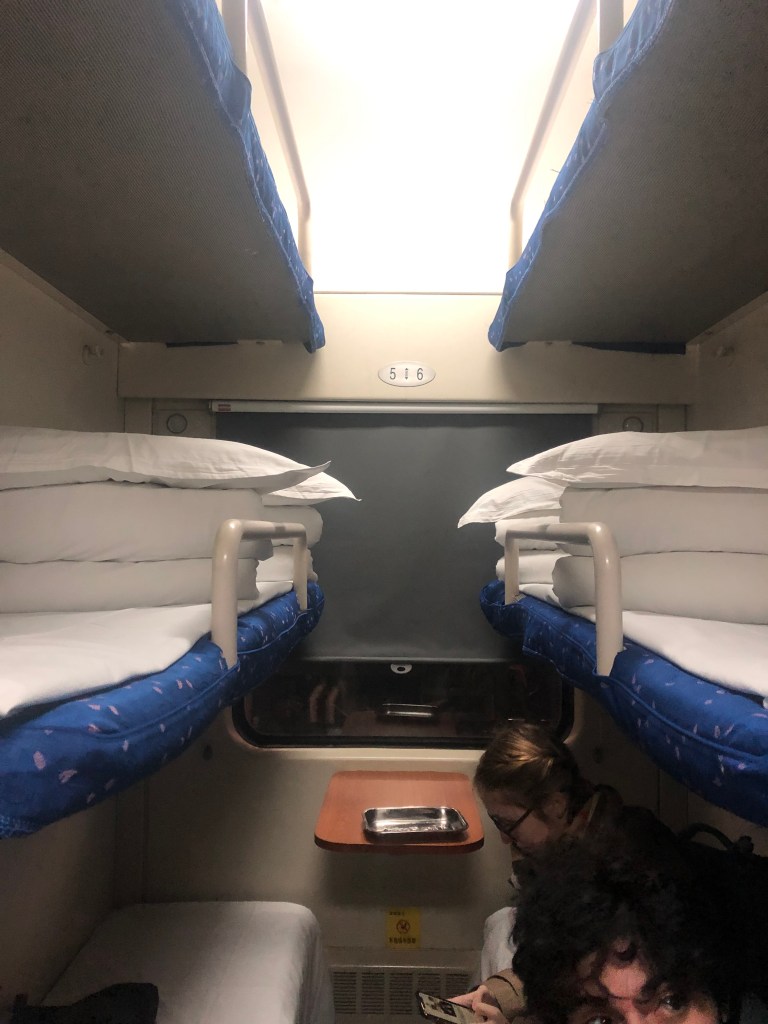
I was given a bottom bunk on the way to Xi’an, which was most suitable for me. I was roomed with all of my friends, and we all sat on the bottom bunks until lights-out, chatting and sharing snacks. After lights-out at 10 p.m., all of us went to our separate bunks, bundling up in the thin duvet we’re given. The heating on this train was a little slow to come on, not fully on until we were already sleeping. Sleeping on the train was easier than I expected, but that may be because I had earplugs and an eye mask. The train was bumpy and made stops pretty often throughout the night, but I still slept alright.
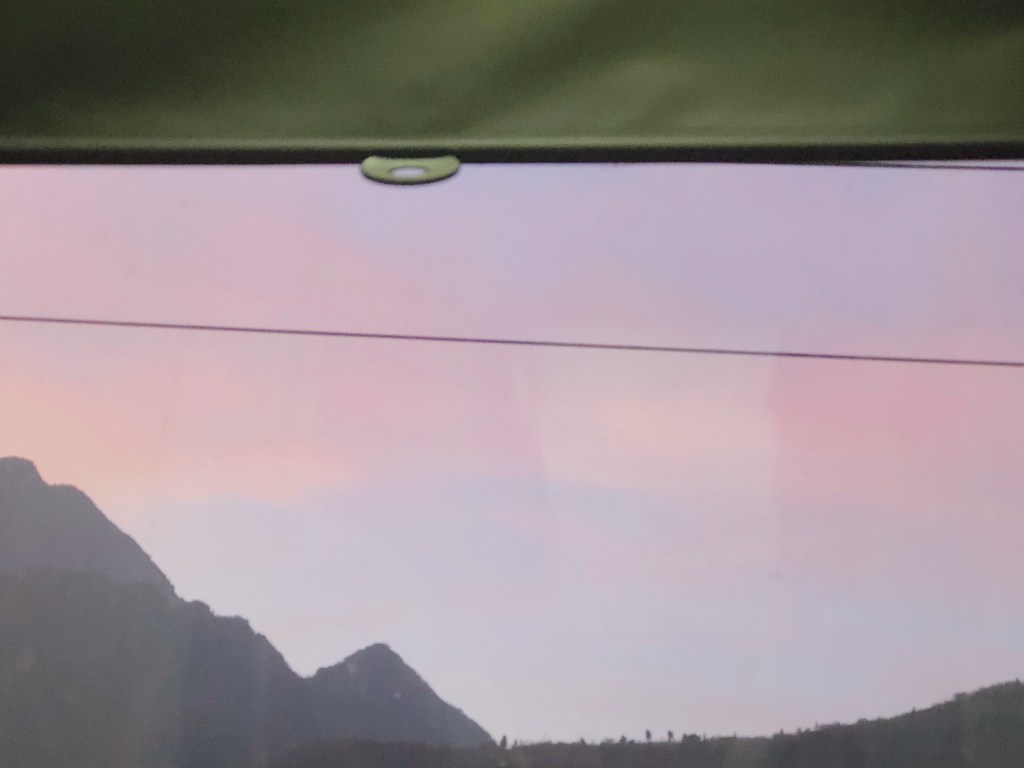
We were on the train for approximately 13 hours total, but it goes by fast because you, ideally, sleep through most of it. At 6 a.m. the next morning the lights came on, promptly waking me from my shaky sleep. However, I was more than delighted to look out the window in front of my room to see large mountains expanding for miles and miles, all standing tall against the pink and purple sunrise. As I got around—gathering my things, freshening up a bit—I watched the view outside my window. I was most surprised to see that scattered across the mountains were what seemed to be shrines and gravestones. Some of them looked very distinctive and unique, all made in similar shapes against wooden boards with bright colors that flapped in the wind; while others resembled small, ornate stone doorways, perhaps resembling a door to one’s next life.
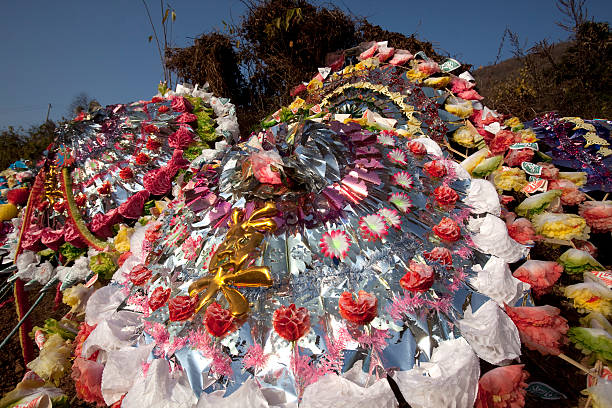
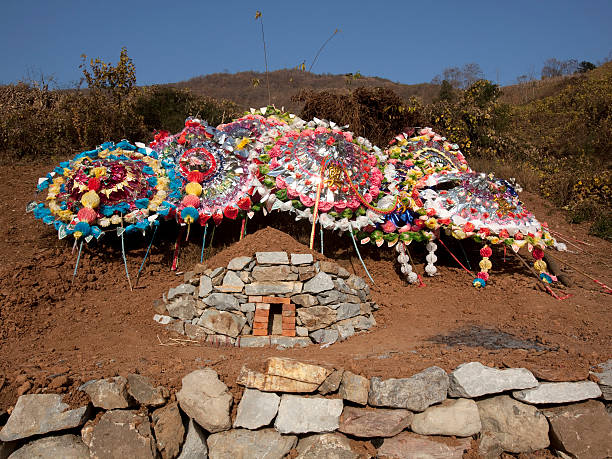
(Surprisingly, this is something I’ve found very little information on. From what little related research does exist, these seem to be “memorial wreaths” of sorts that are laid over people’s graves. I saw them all throughout Shaanxi province).
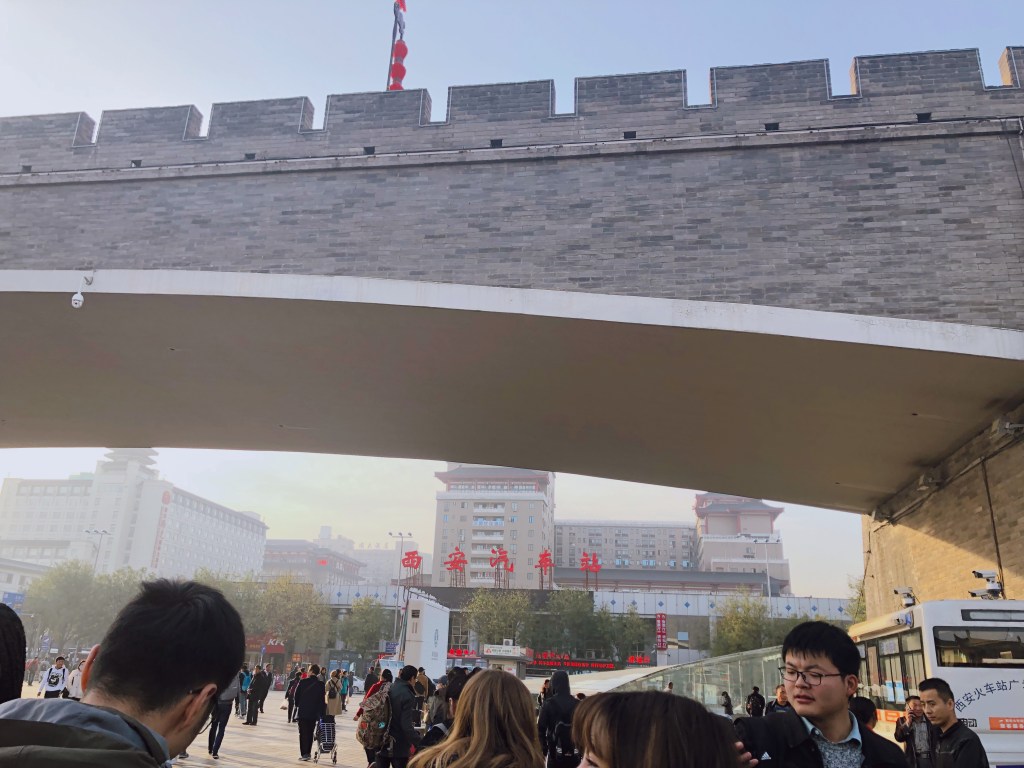
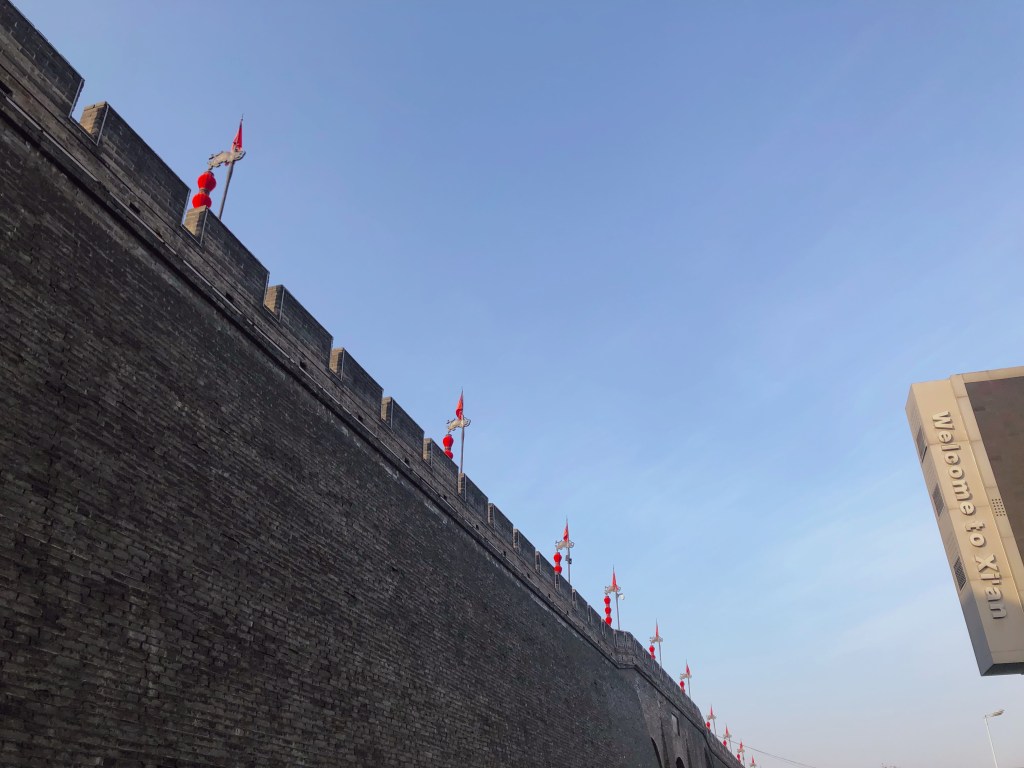
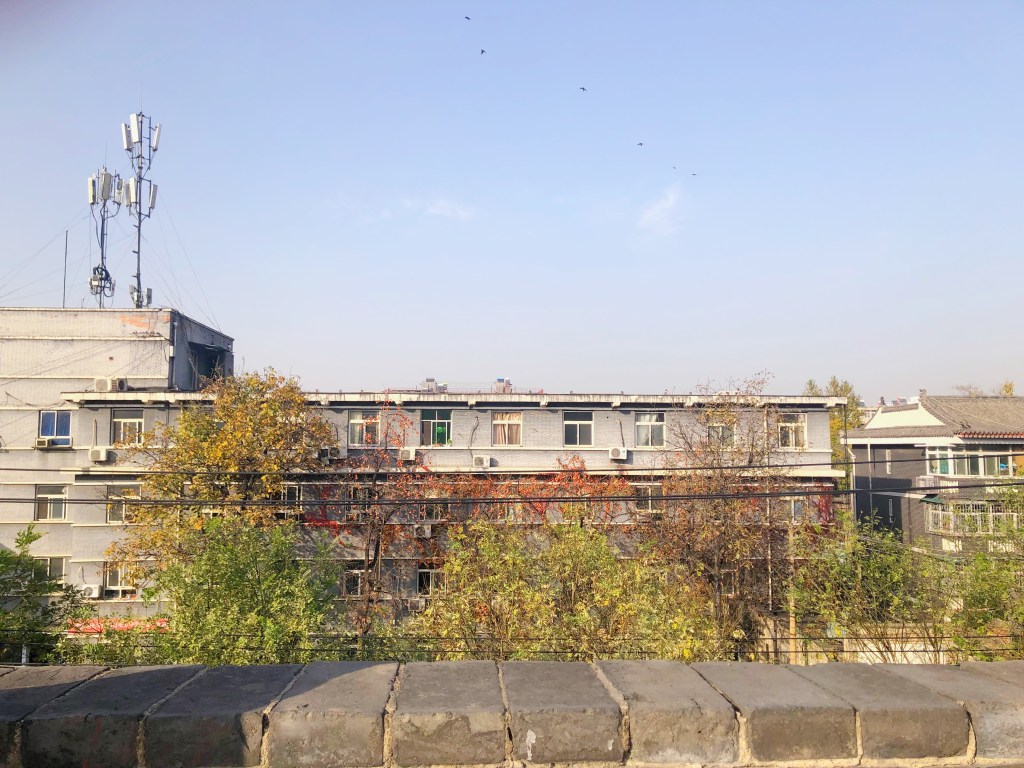
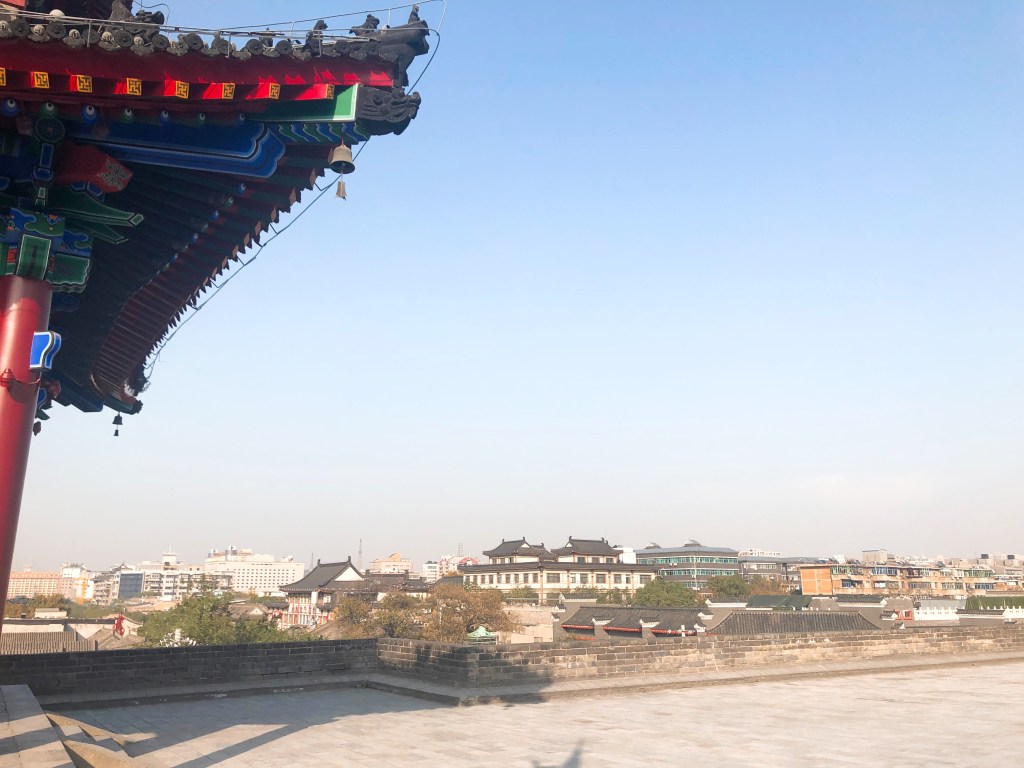
Immediately after stepping out of the Xi’an train station, we were face to face with one of Xi’an’s main attractions: the complete, restored city-wall that surrounds the city center, called 西安城墙 (Xi An Chengqiang). The wall itself is almost 40 feet tall and stretches for more than eight miles. One of the Chinese roommates later told me on the trip that skyscrapers aren’t allowed to be built inside of the wall—this was quite clear, as from the view up top, only squat, old buildings stand inside the wall’s borders, while directly outside are high-rise hotels and offices.
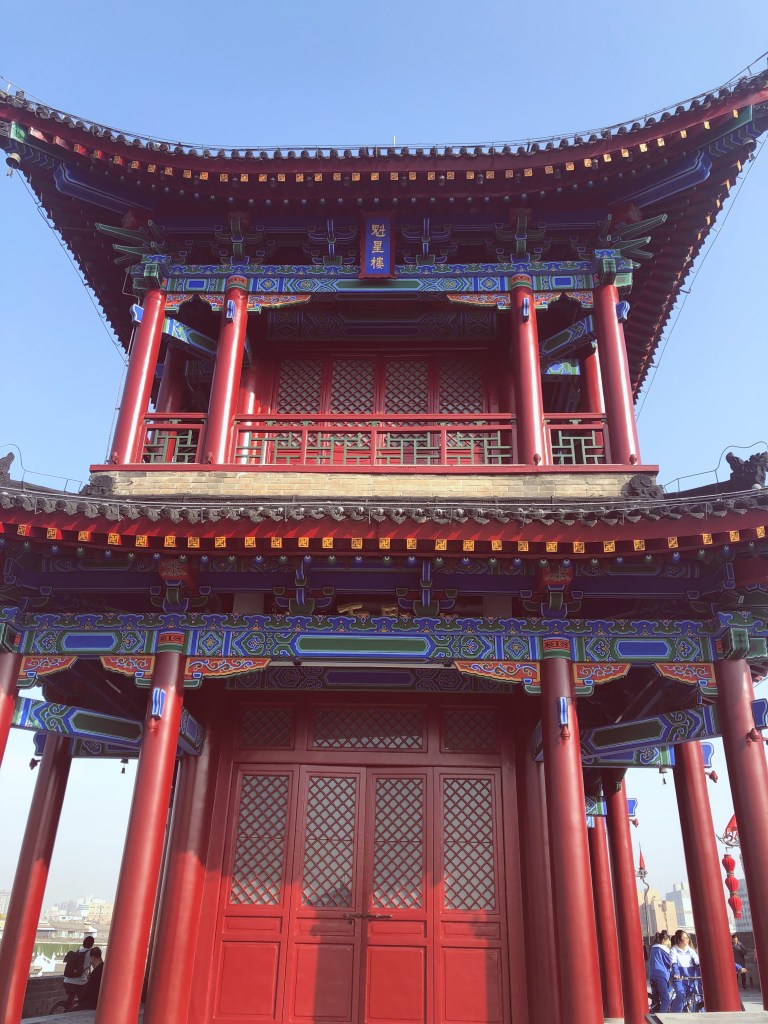
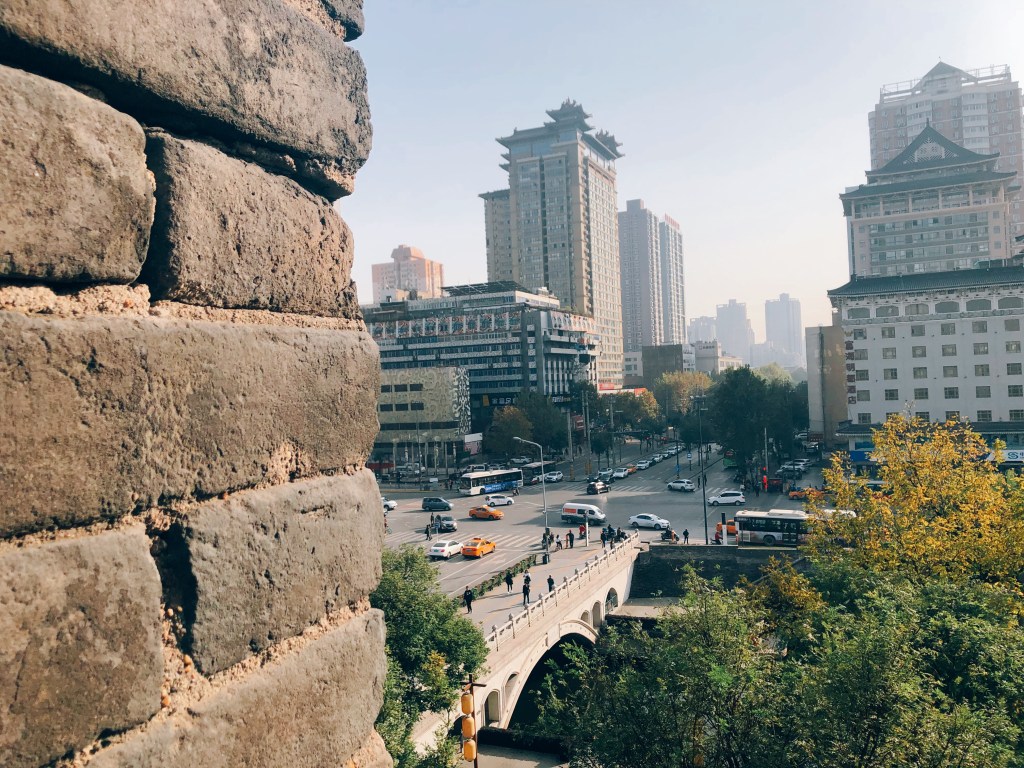
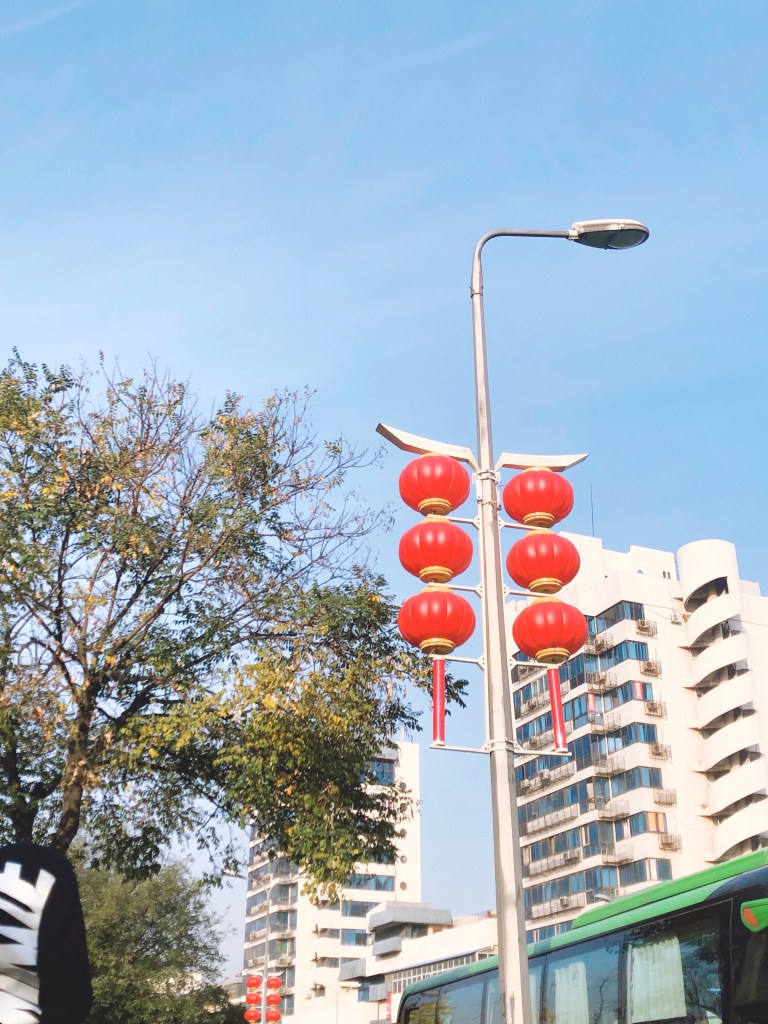
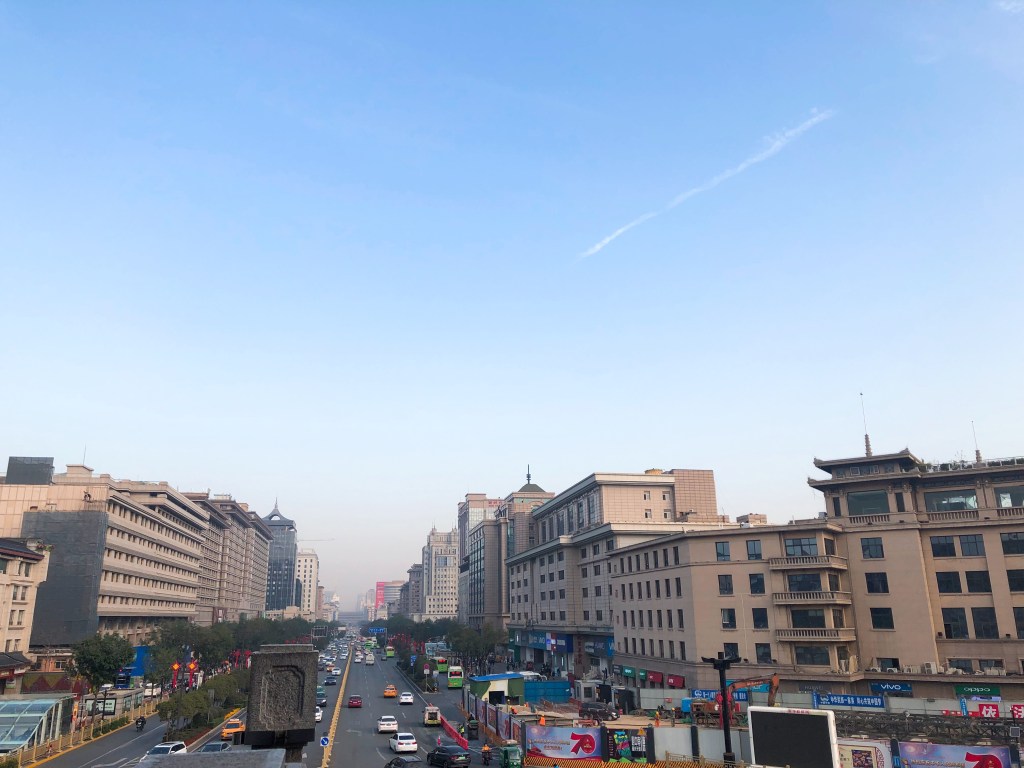
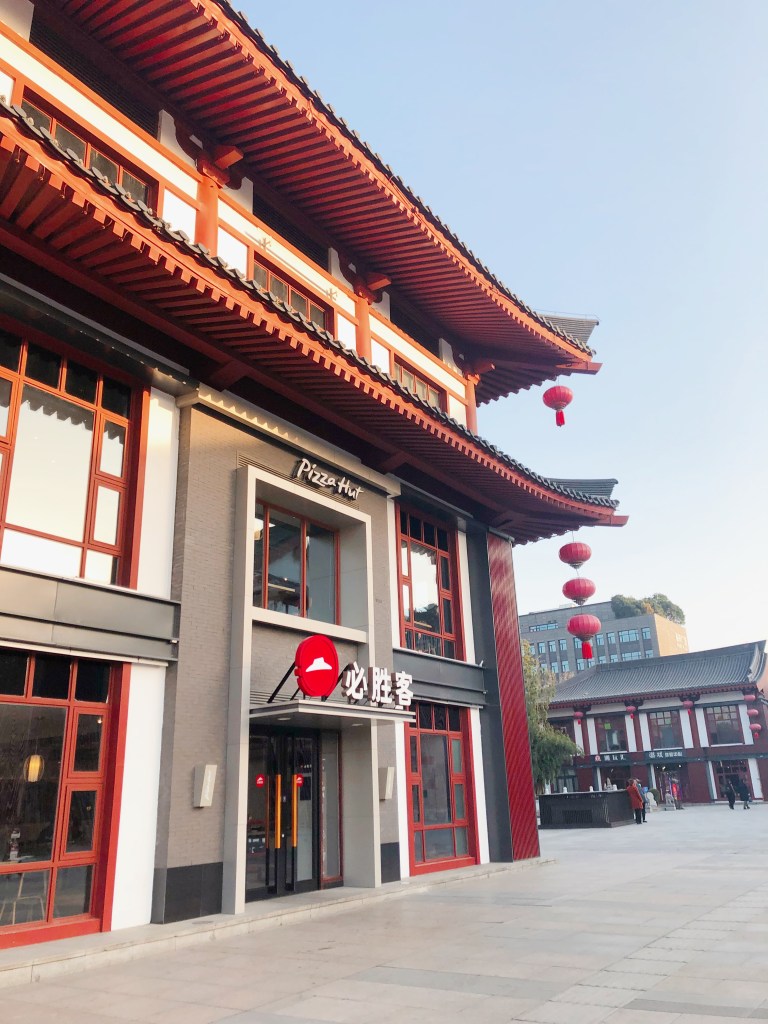
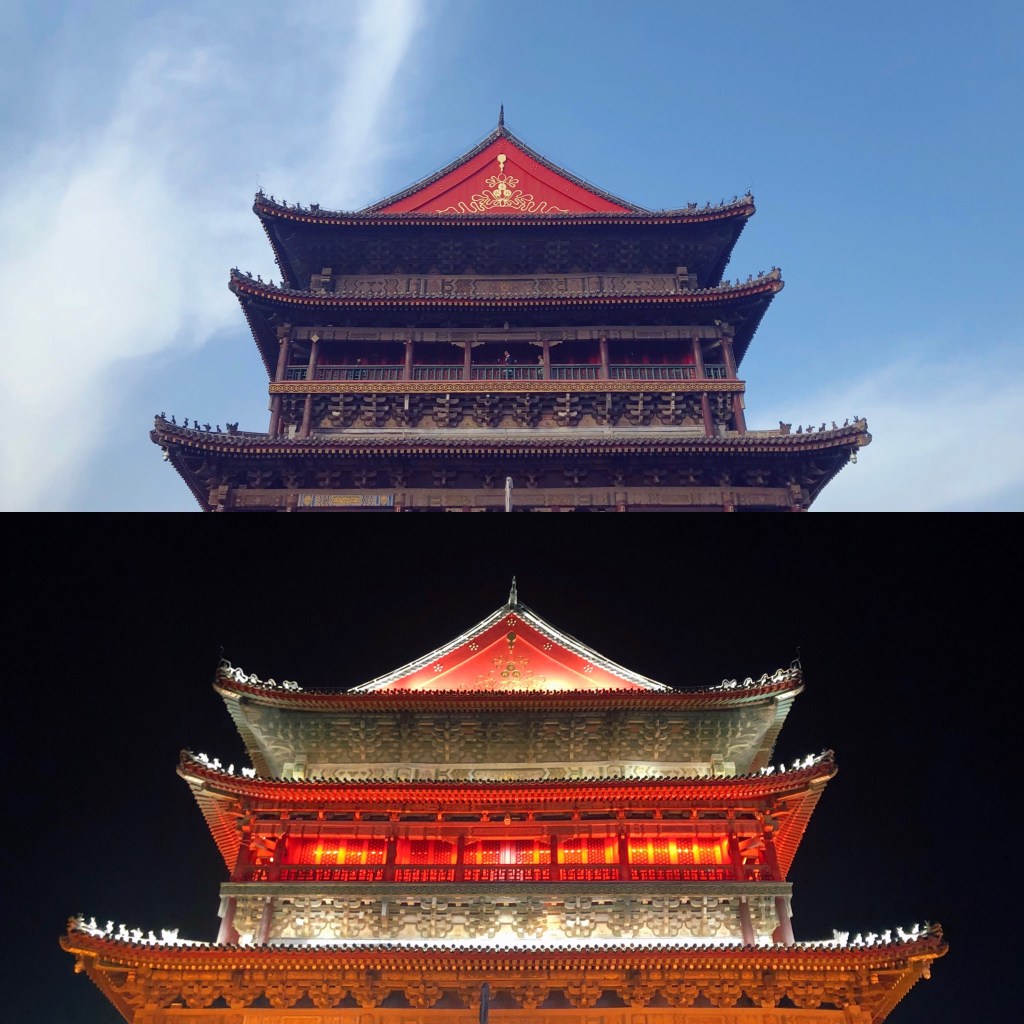
I think what I was most surprised by the view from outside our bus window on the way our hotel—the streets were lined with Starbucks Coffee shops, McDonald’s, Apple stores, Nike stores. It looked pointedly different from the city center of Beijing, an international city. I think had someone told me I wasn’t in China at that moment, I would have believed them. Our hotel was a short ride from the train station, as our hotel was located directly in the center of the city. Two of Xi’an’s landmarks, the Drum Tower and the Bell Tower stand as the traditional, historical mark of the city center.
When we got to the hotel, a scavenger hunt planned by our program promptly started. We were split randomly into groups then were instructed to set out to our first destinations: the Bell Tower and Drum Tower, both directly across the way from our hotel.
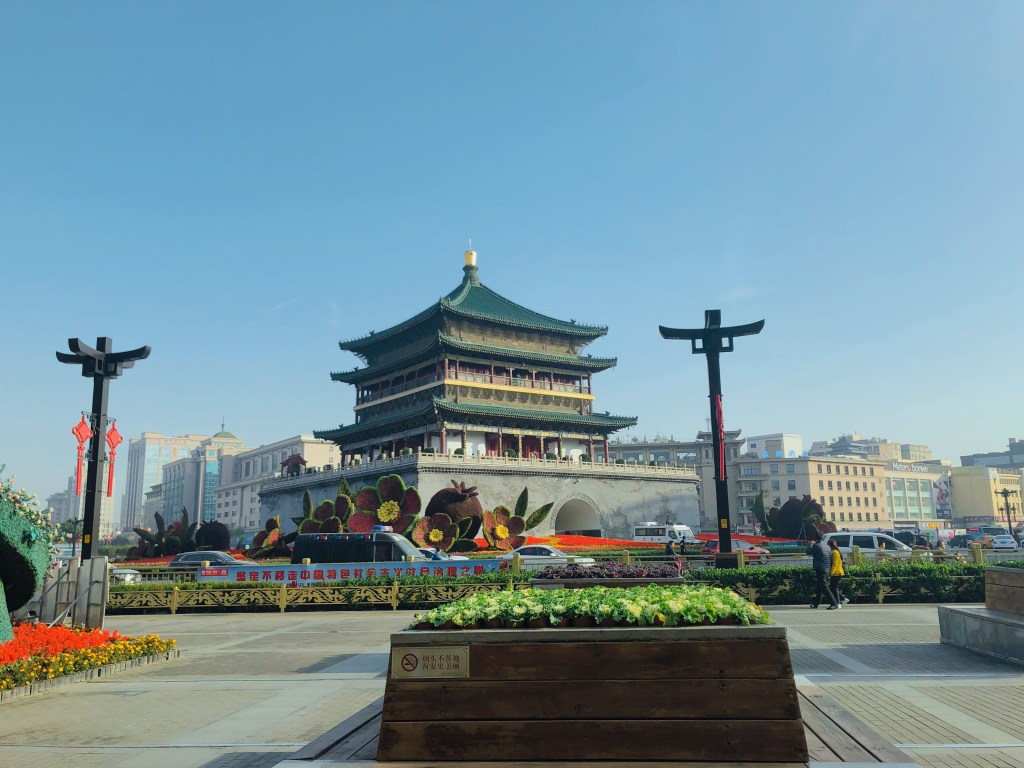
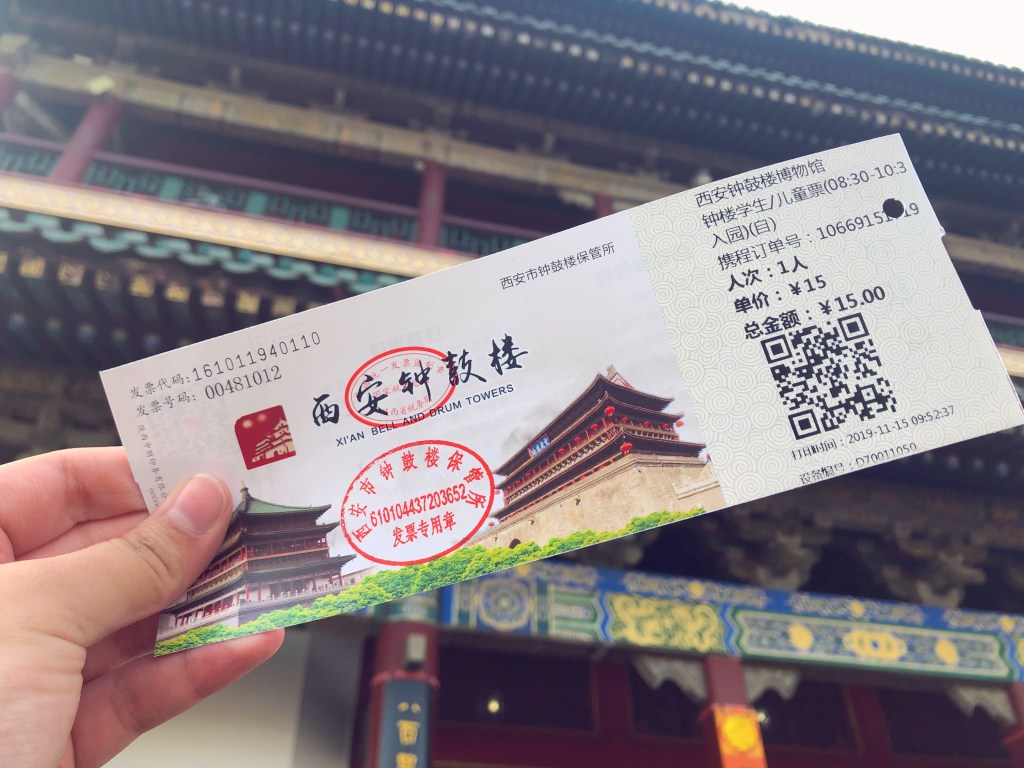
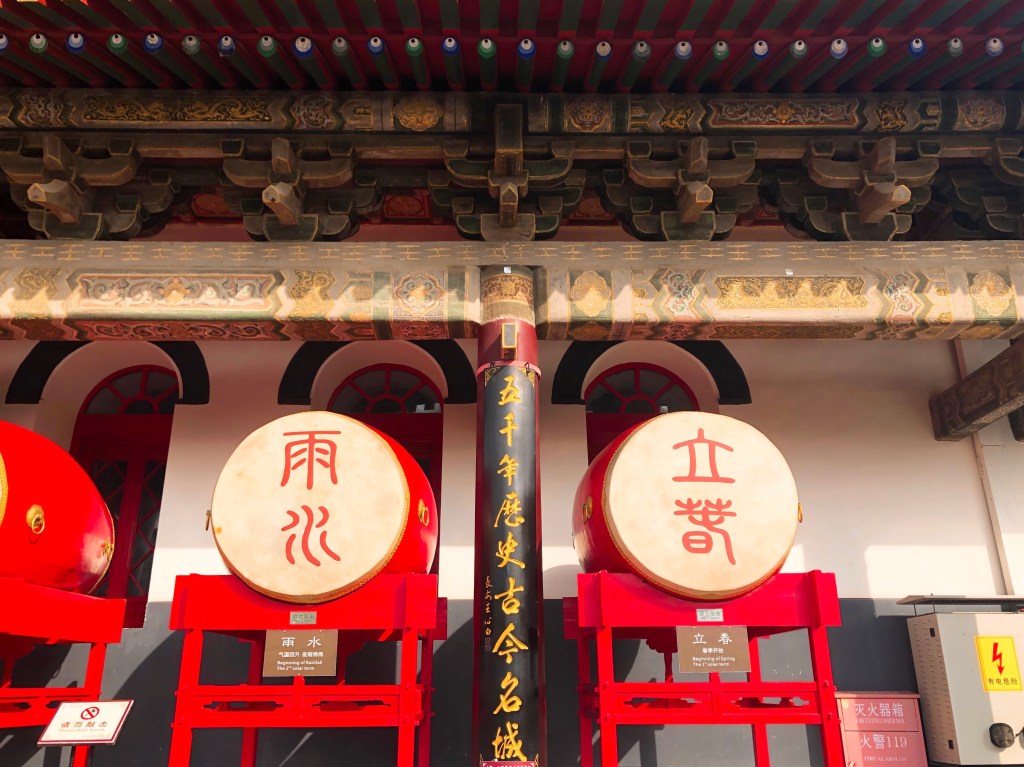
Due to the fact that the first day of our travels in Xi’an were structured in the format of a scavenger hunt of sorts, we were slightly pressed for time and didn’t get to spend much time in a single place or explore things that weren’t on the list. That being said, the list was quite extensive and covered all of the most famous sights in Xi’an, including walking one of the most popular sections of the City Wall and visiting the Da Ci’en Buddhist Temple and the Giant Wild Goose Pagoda at its rear.
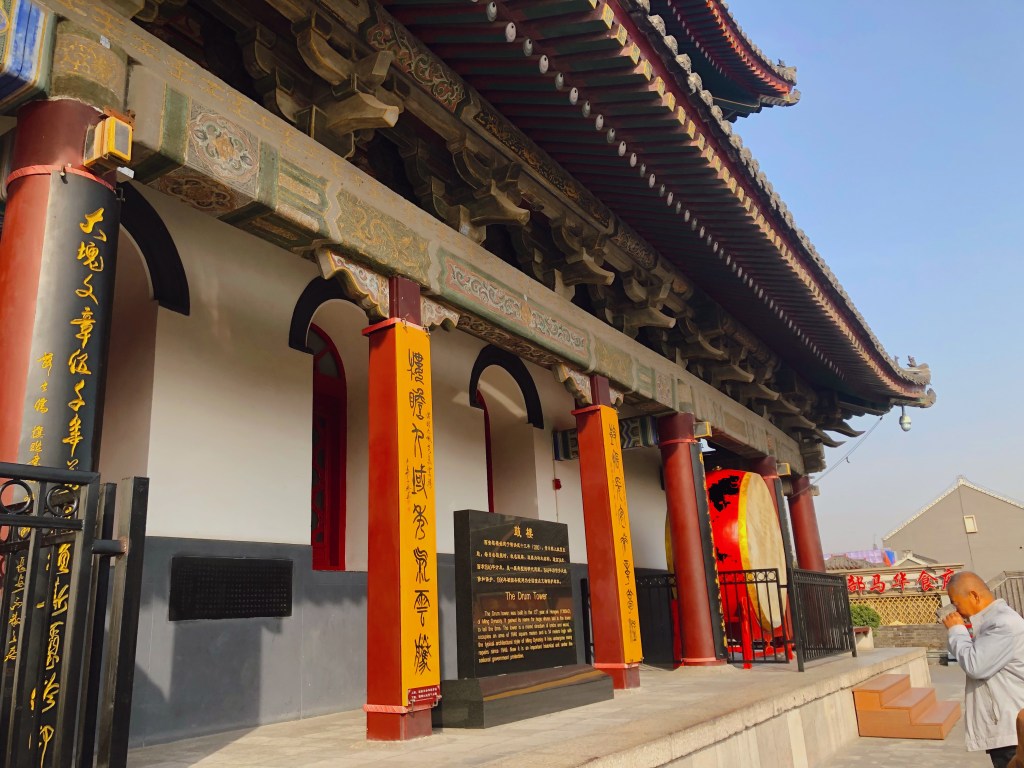
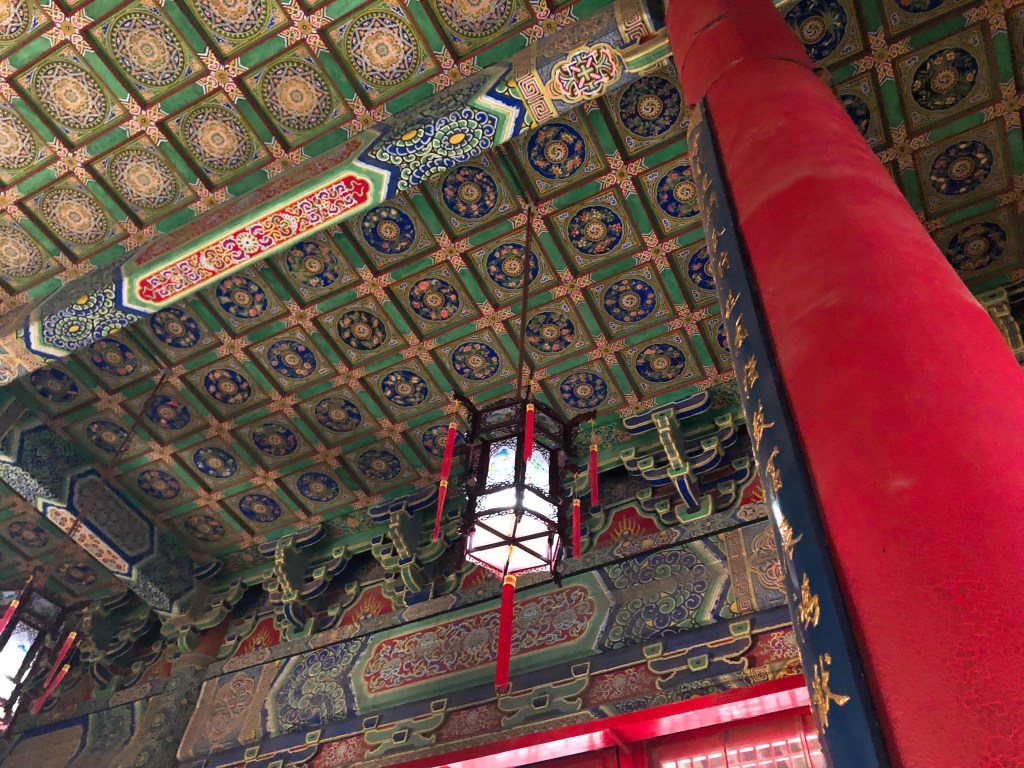
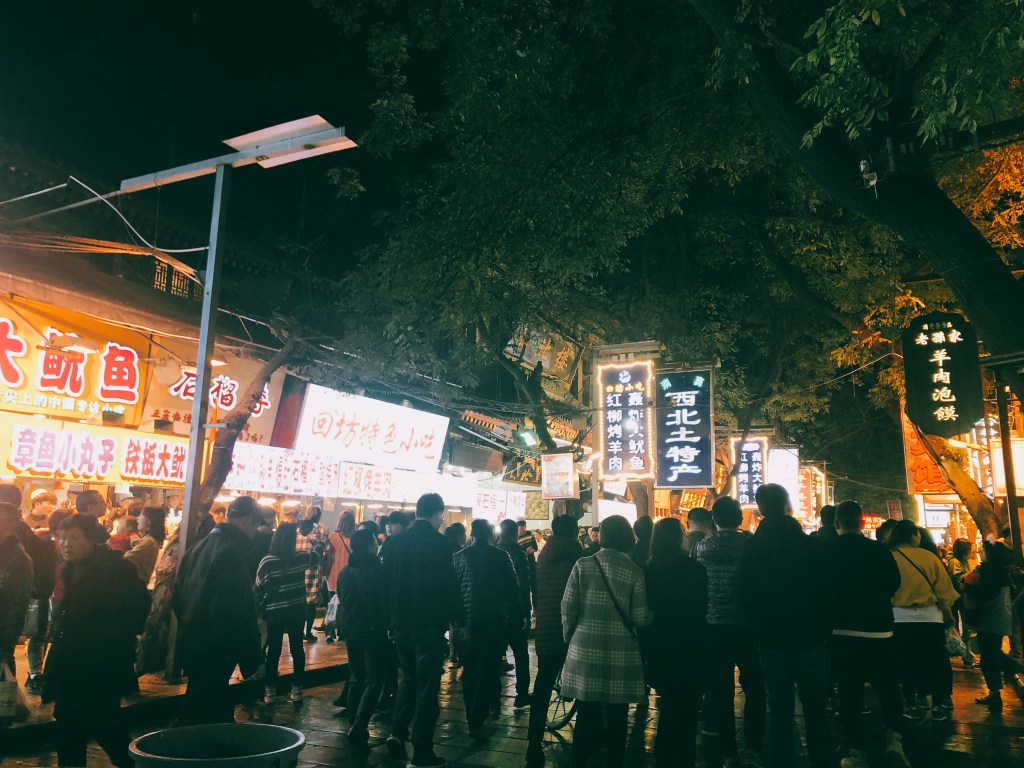
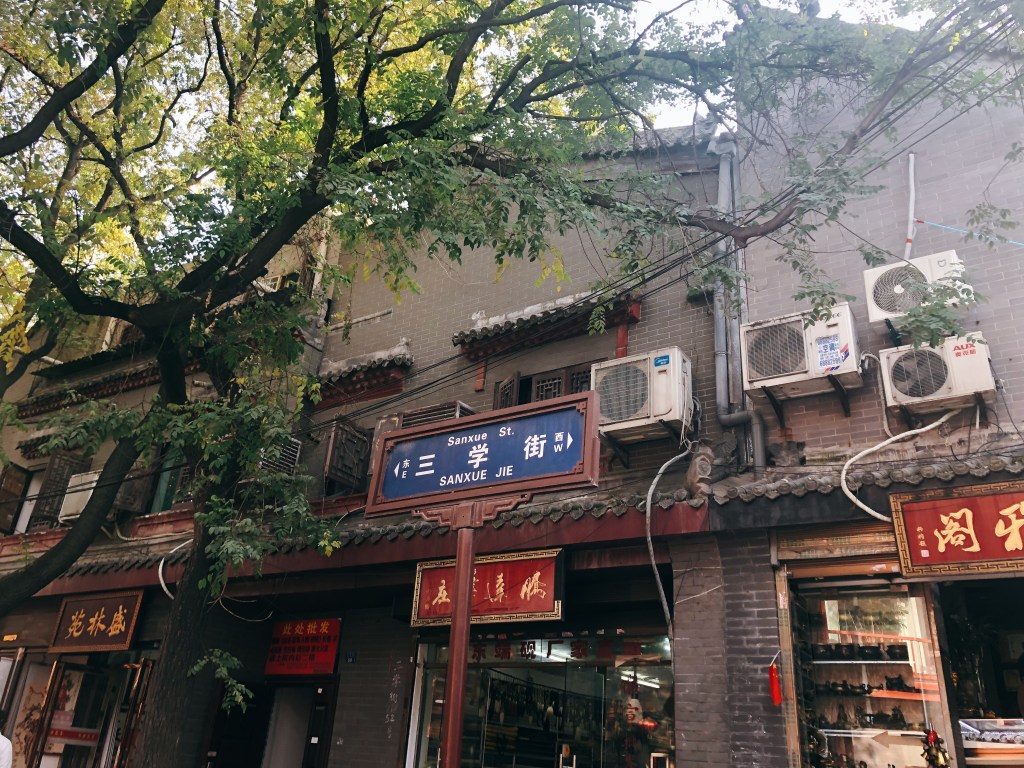
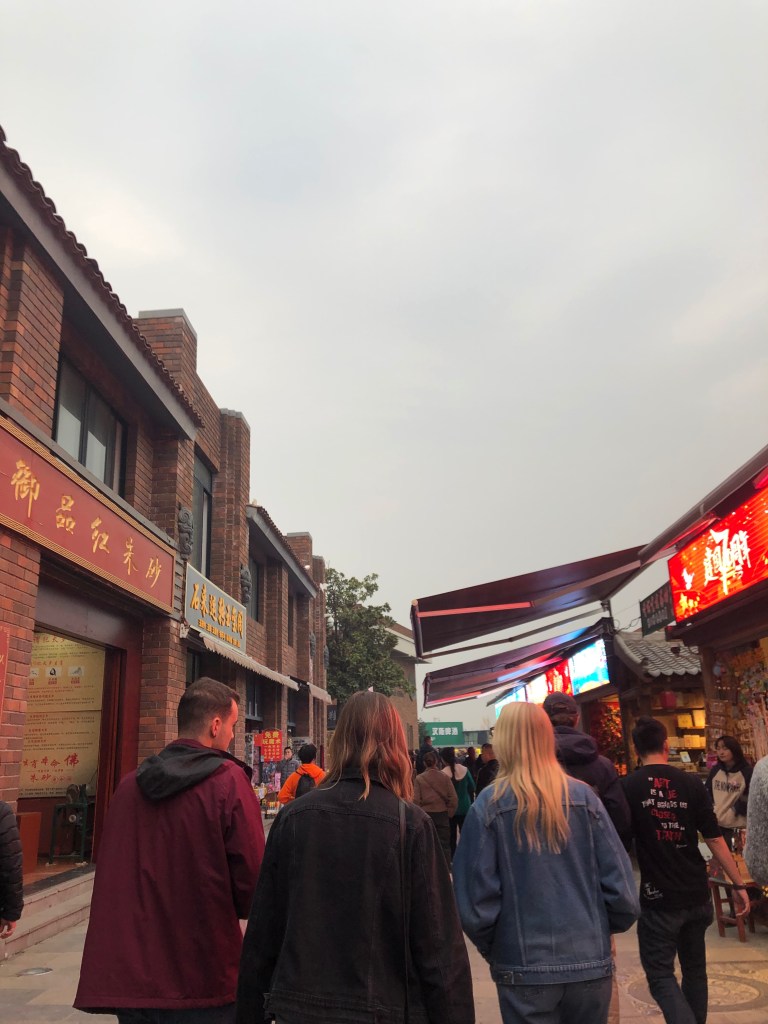
One of my favorite portions of the scavenger hunt was visiting the Muslim Quarter in Xi’an, called 回民街 Huimin Jie. This area has a high population of one of China’s fifty-five ethnic minorities, the Hui people, which is actually the third largest ethnic group in China. These people own all of the stores and stands on this street as a means of not only making a living but also sharing their culture with people from all over the world. And as the English name implies, they are a majority Muslim ethnic group. The area also inhabits a number of historical mosques, some of which are still used for prayer, while others are simply a historical site that you can pay to enter and explore.
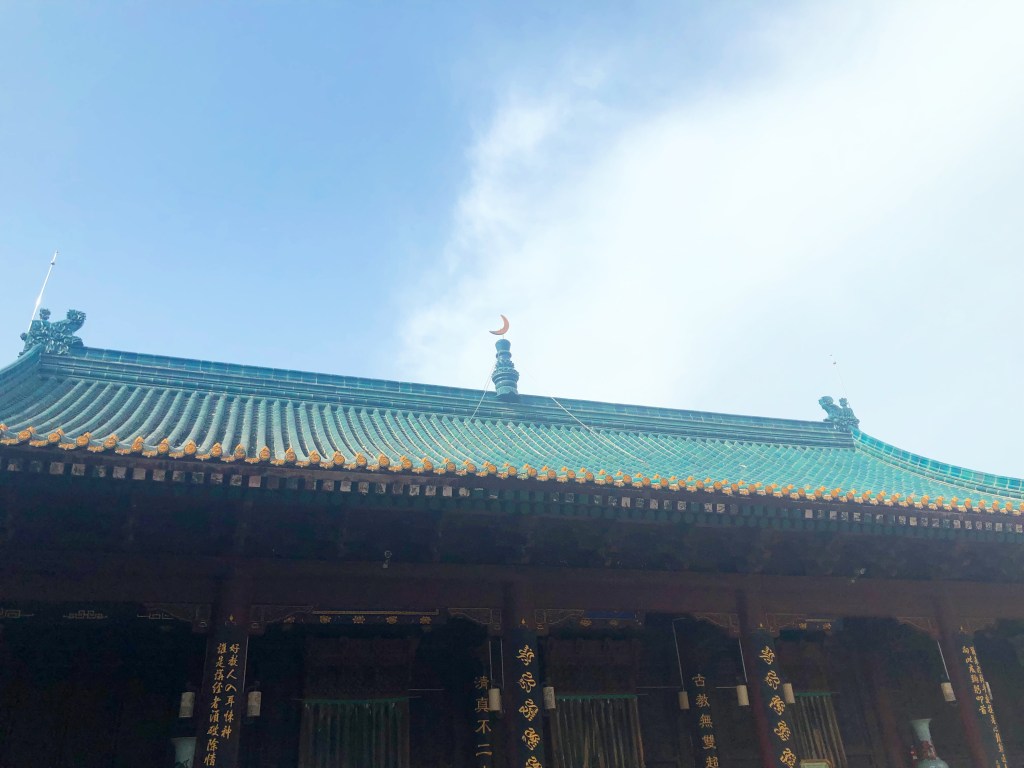
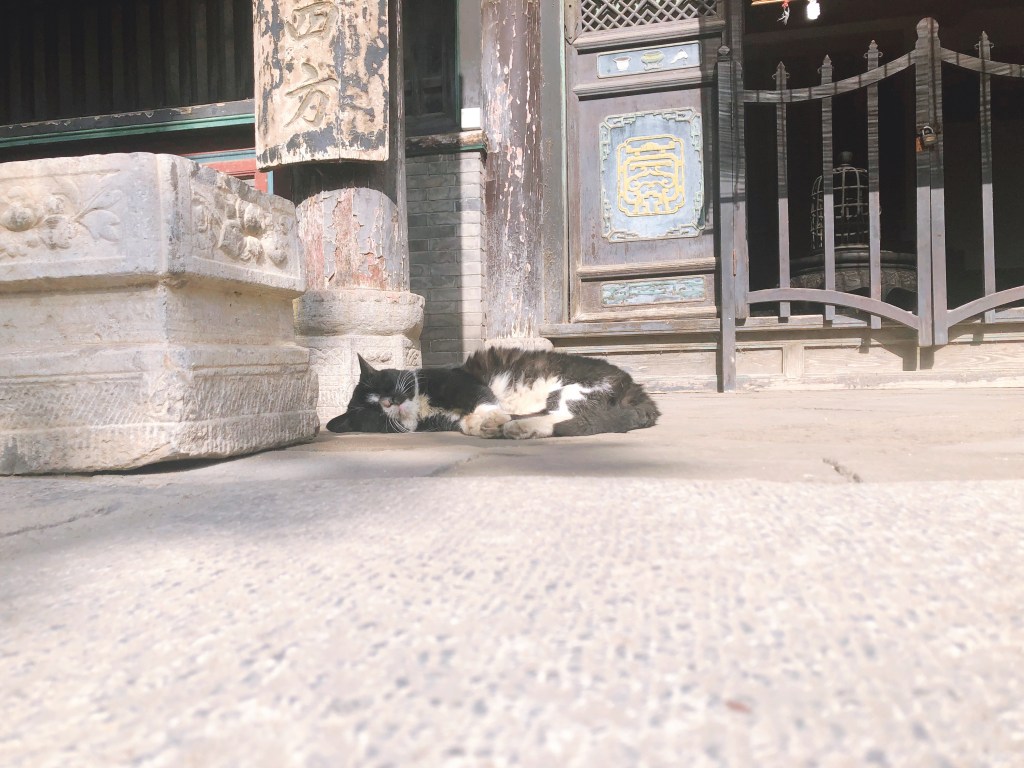
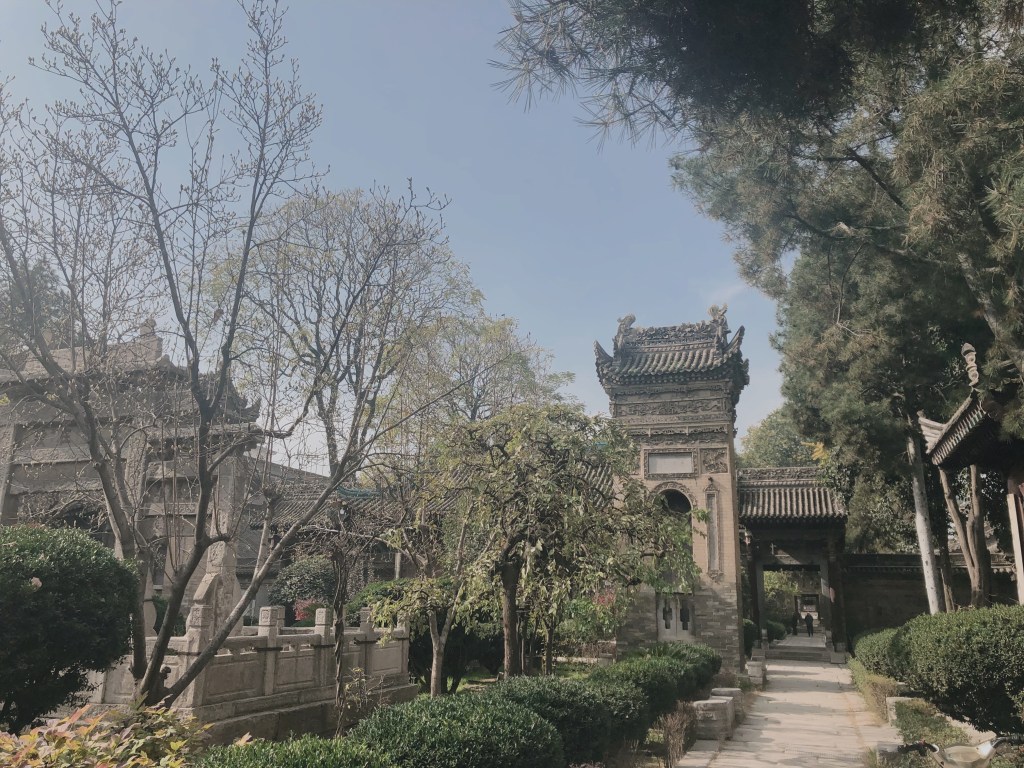
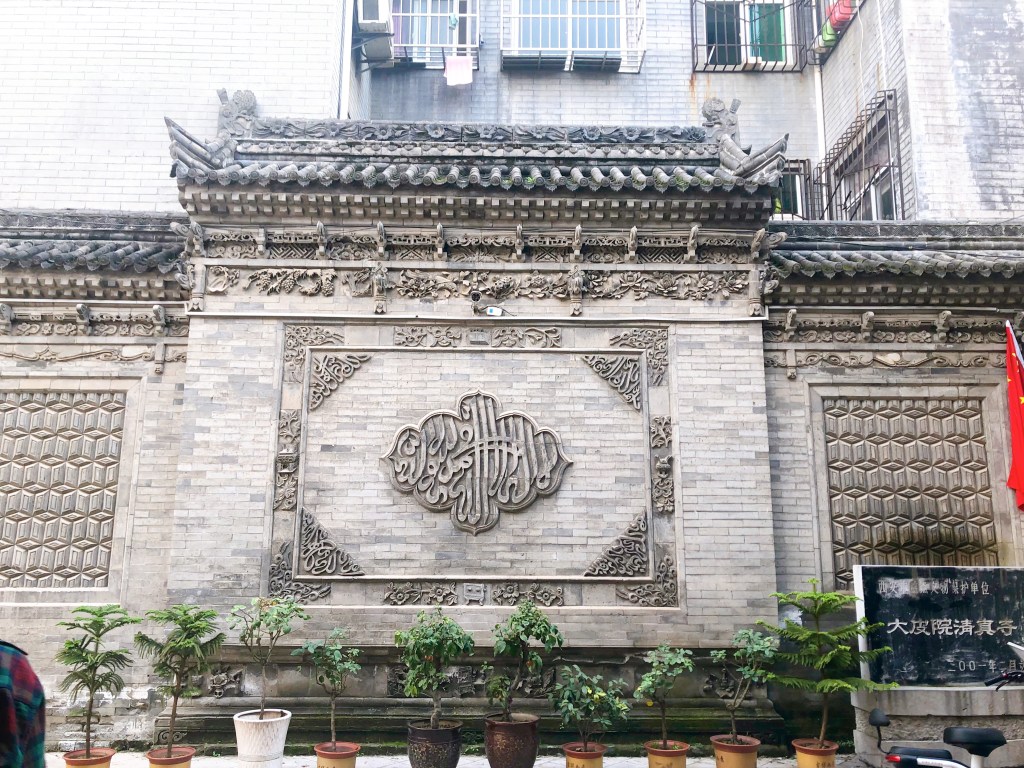
One of the outstanding features of Huimin Jie is the abundance of food and drink stands; it truly is a food street more than it is anything else. Some of the specialty food and drink to be found on Huimin Jie include:
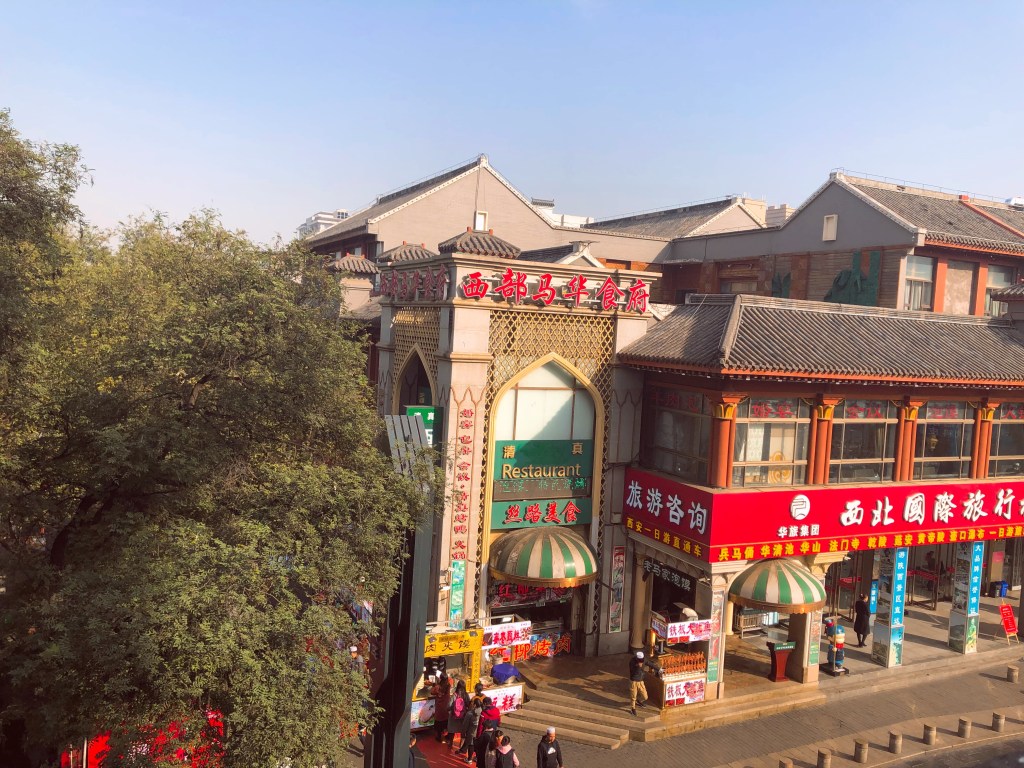
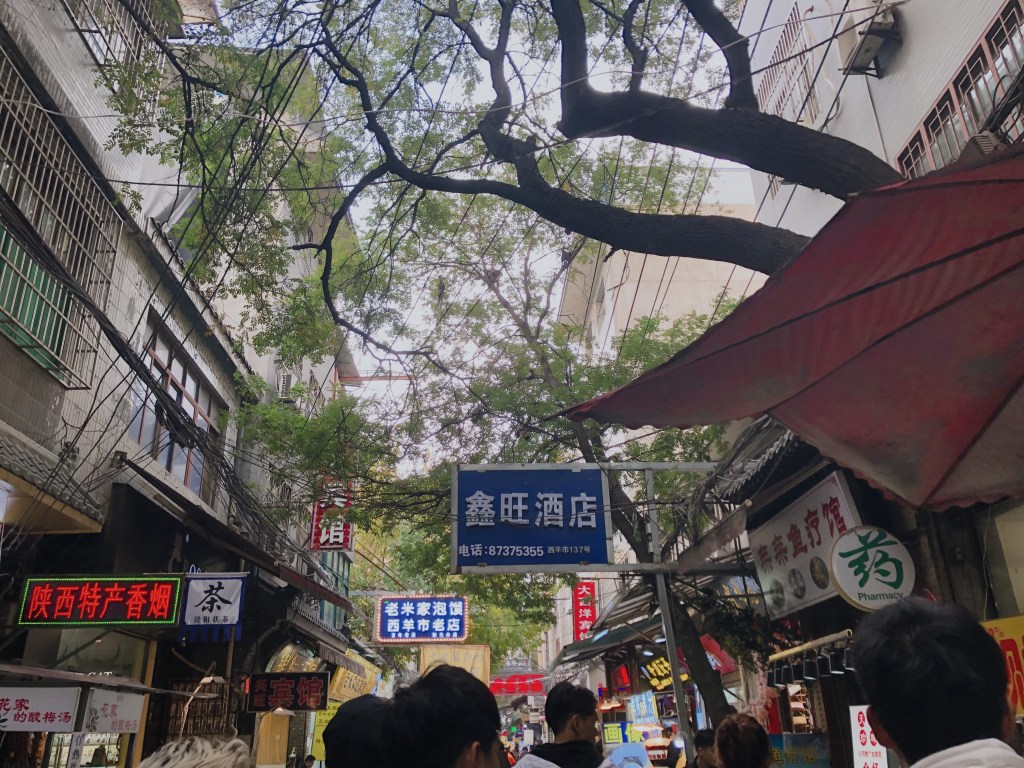
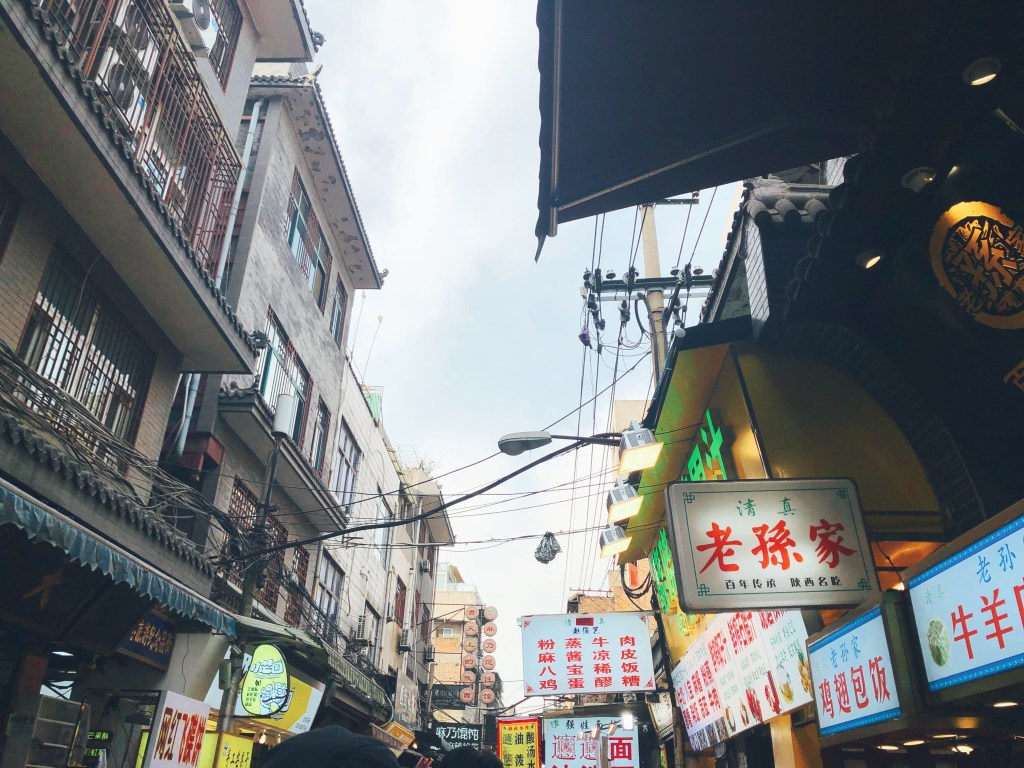
- 羊肉泡馍 (yangrou paomo) pita flatbread in lamb soup,
- 肉夹馍 (rou jia mo) meat-filled flatbread,
- 麻酱凉皮 (majiang liang pi) cold noodles with sesame paste
- 高山小土豆 gaoshan xiao tudou, grilled potatoes
- 酸奶 suan nai, sour milk yogurt drink
- 柿子饼 shizi bing, fried persimmon cakes
- 桂花糕 gui hua gao, Osmanthus rice cake with dates
- Sugar-toasted walnuts
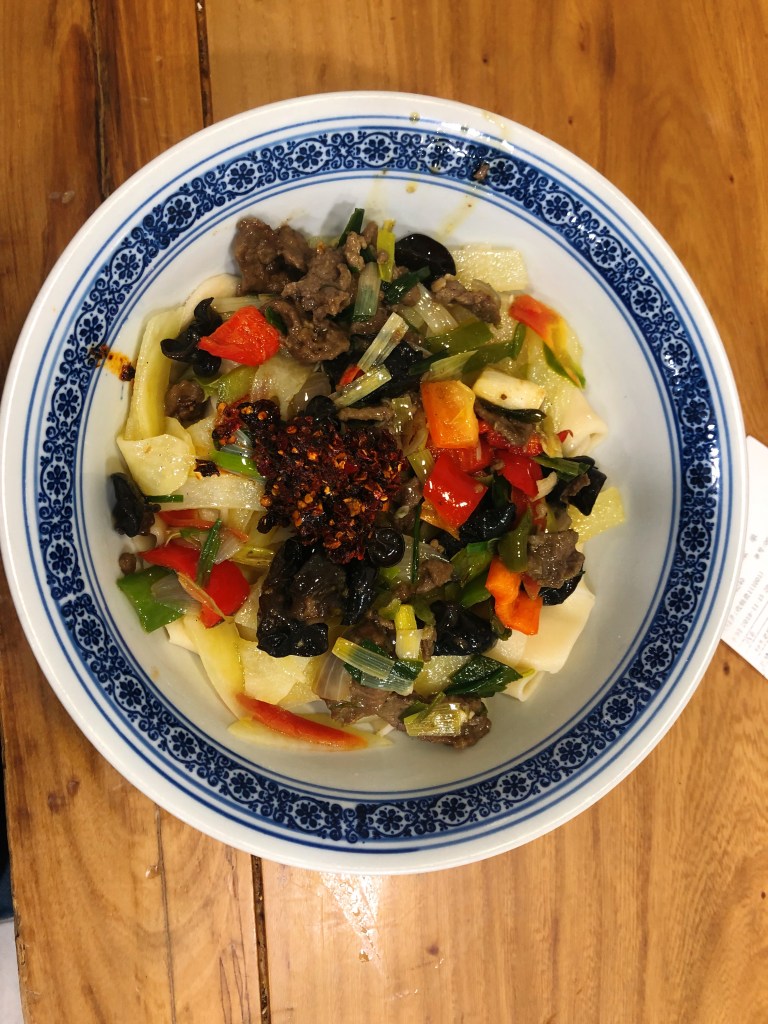
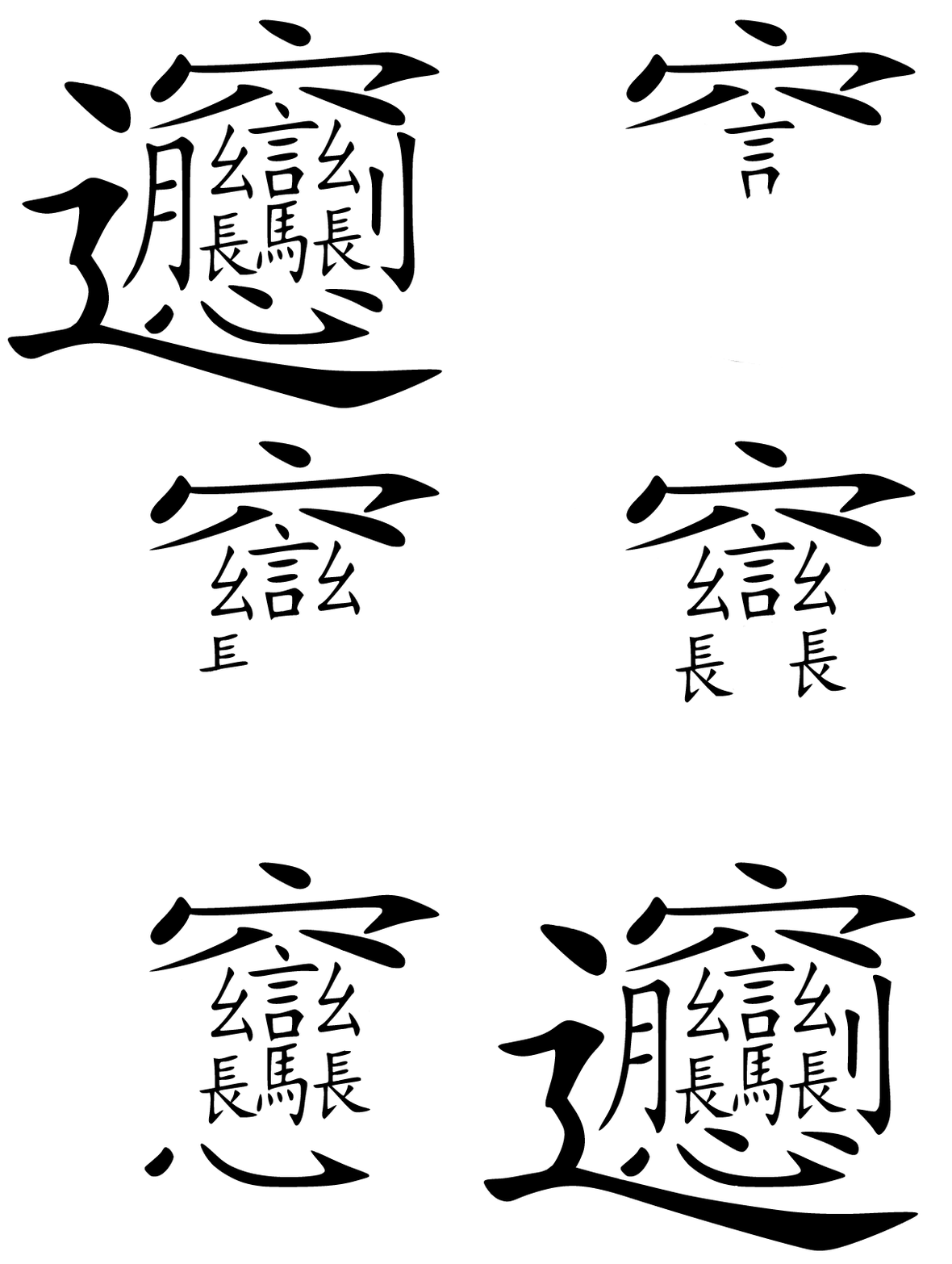
- Biangbiang noodles, long, hand-pulled noodles
- 灌汤包 guan tang bao, soup dumplings
- 石榴汁shiliu zhi, pomegranate juice (Pomegranates are abundant in Shaanxi province!)
- 鱿鱼fried octopus on a stick
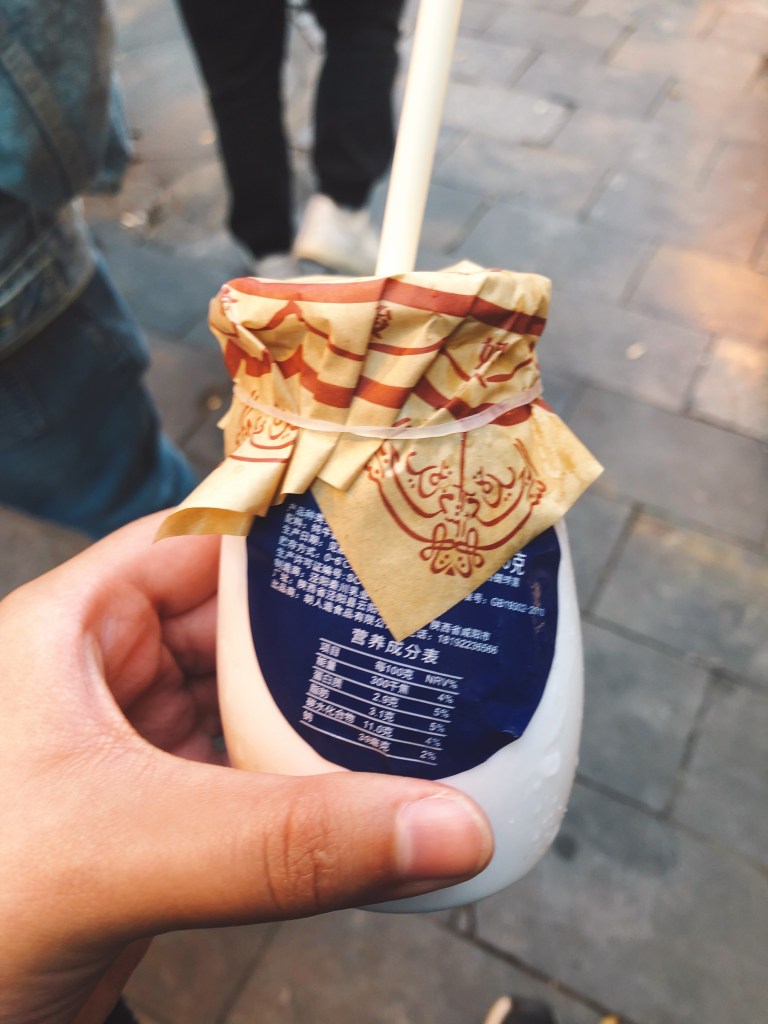
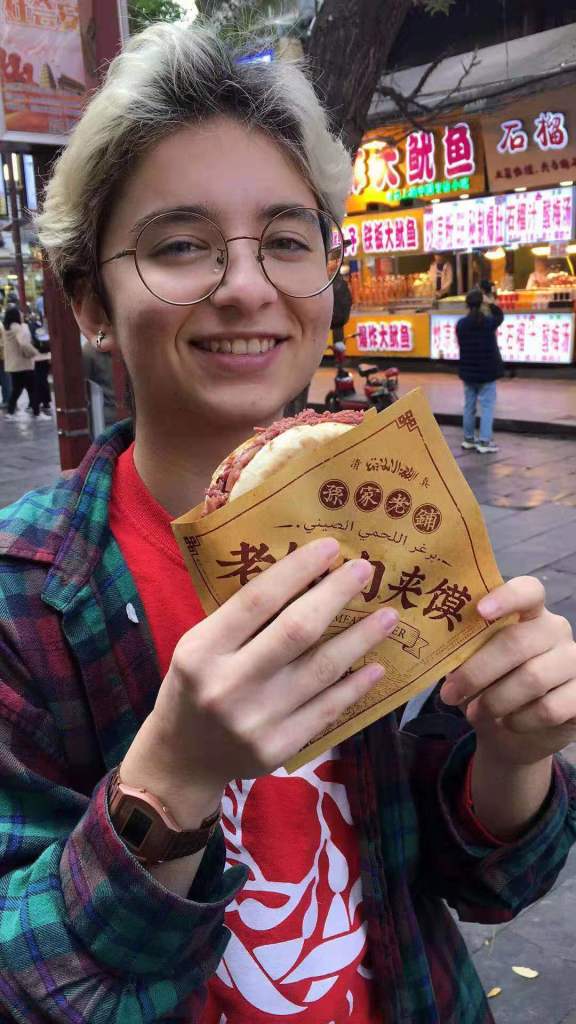
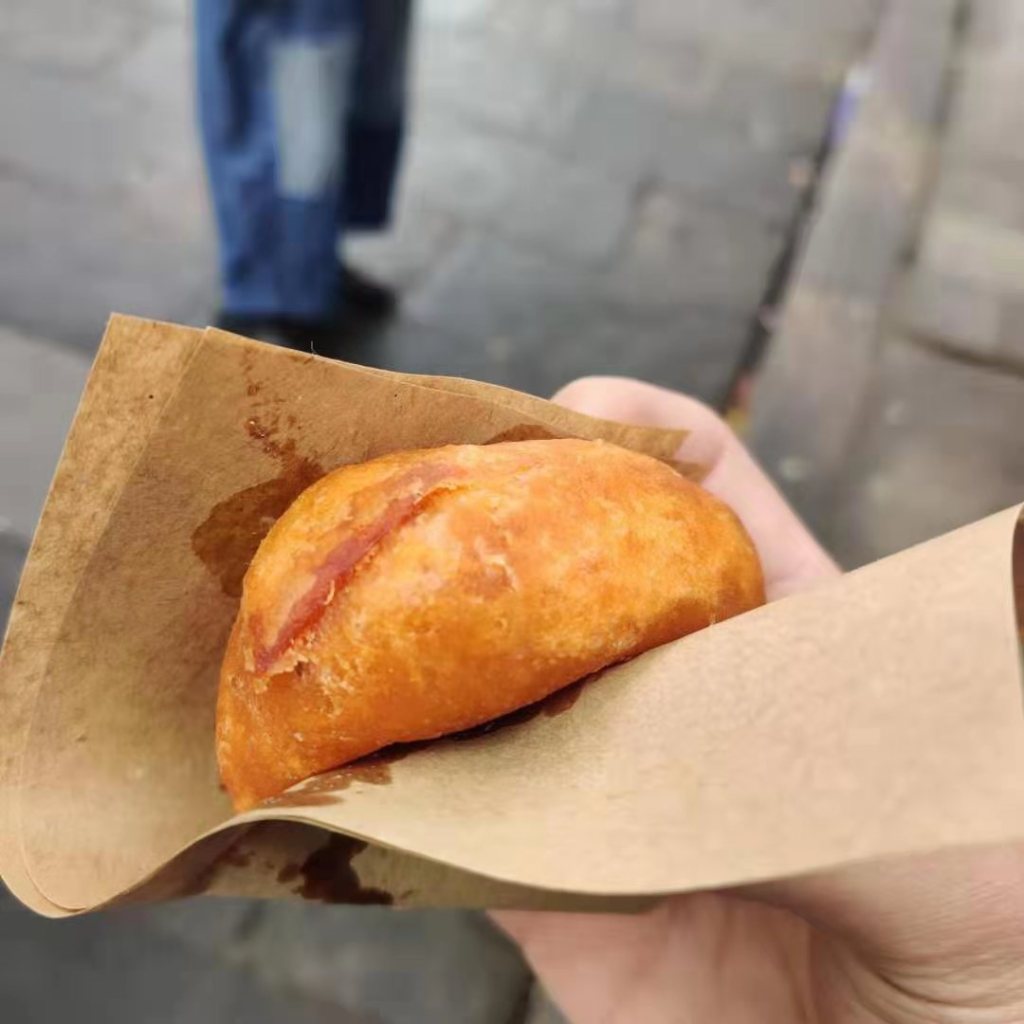
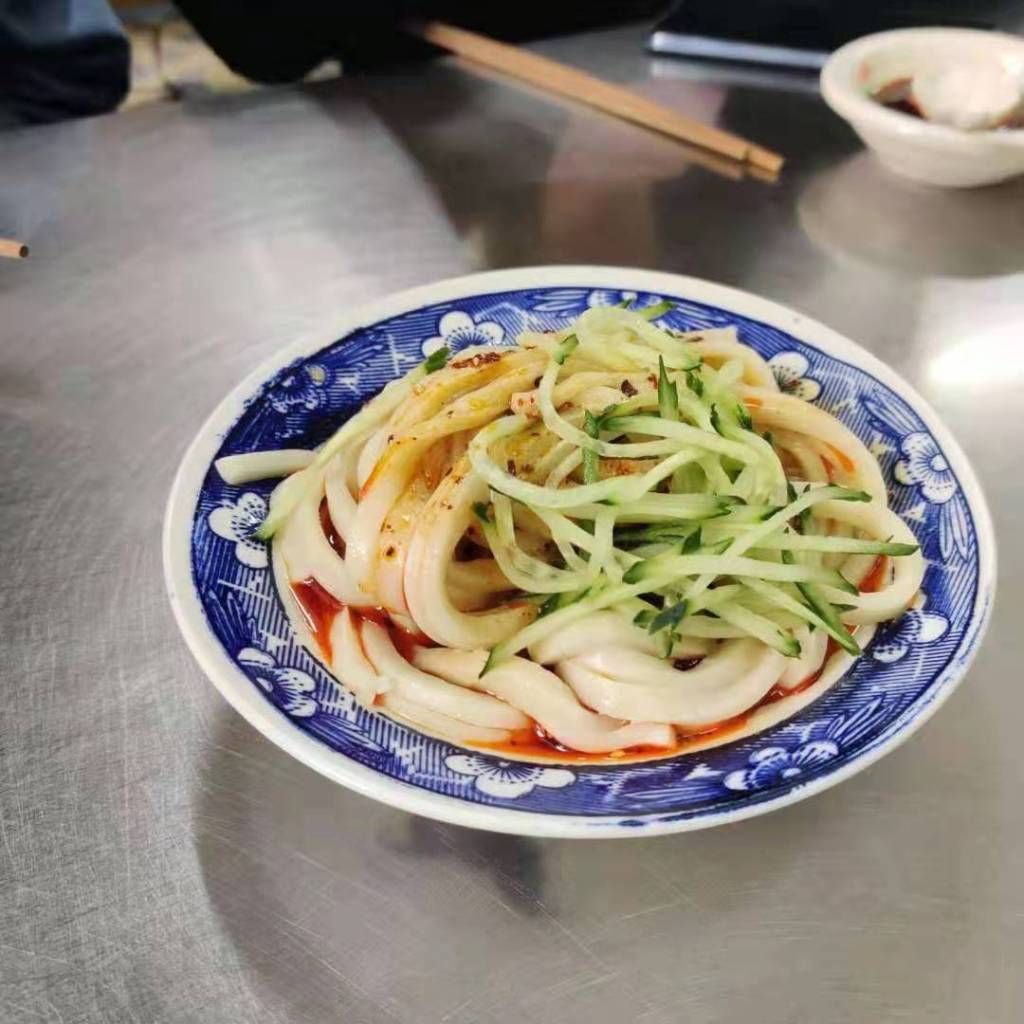
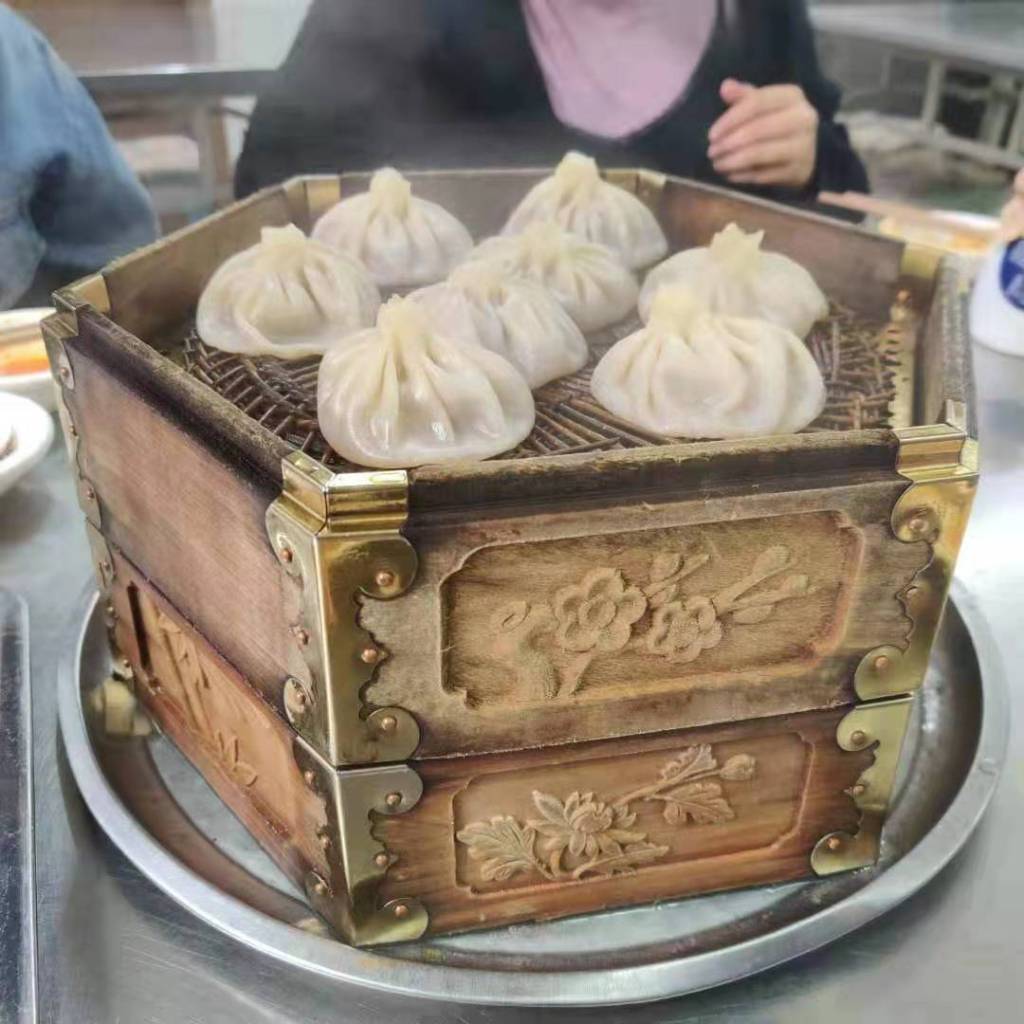
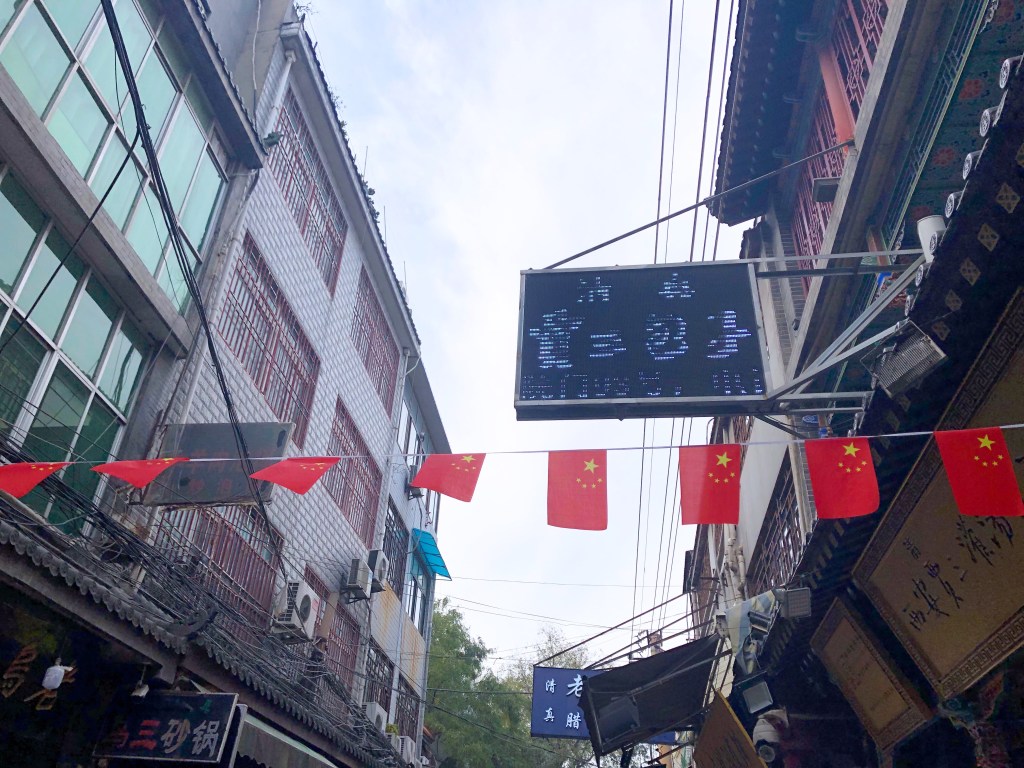
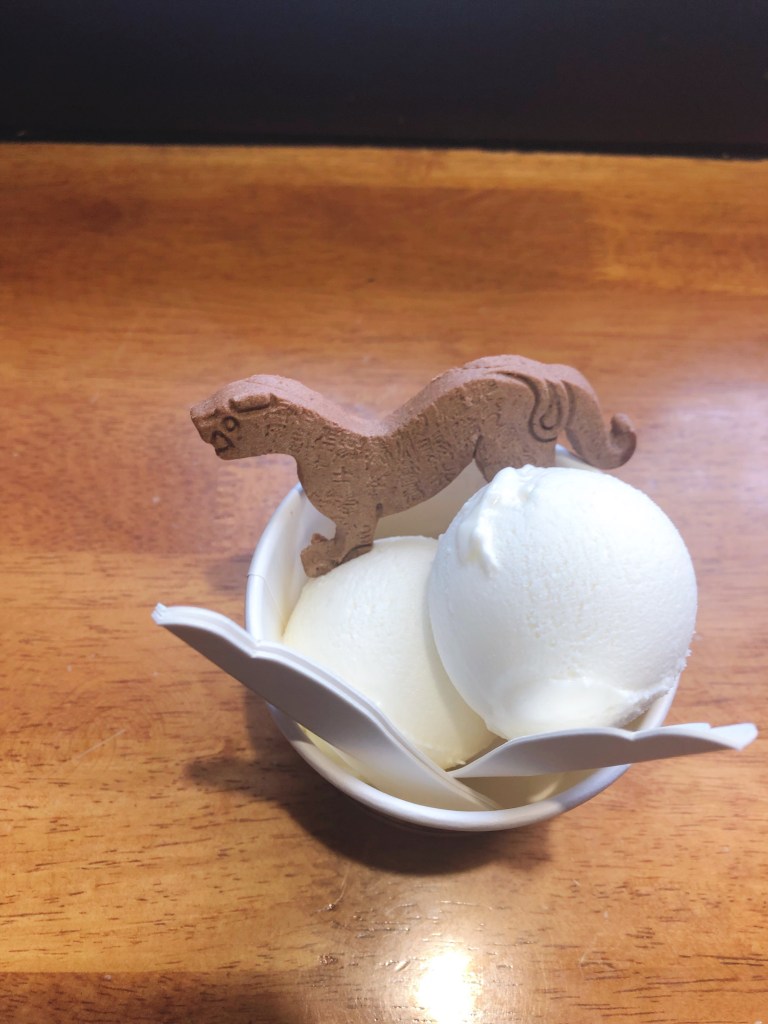
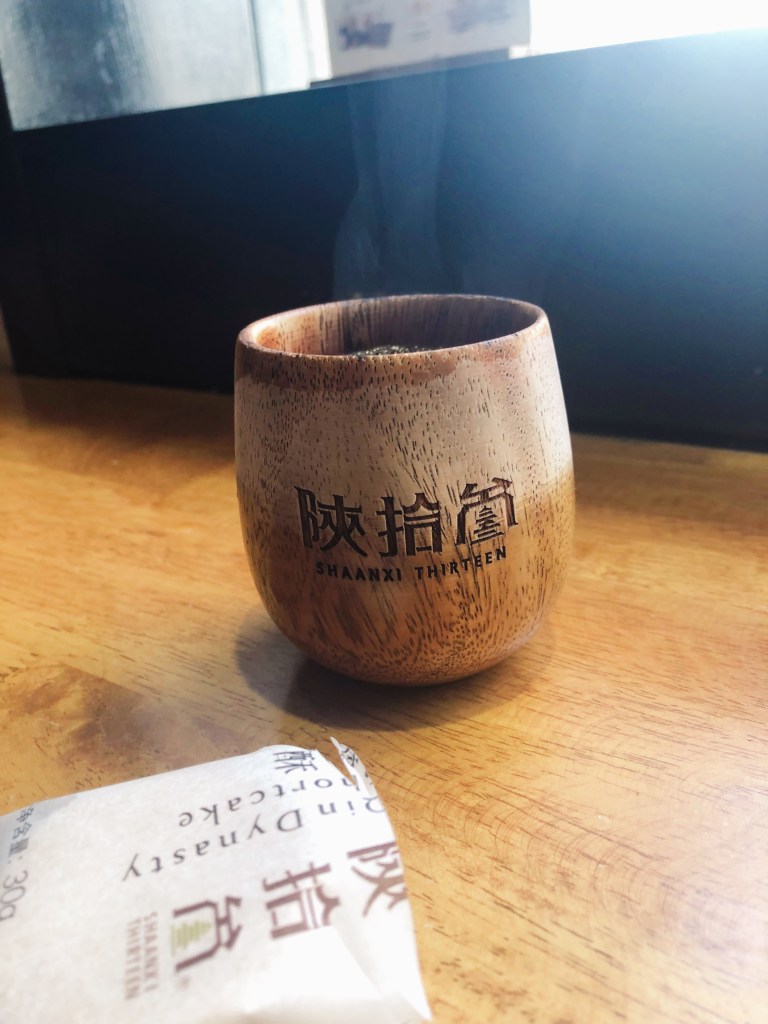
While I wasn’t able to try everything, I was super satisfied with everything I tried. Even though I’ve eaten at Shaanxi food restaurants in Beijing, the real thing was still very different!
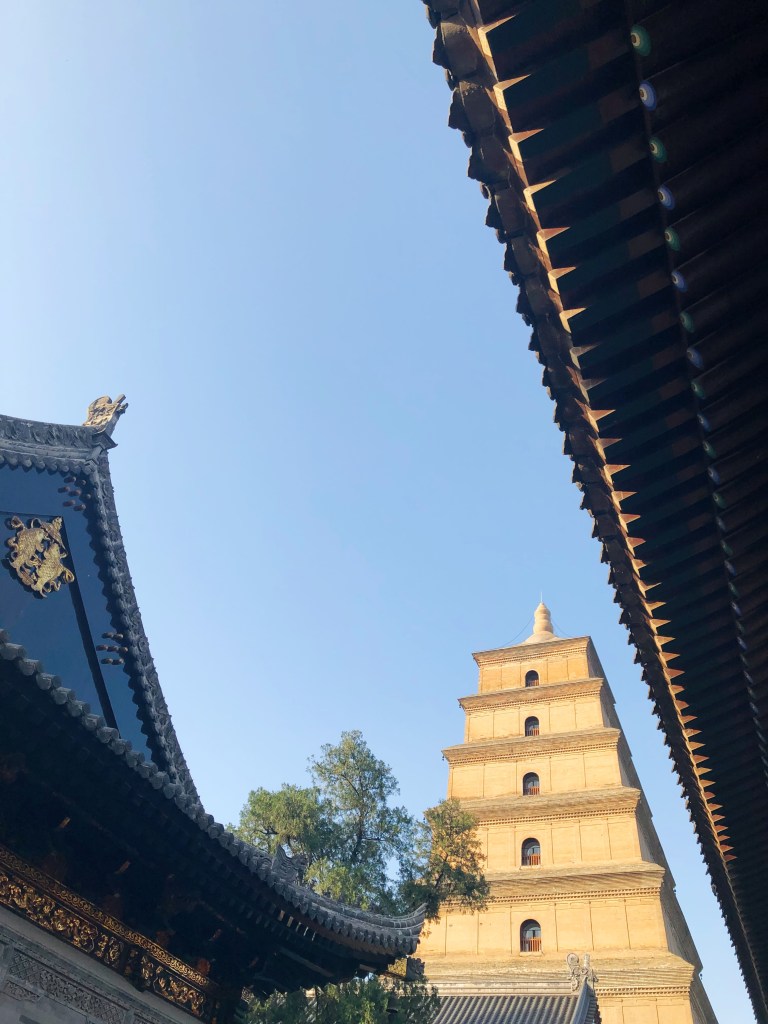
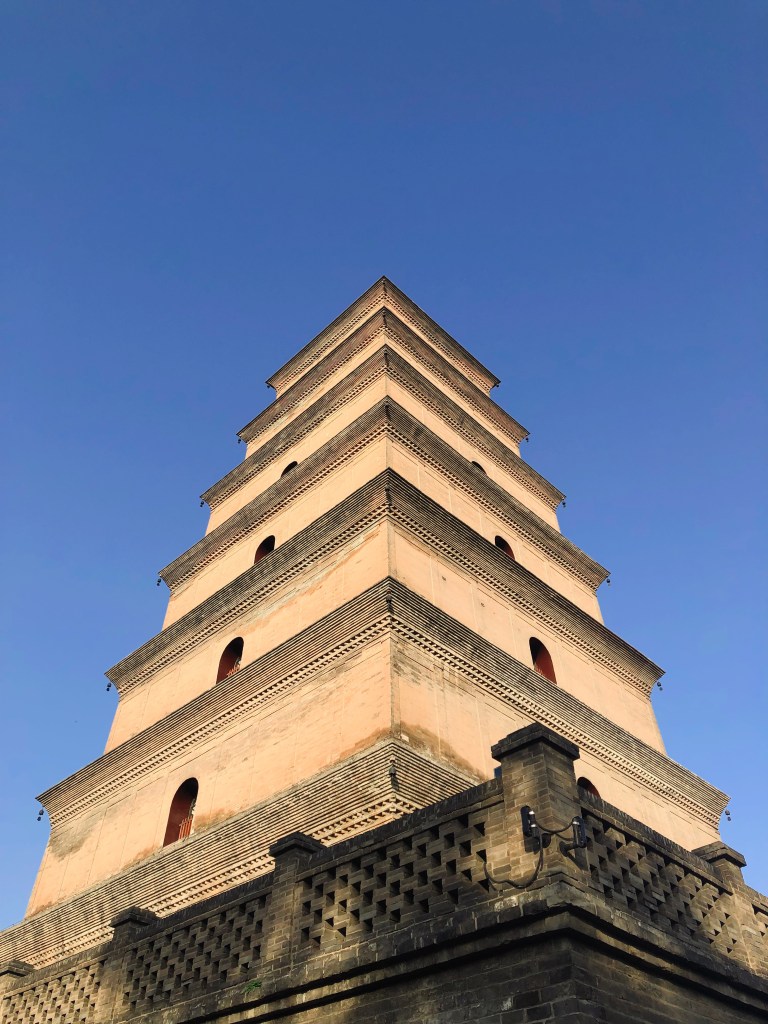
My second favorite stop on the scavenger was the Giant Wild Goose Pagoda and Da Ci’en Temple. Before entering, I wasn’t aware that the temple was still actively in use by practicing Buddhists, so that was a pleasant surprise. We were greeted at the steps of the temple by the wafting scent of burning incense and the sound of a gong striking. The temple’s monks were in the process of a ceremony of sorts. People gathered around the open face of the temple to peer in, listening to the mantras they chanted in unison and sneaking glances at the giant gilded statues of the Buddha. Some people knelt on the pillows in front of the temple and prayed, directly in front of the Buddha.
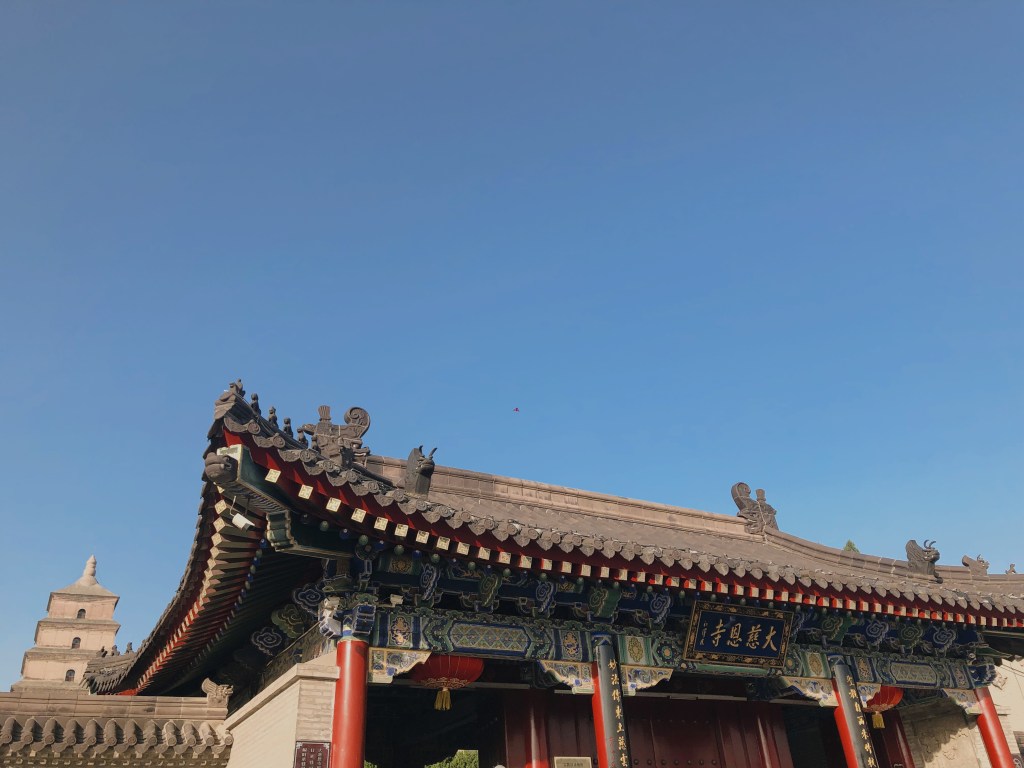
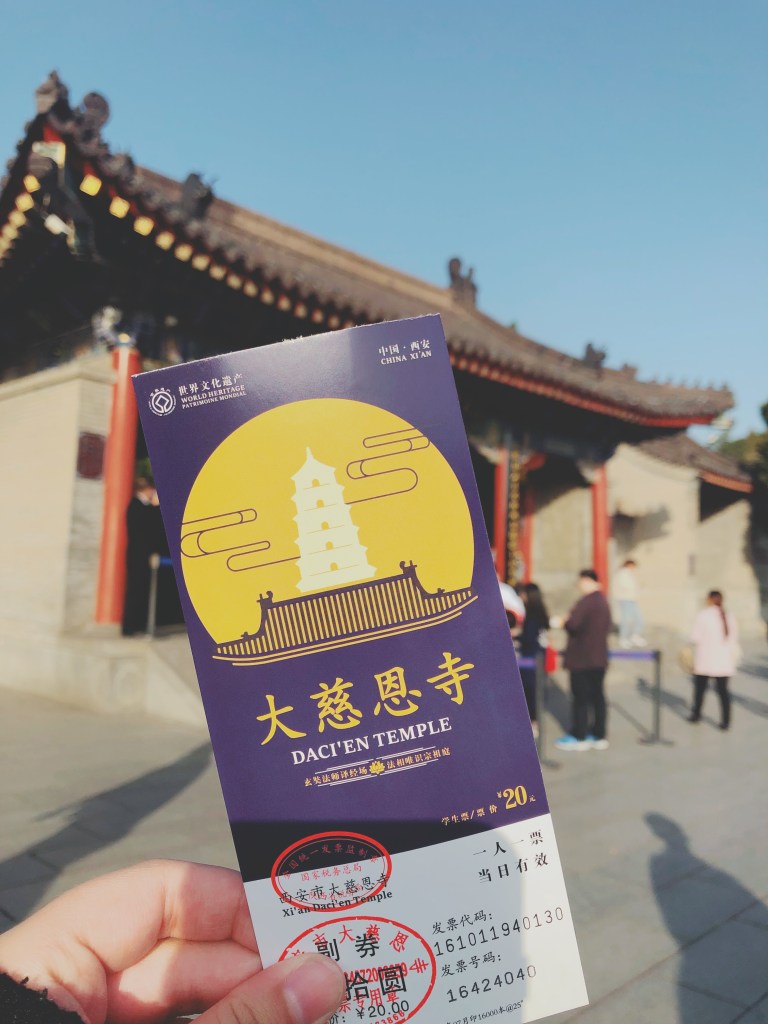
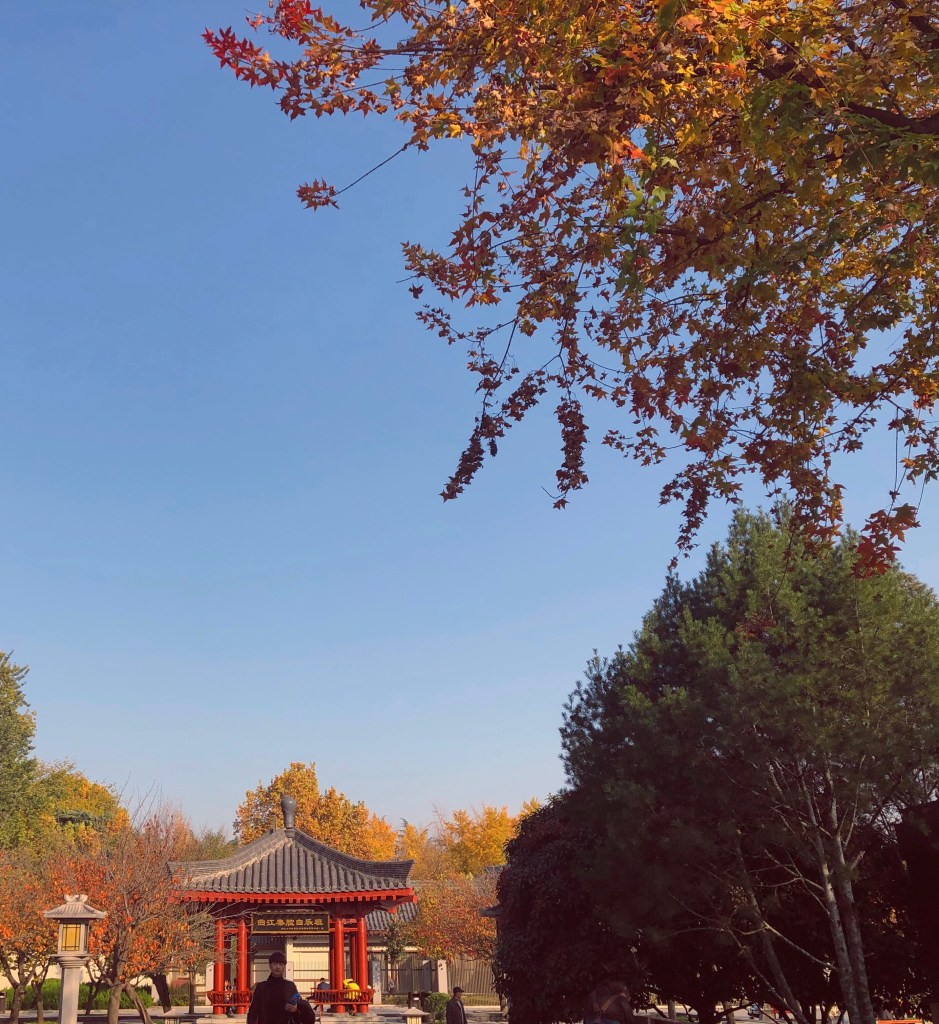
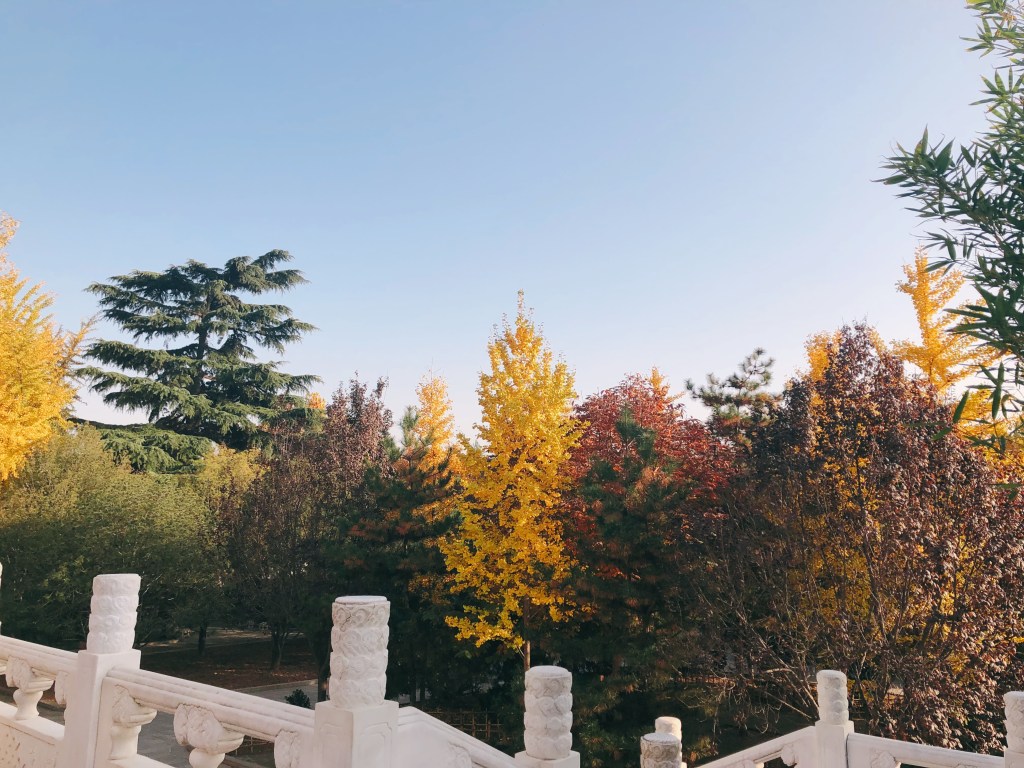
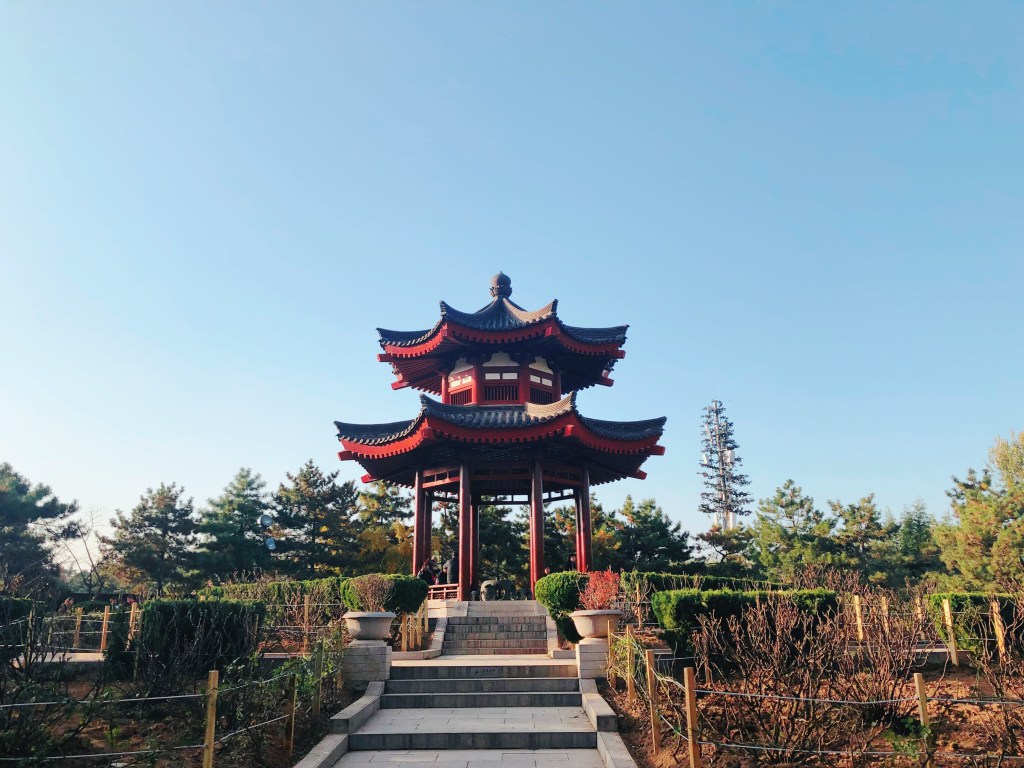
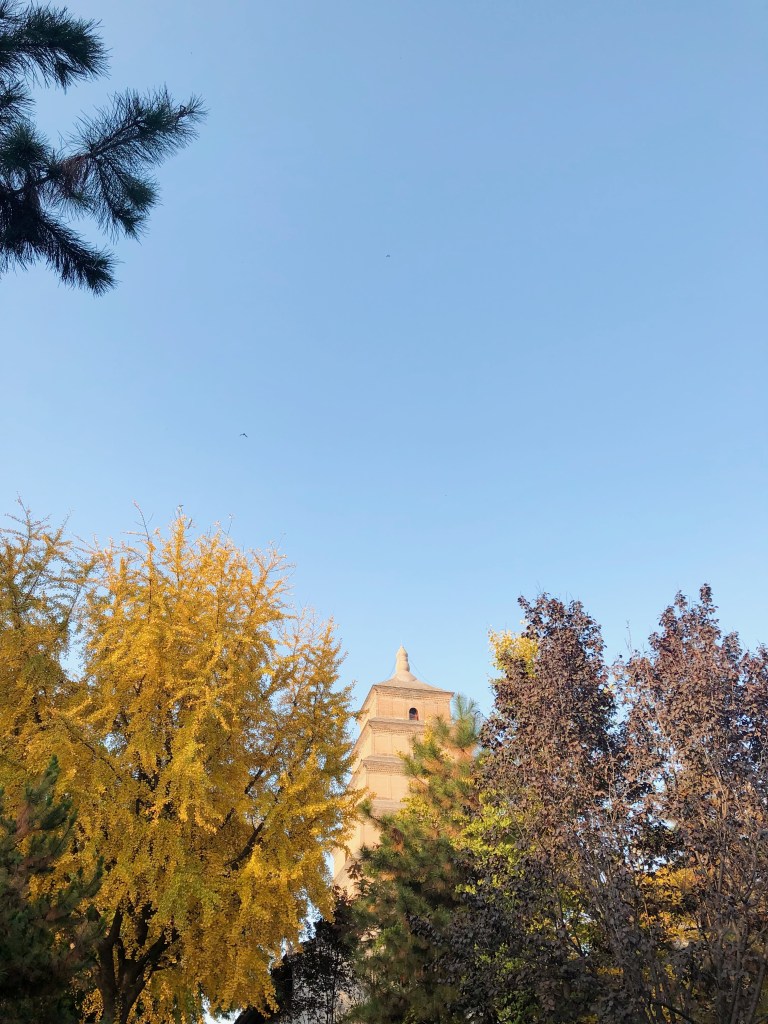
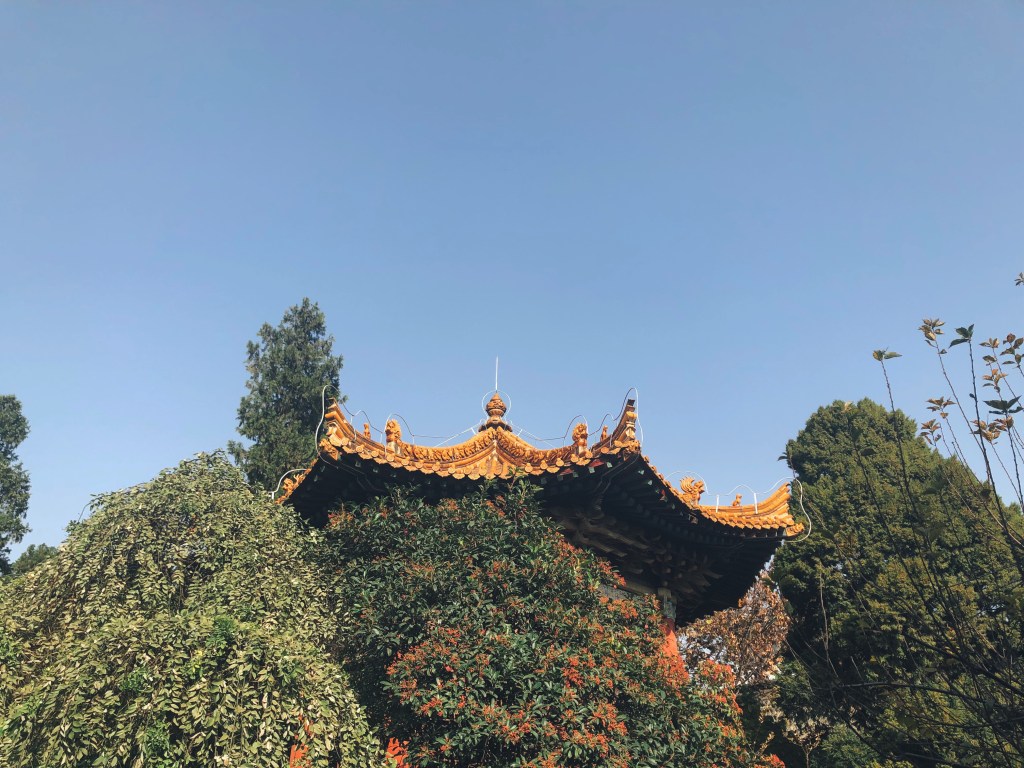
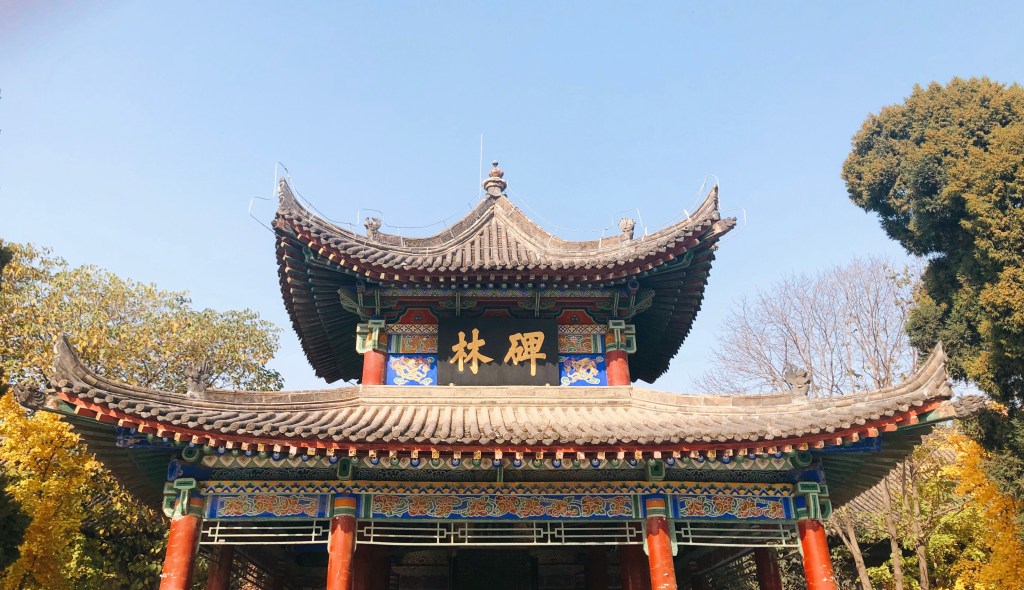
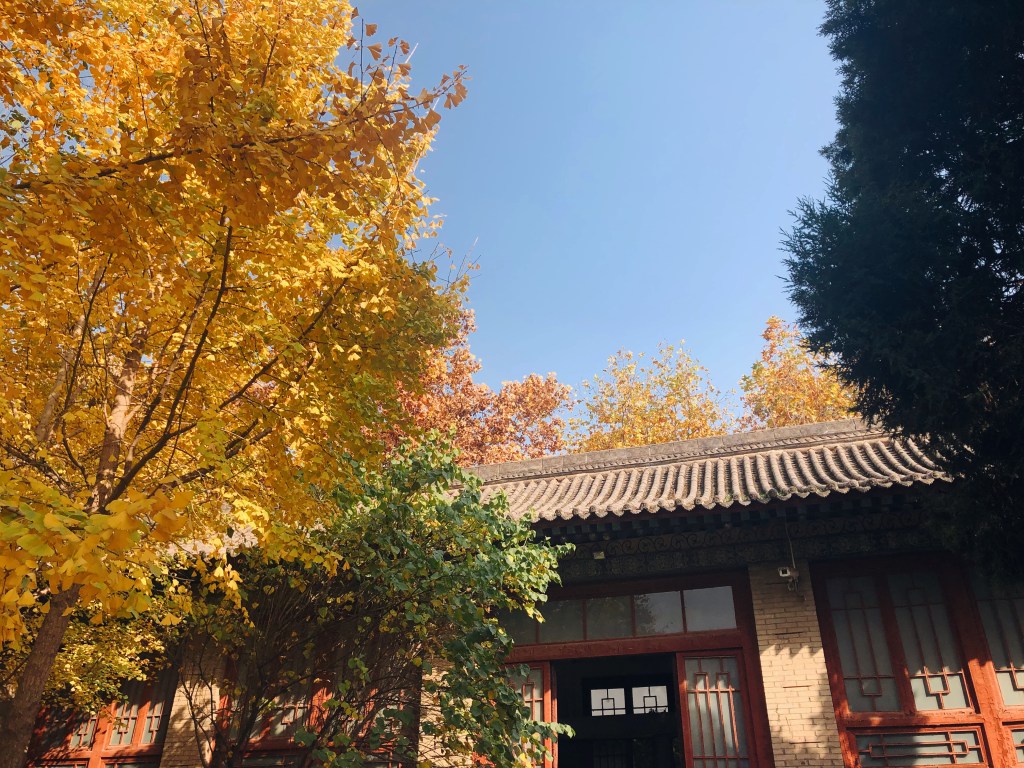
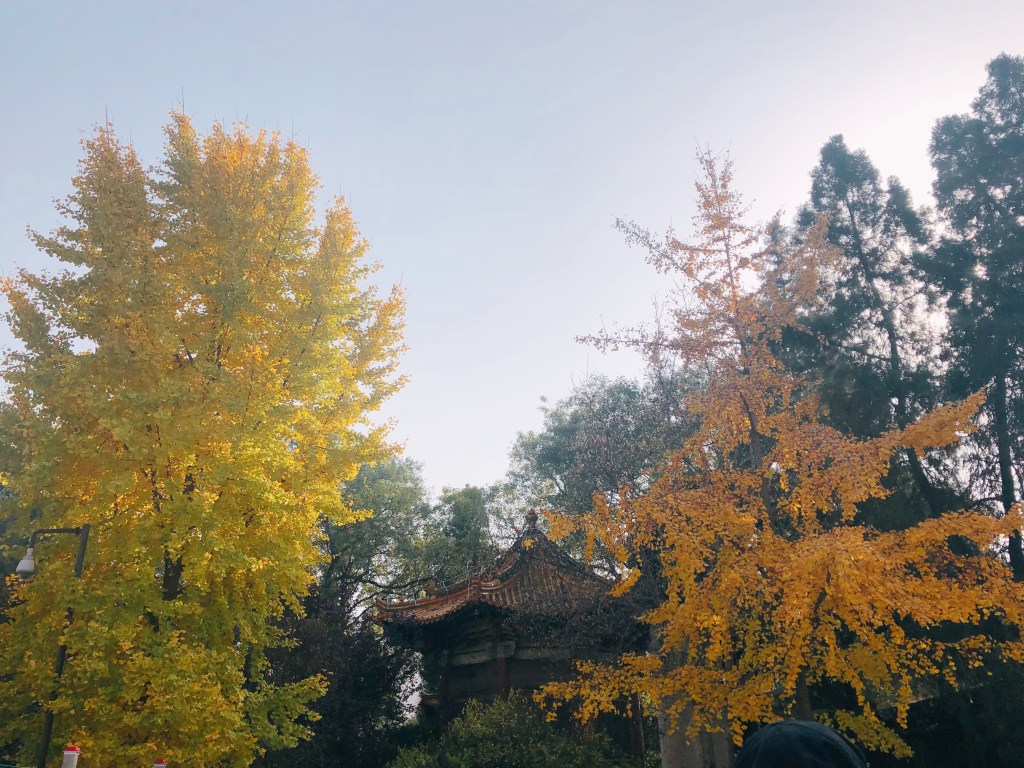
However, given that the Giant Wild Goose Pagoda was our last stop of the day, I decided not to enter the pagoda itself and brave the multiple flights of stairs up to the top. Instead, some of us met up with another group who was also there and sat under a small pagoda in the vicinity while others made the trek up to the top of the Giant Wild Goose Pagoda. The sun started to set at this point, and it was beautiful to watch how it shined through the changing leaves on the trees.

Overall, we spent ten hours exploring the city that day, all on foot except for the subway trip out to the Giant Wild Goose Pagoda. I had over 30,000 steps tracked on my Fitbit and my feet hurt so bad! I hadn’t even checked into my hotel room yet, and I was really hungry. As soon as our scavenger hunt answers were turned in, I went up to my room and collapsed on the bed. I ate some snacks that I had packed while I made plans for dinner with my friend. We ended up going back to Huimin Jie to eat Biangbiang noodles. They were delicious, but they were so thick I couldn’t finish them (thanks Ronnie for finishing them for me!). It was exciting to the street at night—it was like a completely different place.
The following day required waking before the sun to eat complimentary breakfast in the hotel and make it to the Xi’an Museum before the crowds. Unfortunately, the night before, I was woken out of my sleep with sharp stomach pains and quickly realized that my stomach did not agree with something I had eaten that day. I haven’t eaten beef since I got here since I don’t really prefer to eat beef and pork and chicken are more commonly found where I’m living, however, since the majority of Hui people are Muslim, they don’t eat pork, and had an overwhelming amount of beef and lamb options. I assumed that my body had been a bit taken aback that I ate beef twice in one day after not having eaten it at all in the past three months. I was still feeling sick come morning, so I decided to stay back until our group lunch and didn’t get a chance to go to the museum. I saw pictures and it looked beautiful, though!
Thankfully, I had the help and support of my temporary roommate for the trip (hi Maya!), as well as the help of my resident director who both made sure I was eating suitable foods, like crackers, bread, and fruit. I ate lightly at lunch that day too, just to be safe, thus I don’t have a picture of what we actually ate. It was a lot of Shannxi’s most characteristic dishes: Hulu chicken (gourd-shaped chicken), golden sticky rice, more cold noodles, and a number of other dishes with bright flavors that spun their way around and around the lazy Susan.
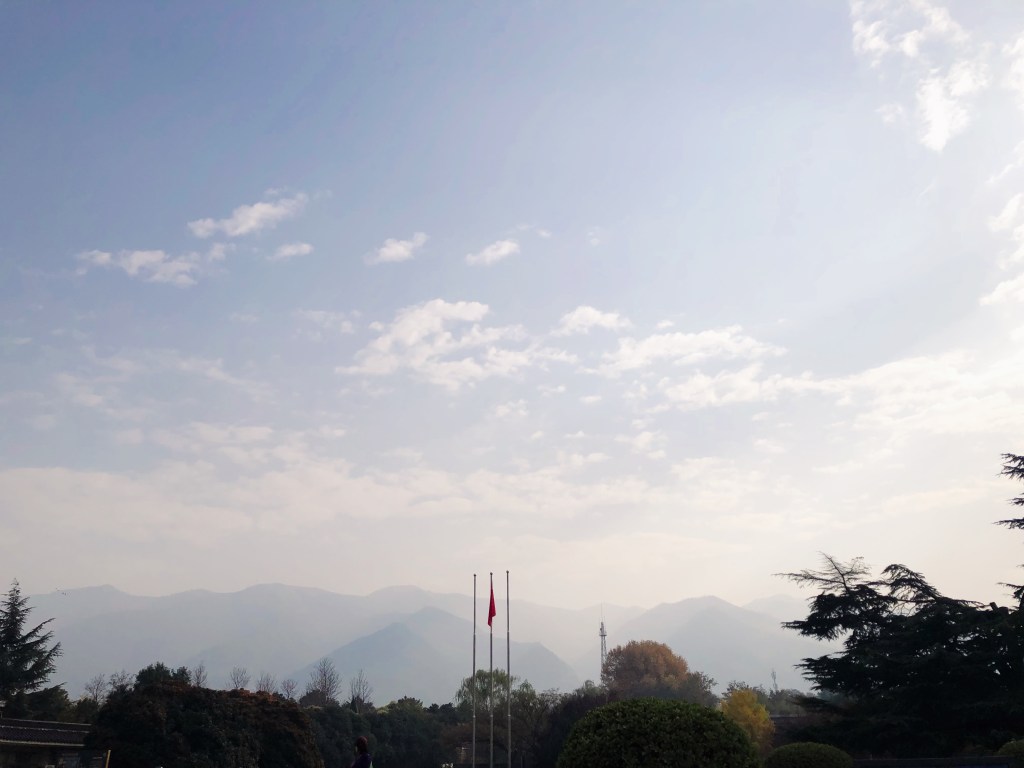
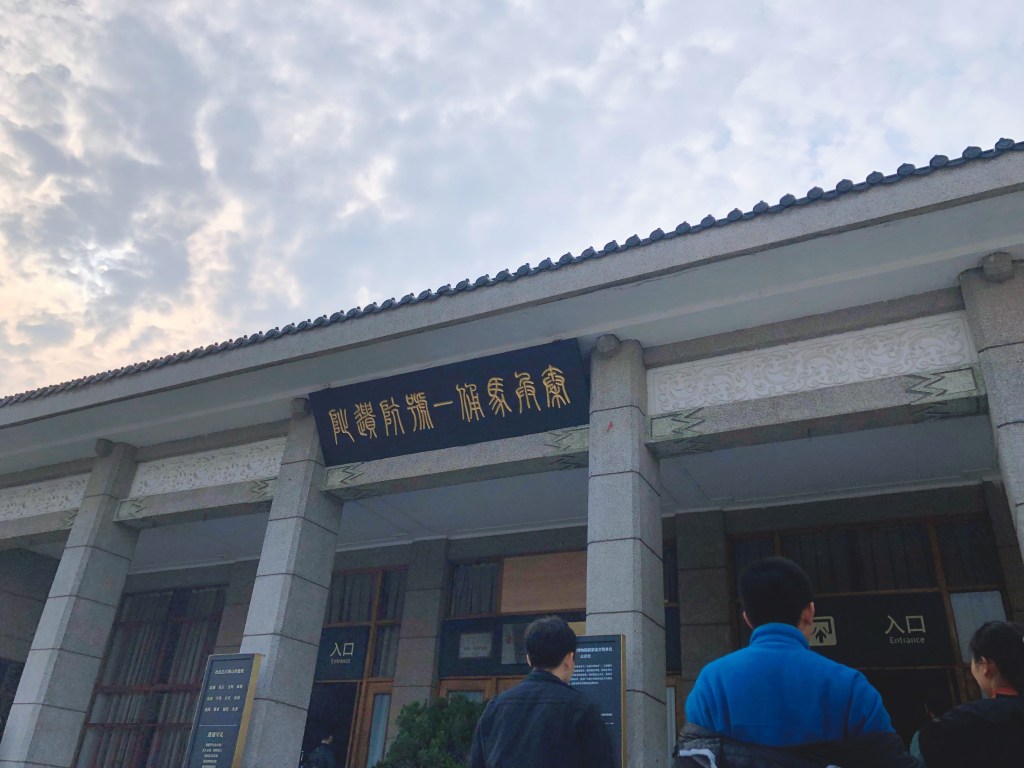
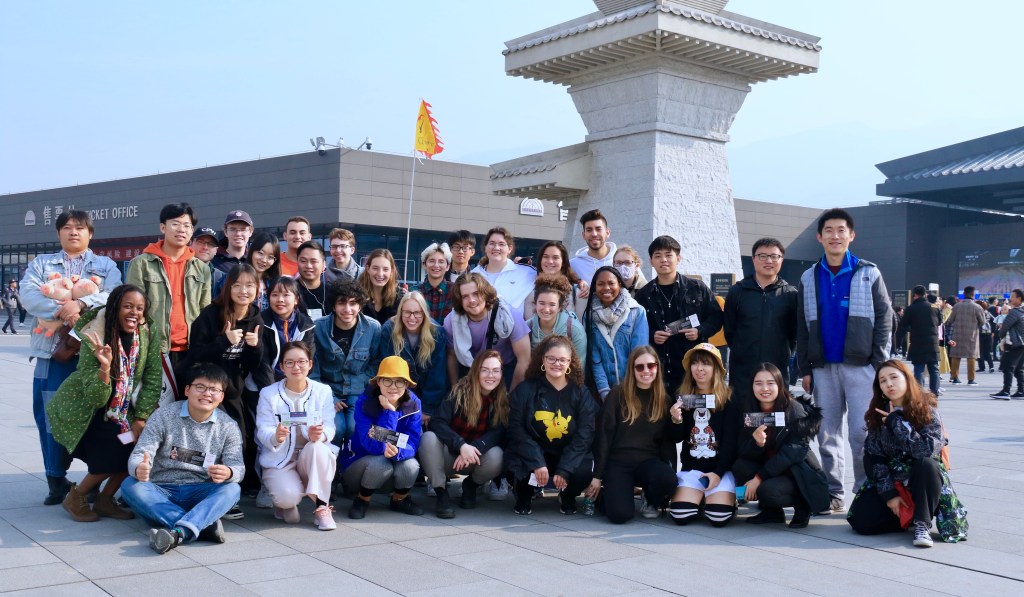
From there, it was time to head out to one of Xi’an’s—perhaps even one of China’s—most famed attractions: the Terracotta Soldiers. It was over an hour away from the restaurant we were at, so I took a nap on the bus ride there. When we arrived, the sun was out and shining, but by the time we left it was cloudy and smoggy. I was surprised by how much time could be spent walking around this area. I went into the first main building not even knowing that the Terracotta Soldiers were housed in a number of different buildings. I realized upon entering the viewing area how little I actually knew about them; I was more than surprised by how long of a walk was required to get to the actual viewing buildings—I was under the impression you just walked right into one building where they all stood. Imagine my surprise then when I saw that many of them aren’t even standing! Some of them have broken into pieces, others reclined onto their side as a means of preserving them. A number of them are hand-less and headless, standing upright like something straight out of a nightmare. The headless horses just make me sad.
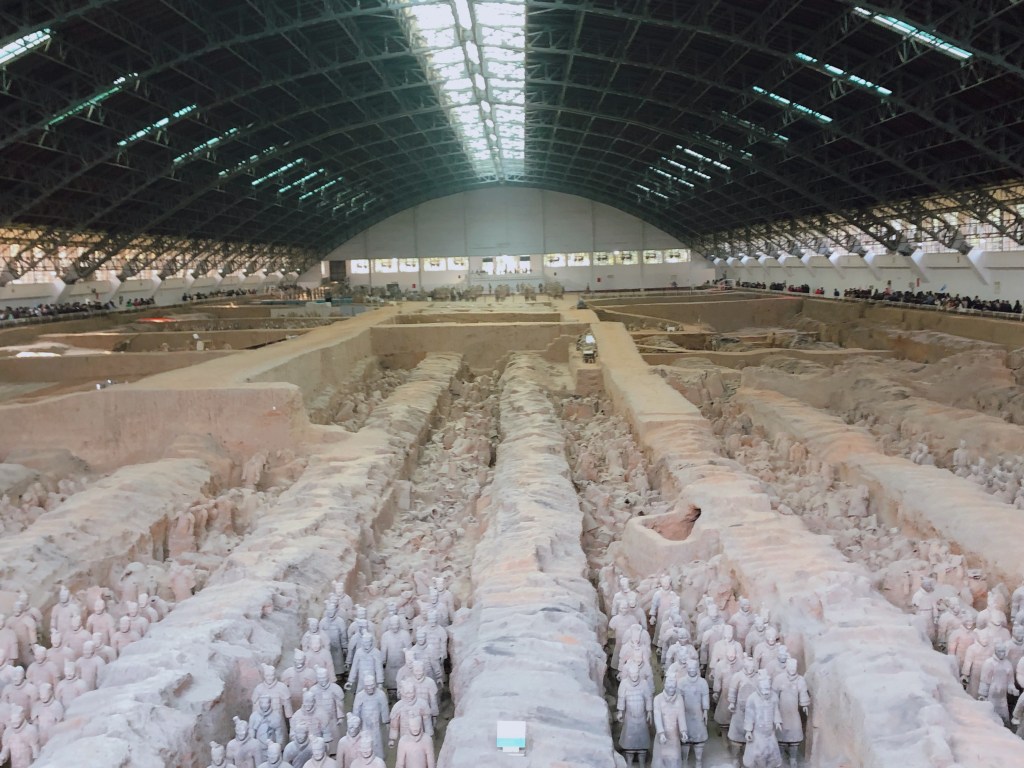
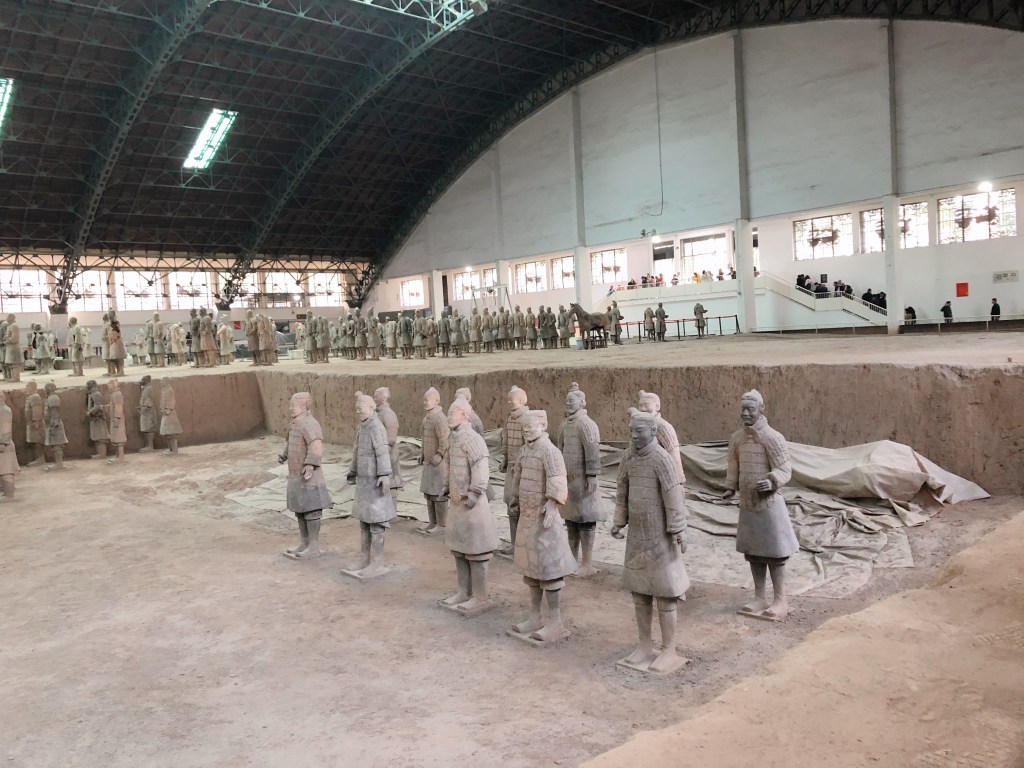
It really was a sight to see though—it’s unfathomable to me that they’re all so unique, each one appearing to be different from the others. It seems as though no matter how much time you spend grabbing glances as you’re moved through a mass of people, the sheer brilliance of these sculptures is incomprehensible. Some of my favorite facts I learned while I was there include that the lighting is kept very low in the building in order to sustain what soldiers are left—if the lighting is too strong, and thus too hot, they will begin to break down even further. It’s amazing to me how long they have survived. Another thing I didn’t know before going was that they are still in the process of excavating more soldiers, horses, and carriages. Another building has been built around this site, but it just appears to be masses of dirt. I’d love to return to Xi’an someday once this group has been uncovered, but I’m not sure how long that would take.
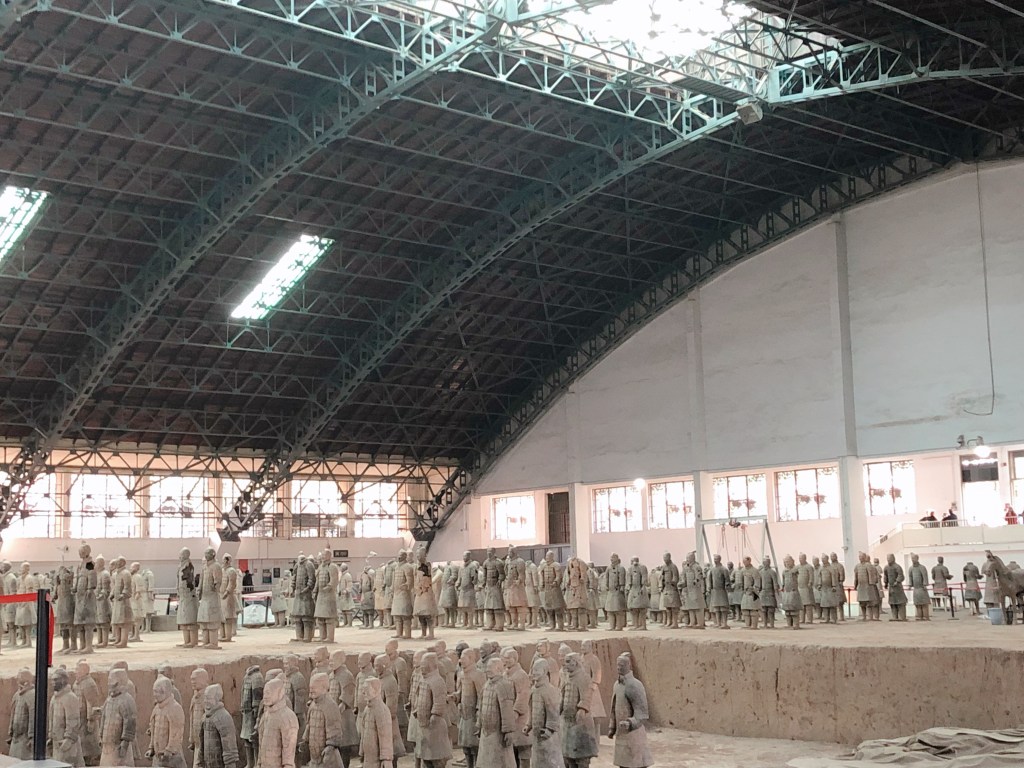
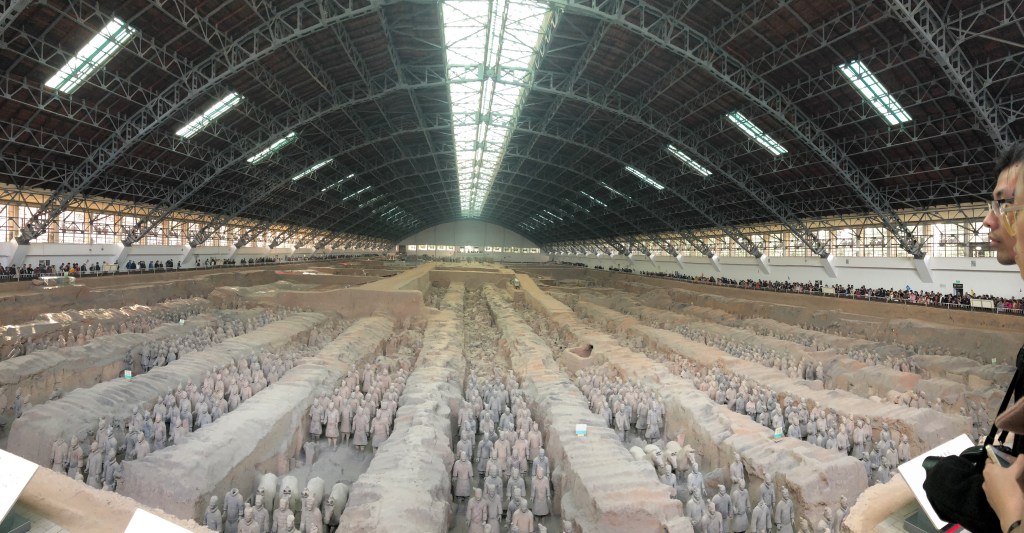
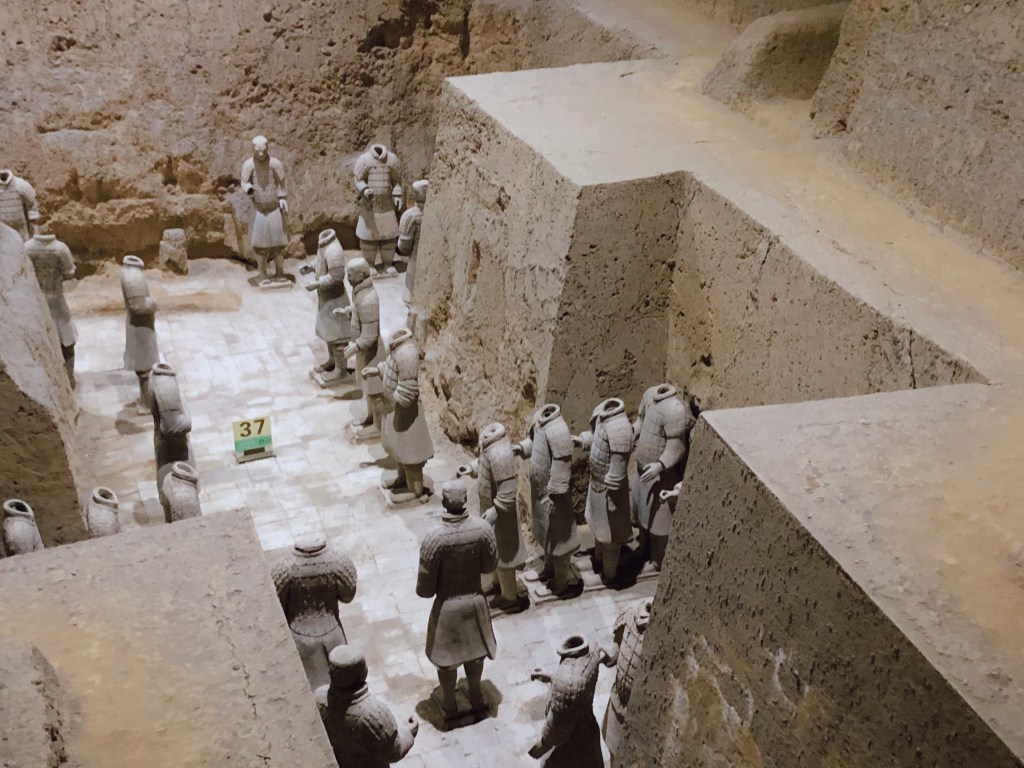
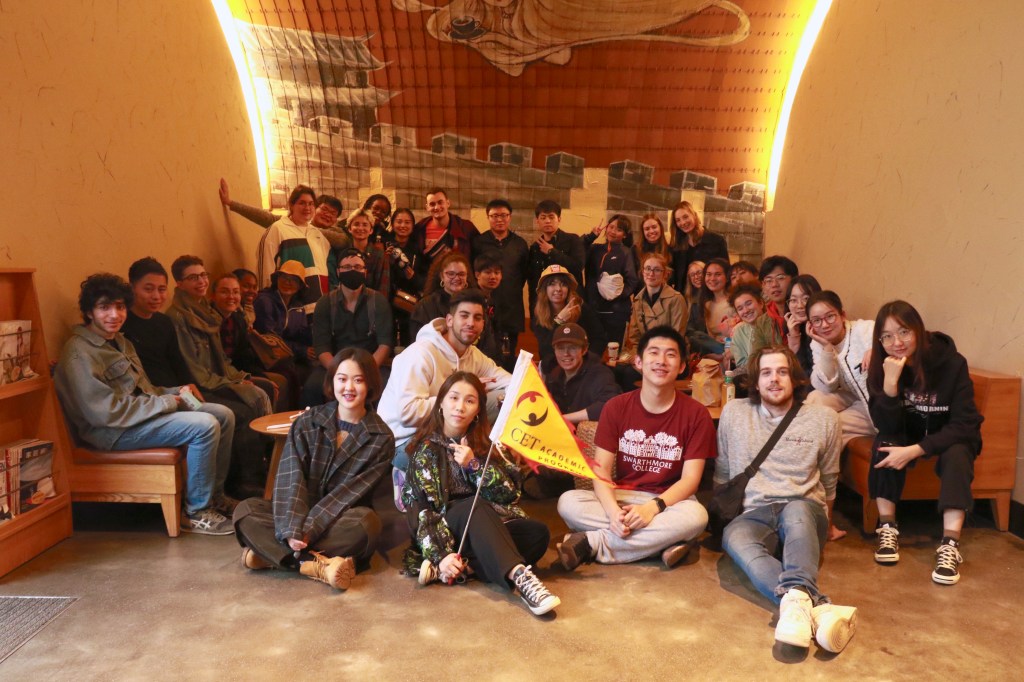
The complex also includes a museum that we wandered through to pass time. Once we were actually finished though, the exit leads you to a bustling street lined with privately-owned souvenir stores, food stalls, and popular Western fast food restaurants, like KFC, McDonald’s, Subway, and Starbucks. We all gathered in the cozy Starbucks, some buying drinks and others just sitting to talk. We stopped in some of the shops and bought souvenirs for pretty fair prices.
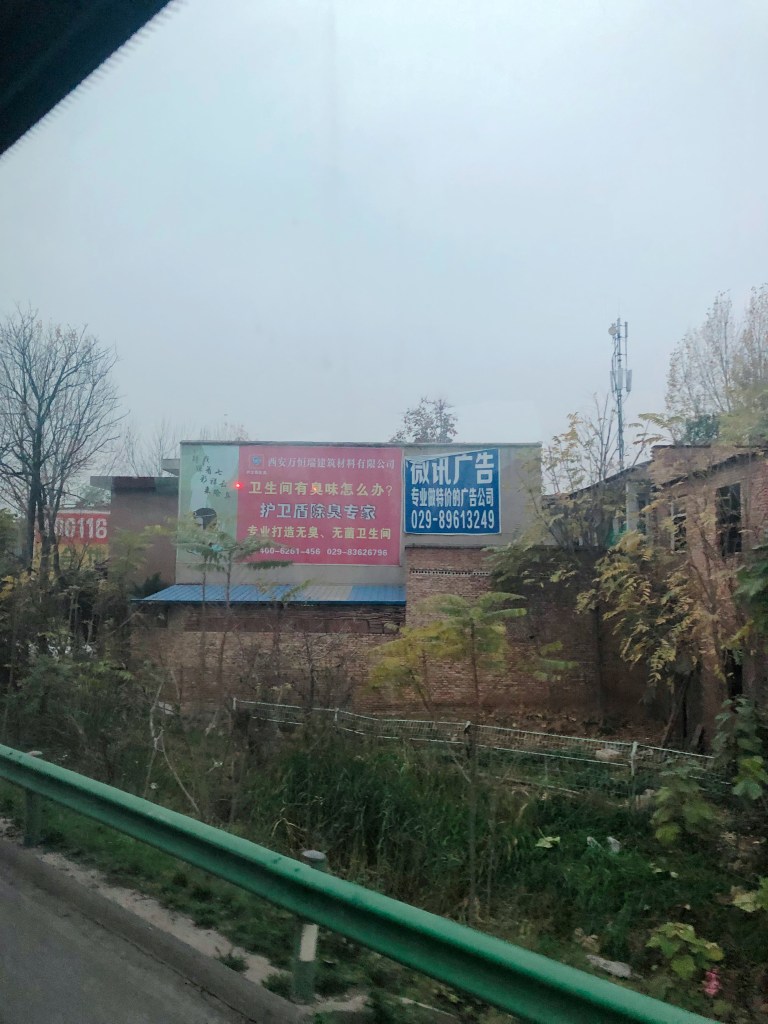
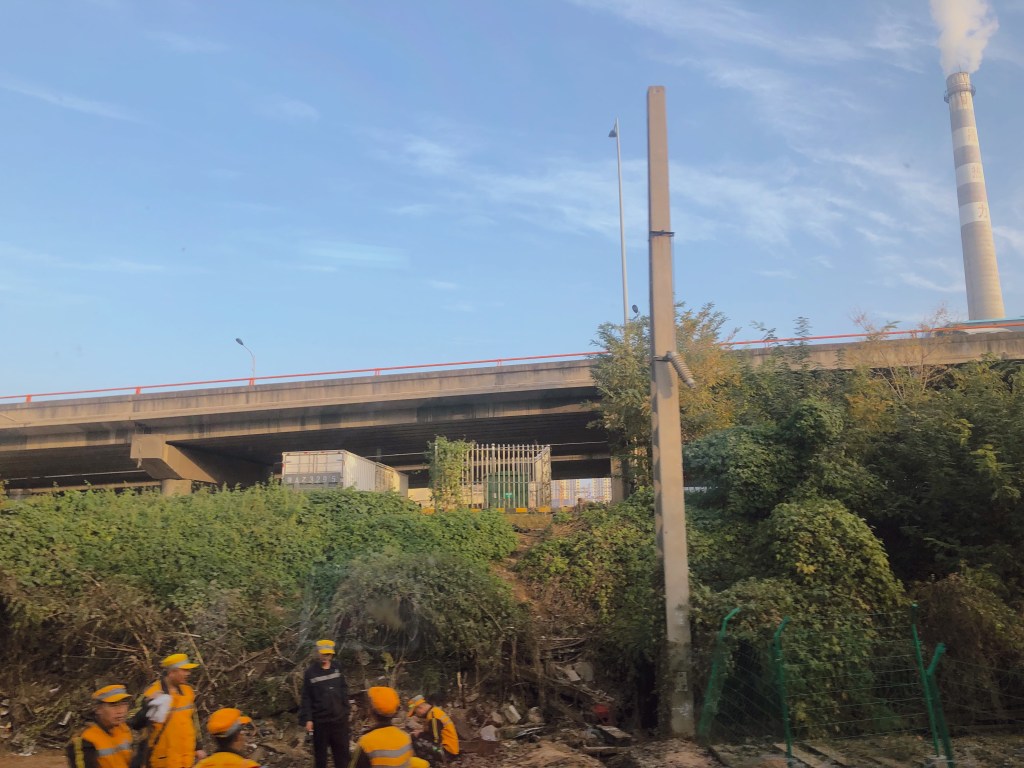
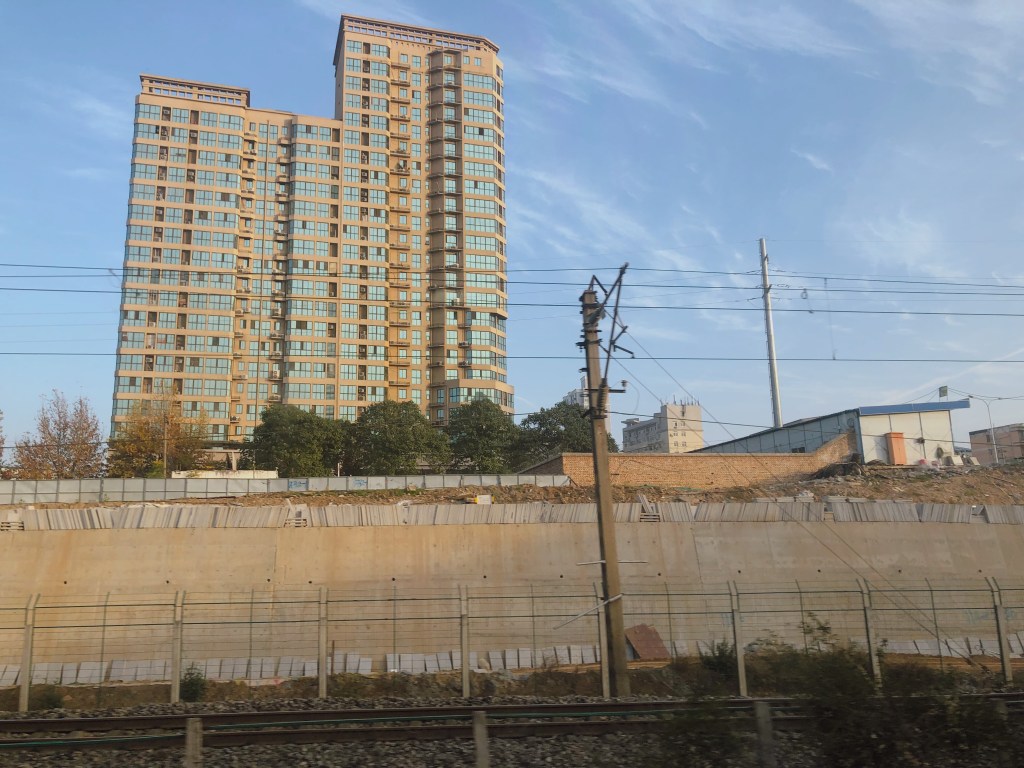
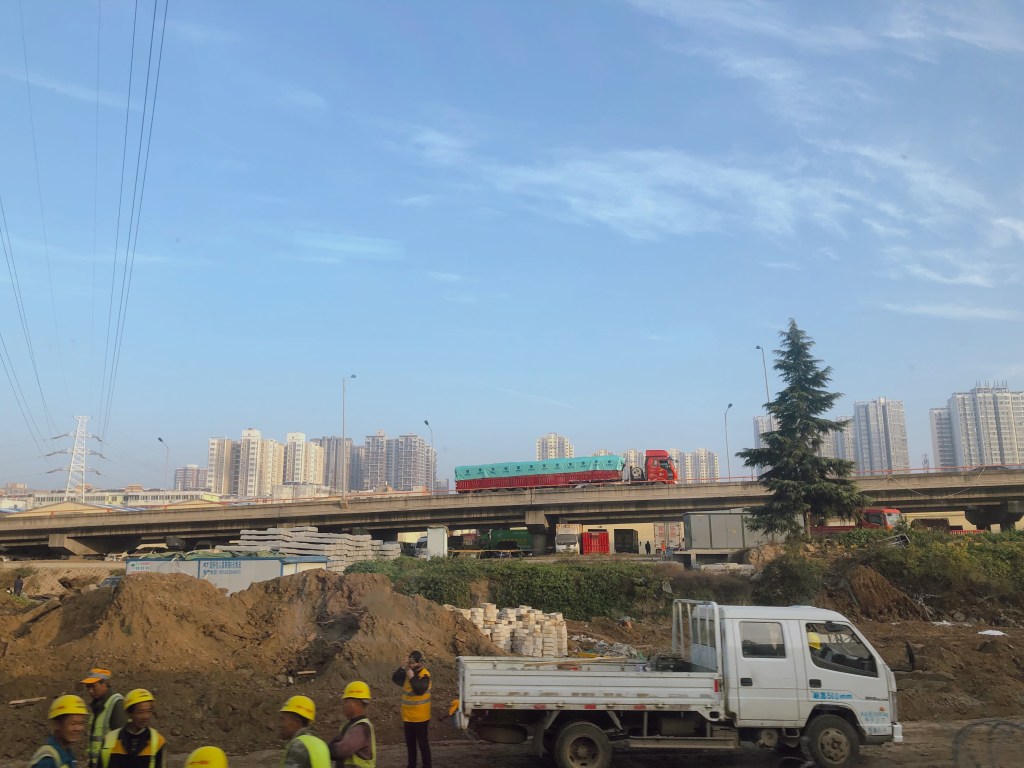
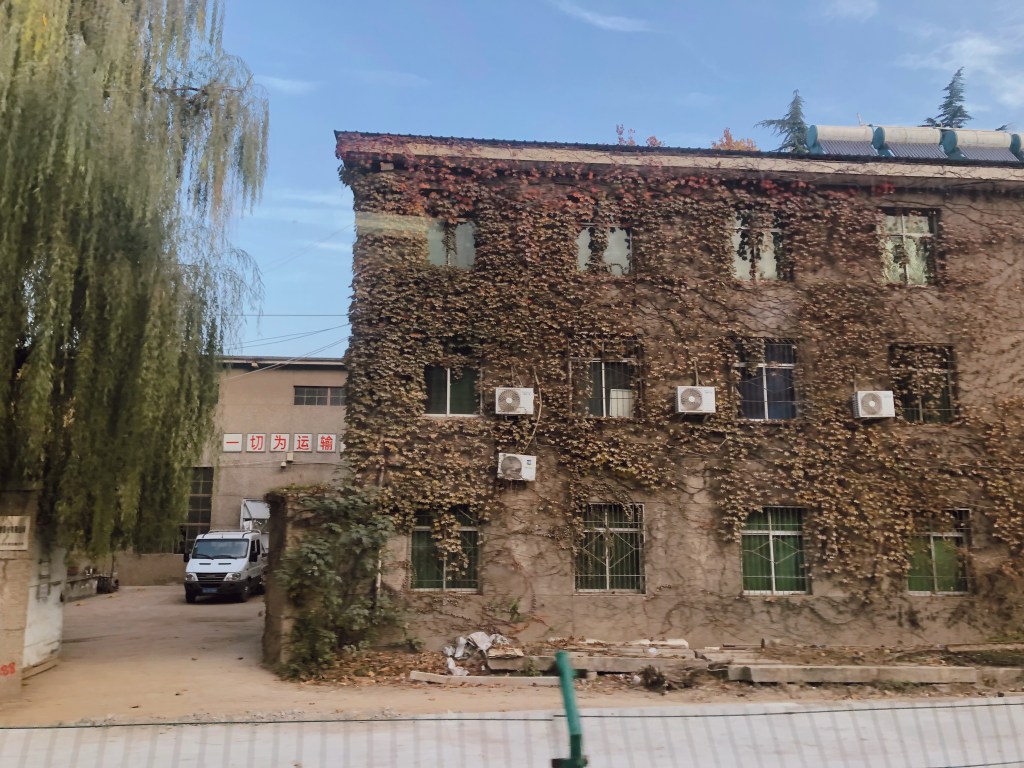
By this point, the sun was beginning to set, and it was almost time for us to climb back onto the bus and make our way to the train station to head back to Beijing. The bus ride to the train station was, surprisingly, one of the most interesting portions of the trip for me. I watched out the window as we passed by a number of small fields that, even in the cold, people were out tilling. It was so interesting to see what ordinary life looked like in this area. I saw people standing together in fields chatting and smoking a cigarette, as though they were taking a break from the physical labor. I also saw wild dogs running around small towns with dilapidated buildings, the red and white government slogans on their façade peeling off. I could see into small stores, even watched a woman carry a long pole on her shoulder down a small dirt path. Watched groups of women take their nightly walks together, people on electric transport bikes carrying overflowing bundles of leafy vegetables. I even saw a number of the memorial wreaths placed out in fields.
On the bus, we were handed our return ticket with our room assignments. I was placed with my friends again, but this time I had the top bed. Thankfully I was able to switch the people in my room once we were on the train! A group of us students and a couple of our teachers sat shoulder-to-shoulder on the tight bottom bunk playing Uno. We had to explain how to play to our teachers in Chinese which was fun in and of itself. We shared snacks from the train station and things we picked up in Xi’an. But after such a long day, I was ready to sleep before lights even went out.
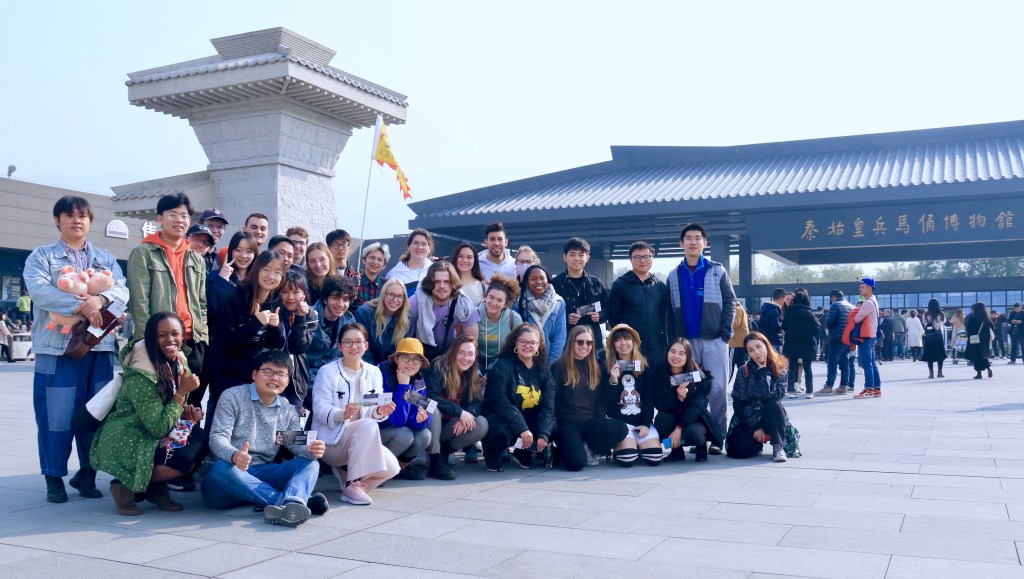
I think back and am a little sad that we spent just as much time on the train as we did exploring the city. There was one particular sight I wanted to see while I was in Xi’an, the Huaqing Pools dedicated to Yang Guifei, a historical figure I did a lot of research on my sophomore year, but we had no time to do our own sightseeing (another reason why I would love to go back to Xi’an!). I hope that one day I can bring my family to China and that we can go visit Xi’an again, because the culture and atmosphere of the city was so rich. I truly enjoyed even what little time we spent there.
 travelingtresses.travel.blog