
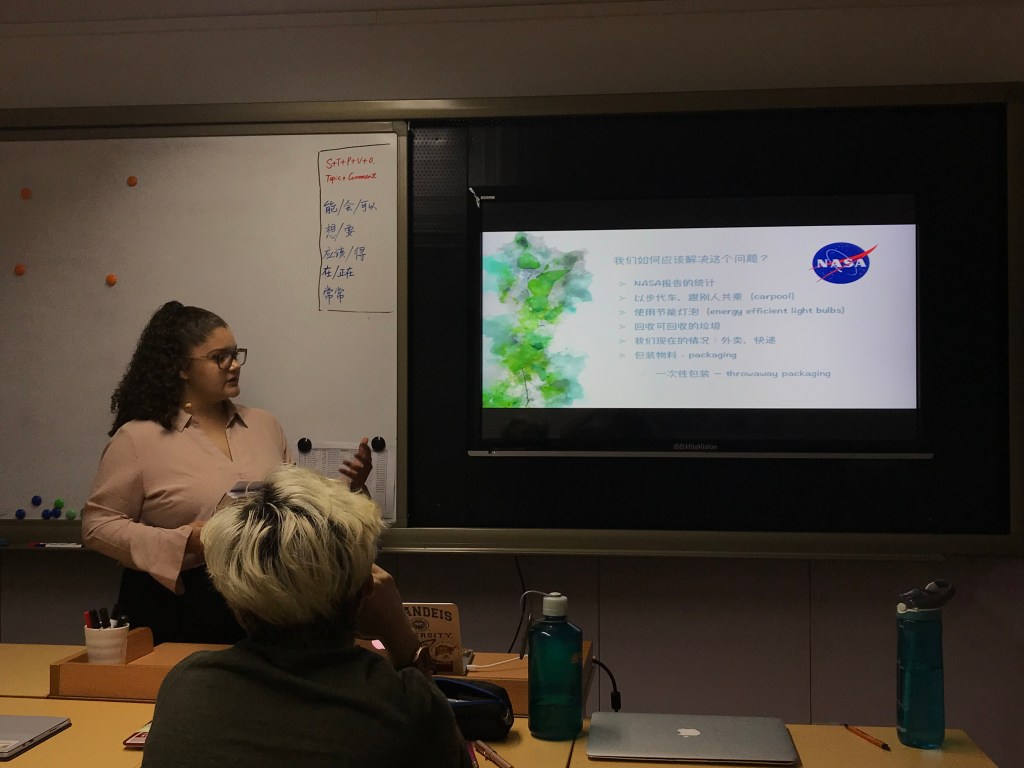
Sustainable, green living, 绿色生活方式 (lü se shenghuo fangshi) in Chinese. Considering our current ecological conditions, it’s something that more and more people are thinking about and pressing our government (and each other) to take action on. This week, we studied environmental protection (环境保护 huanjing baohu) in my classes. Our discussions, class materials, and our weekly outing had me thinking more about having a sustainable lifestyle in China. In the U.S., I’ve learned more about sustainable living over the years and started making simple changes in my life to lessen my impact on the earth. I don’t live a perfectly green life by any means; I still contribute to food and plastic waste in many ways. However, I’ve found that even making the simplest effort—recycling, composting, reducing and reusing plastic—is difficult. This week has led me to consider what my daily life looks like here in terms of sustainability. I decided that for this week’s blog, I would put it all into writing.
My morning starts every day at 7 A.M. The first thing I do upon waking is shower—my showers (excluding the day I wash my hair) usually last five minutes, ten at most. My bathroom has two separate lights and a fan, all of which I usually have on at the same time. I’ll even leave them on while I’m getting ready, as I move between my bedroom and my bathroom. My bedroom lights are never on, I rely on the sunlight that comes in or the light from the bathroom to do what I need to do. After I’m ready for class, I’ll often trek towards my school’s cafeteria for breakfast. Because I often have more studying to do in the morning, I don’t often eat in the cafeteria and instead opt to take it to go, 打包 (da bao) in Chinese. Not only does this mean most days I’m essentially wasting a plastic bag for the sake of convenience, I’m also paying for them. In China, they’ve implemented a law that bans establishments from offering plastic bags for free, however, they’re only ever a small fee (usually ¥.10, not even equal to the value of a penny in the U.S.). Therefore, many people (including myself) think paying this fee is feasible, since it doesn’t amount to much in the grand scheme of things. In fact, it quite does. Where I to buy 150 plastic bags in my time here (my total time here is around 180 days), I would end up spending ¥15 solely on plastic bags. While this is only around $2 USD, it’s still quite amazing that I could spend that much on bags alone. Some days, I’ll even take my lunch to go so I can study before class and eat. Then, they’ll usually give you a pair of disposable chopsticks that are, surprise, wrapped in plastic. Therefore, I’ve since invested in my own Tupperware, chopsticks, and bring my own bags to the store—often ones I’ve collected over time.
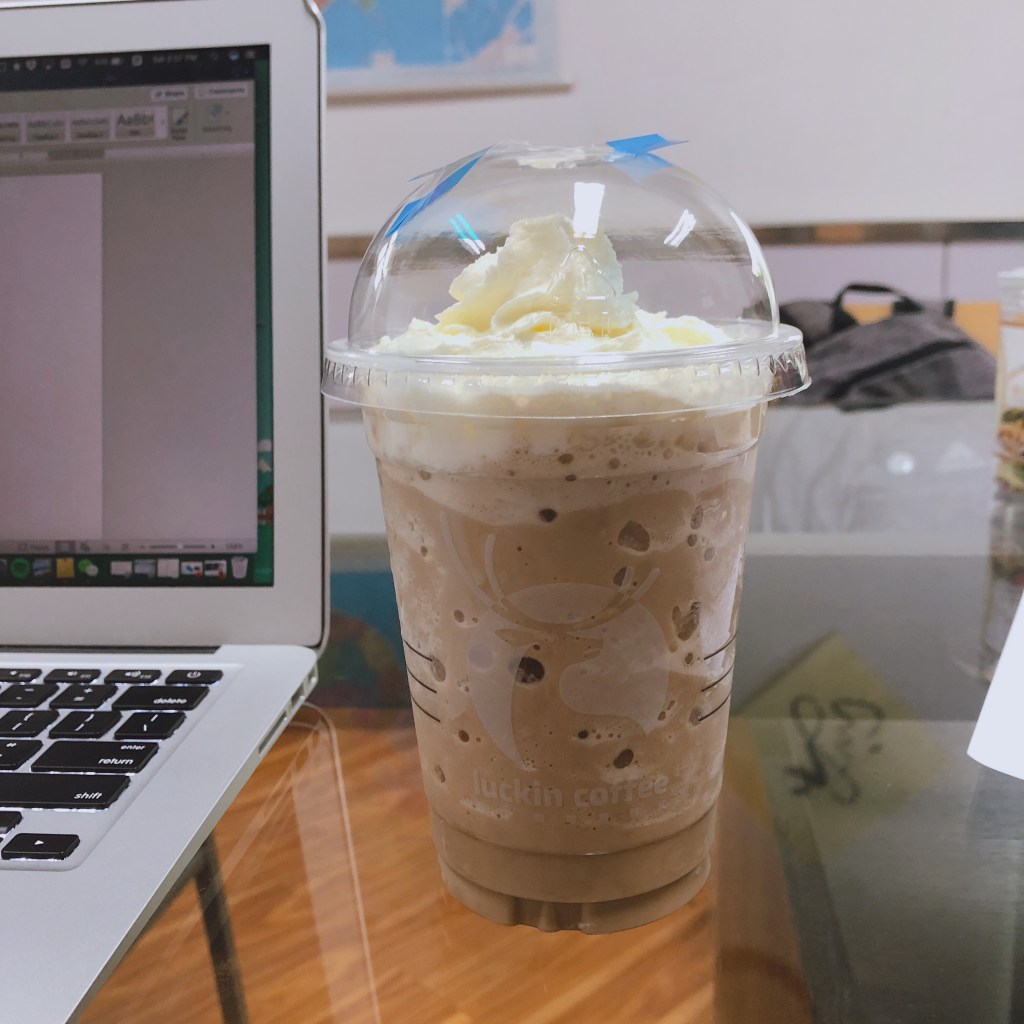
Another similar circumstance I’ve observed is regarding the popular, developing takeout industry (外卖wai mai). At all hours of the day, from 7 A.M. to 12 A.M., you can see takeout drivers running their deliveries to buildings. It’s a preferred method of meals for some people, since you have limitless options and, again, benefit from the convenience of not having to leave where you are or what you’re doing. This, of course, has its own issues, but one thing I’ve noticed in the few times I’ve ordered takeout is that there seems to be excessive plastic waste. For example, your order from McDonald’s includes a burger, fries, and a soda, but the burger and fries come in a plastic box, the drink comes in its own plastic bag to protect spills. Everything comes in an even bigger plastic bag, with a straw wrapped in plastic and plastic cutlery that is, of course, packaged in plastic. It’s a lot easier to not think about the implications of this, especially with the knowledge that 355 million people order takeout on a regular basis and that number is only increasing (Daxue Consulting https://daxueconsulting.com/o2o-food-delivery-market-in-china/). That being said, it’s something that consumes my thoughts here quite frequently. Sometimes you’ll buy a small snack at the convenience store, for example, instant noodles, and the big cardboard container comes wrapped in a thin plastic. Inside the box with the noodles includes a plastic fork, and all of the sauces and toppings, all encased in plastic. Or an even better example: I bought a small pastry from a convenience store last night. The bread was had a plastic wrapper, but also came in a small plastic tray inside the plastic. Sometimes the excessive use of plastic here seems unnecessary, even more so than in the U.S. This is especially interesting to me, as the Chinese government has taken multiple measures to encourage their people to consider their environmental impact, just one being ending the buying of other countries’ recyclable plastics (did you know about this? Here’s an interesting article explaining the relatively new effort as well its consequences for the numerous countries that used to dump their plastic waste in China: https://www.vox.com/the-goods/2019/4/2/18290956/recycling-crisis-china-plastic-operation-national-sword). Another interesting source on this is the film “Plastic China,” directed by Jiuliang Wang in 2016. I first watched this in a class on 20th century Chinese cities in my first year of college, and we watched it again this week as a part of our discussion of environmental policy and protection. Here’s a link to the film on YouTube: https://www.youtube.com/watch?v=3ArmtKFYYkI. It changes your perspective on plastic waste—it’s really easy to ignore the potential impact of throwing away something as simple as a water bottle as opposed to recycling it. Many people don’t know the repercussions of this—both environmental and social. This documentary highlights both.
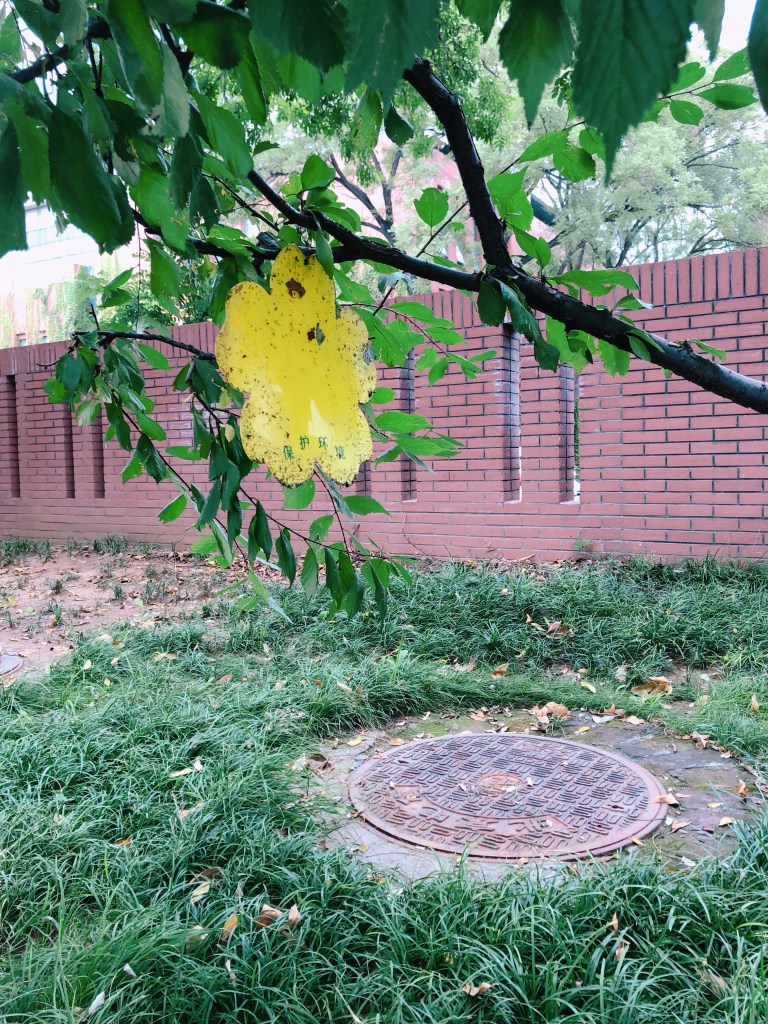
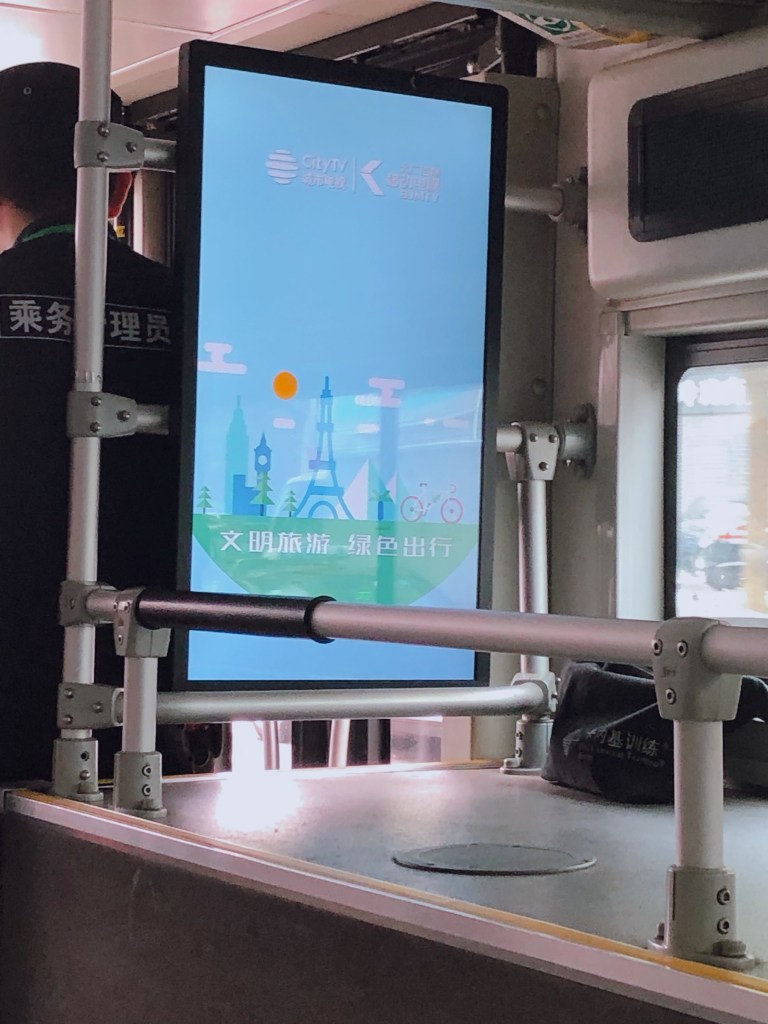
On nearly every street corner, in almost every building, you’re likely to find some sort of poster with a Chinese saying urging you to protect the environment. We all know China has a particularly severe pollution issue. The government has passed a number of laws to try and reduce the air pollution, such as reducing the amount of coal that can be burned in a province and dictating which days people who own cars can and cannot drive. One saying I saw on the bus the other day encouraged citizens to “travel greenly.” The Chinese national holiday just passed, and during that time many people travel within and outside of China. Many Chinese people will actually first elect to take the high-speed train, subway, or tour bus when travelling. On a regular day, most people within Beijing will walk, bike, or take the bus/subway to work and school. We obviously have different circumstances in the U.S., since most places are too far to walk or bike to and our public transportation system isn’t that developed (with the exception of within big cities). It seems that sustainable living takes on different meanings in different places.
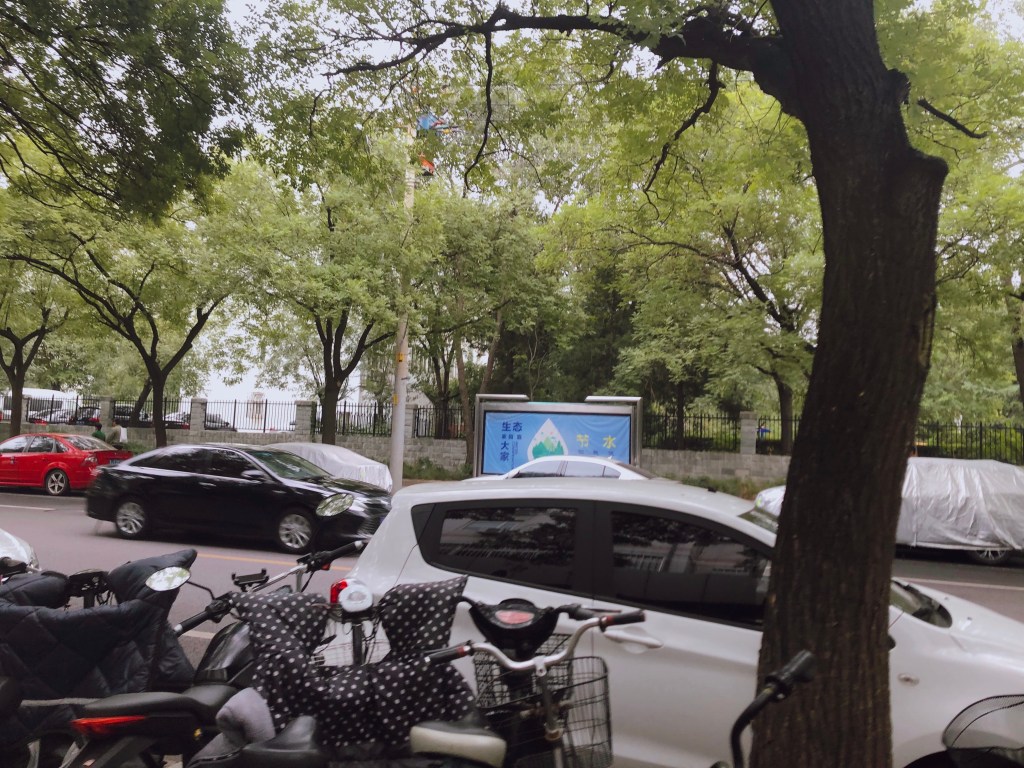
That being said, the air pollution is still a daily toss-up. My friends and I like to joke sometimes, saying “foggy or smoggy?” on particularly bad days (sometimes it’s both). The pollution settles in the air as a haze, so thick it looks tangible. In complete honesty, most days I don’t wear a mask. Some days I forget, other days I feel like I don’t need one. Some mornings have great air quality, on par with the quality on a normal day in Lansing. Nonetheless, I know what days I definitely need to wear one. Those days, I’ll usually notice while sitting inside that my throat, nose, lungs, and eyes are irritated. I’ll try to compensate for the dry, bad air by drinking a lot of water but to no avail. One thing I’ve noticed is that when the air is particularly bad, I’ll blow my nose or brush my teeth and notice an odd color—sometimes grey, sometimes brown. Fighting the air pollution from inside is one of the hardest challenges, since even a brick foundation can’t protect you from it at its worst.
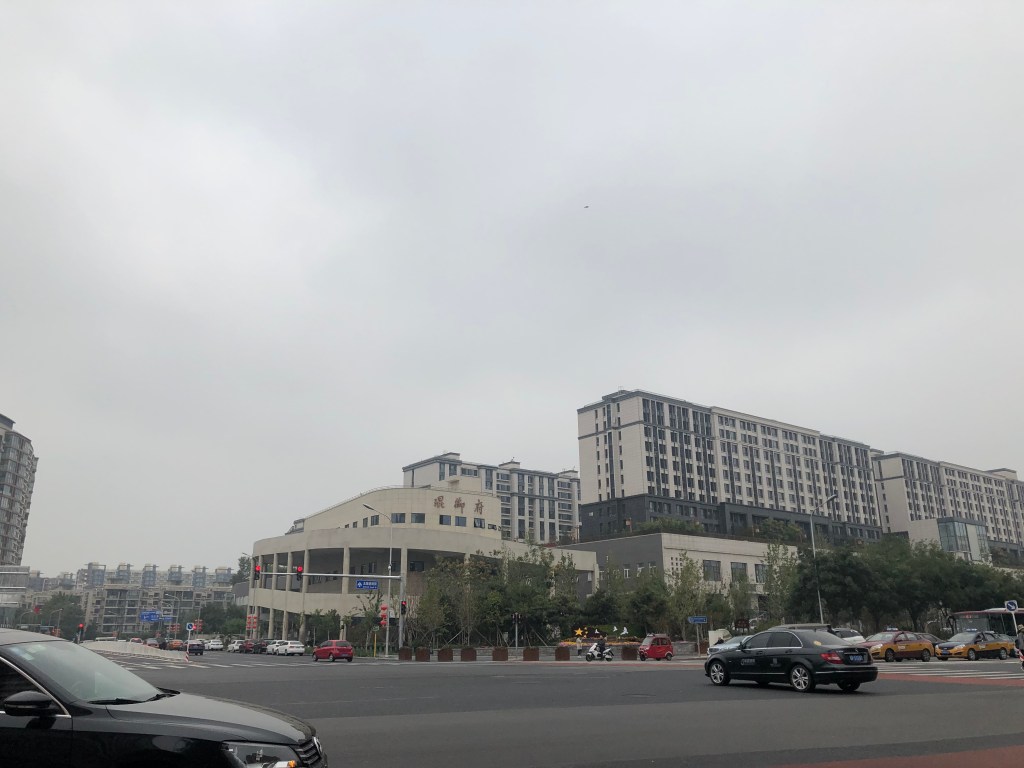
As for the more “radical,” individual forms of fighting climate change and protecting the environment, such as going vegan, going waste-free, using only natural products, and only wearing sustainable, ethical fashion, it’s next to impossible in China. I’m sure people have done it or tried to before (people have! Here’s an interesting blog I found: http://www.gittemary.com/2018/08/trying-to-be-vegan-and-zero-waste-in-china.html). However, it seems that animal products and one-use plastics are unavoidable. My teacher and I were discussing this in class yesterday and he said he believed there used to be a zero-waste store in Beijing, but that it may have closed in recent years.
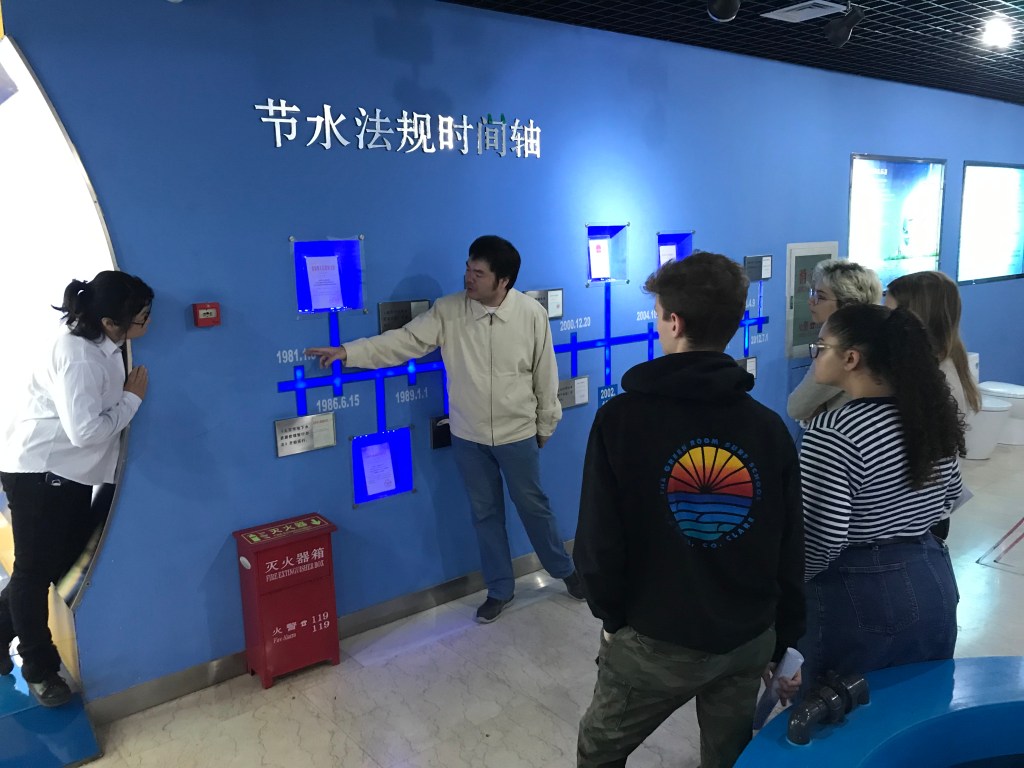
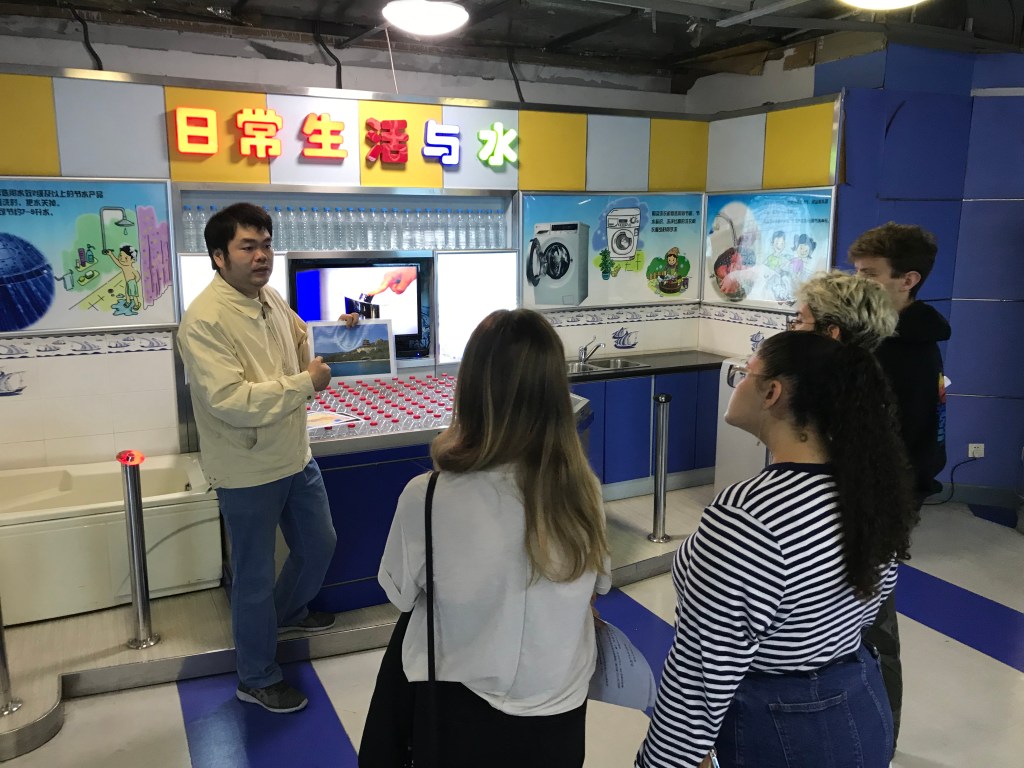
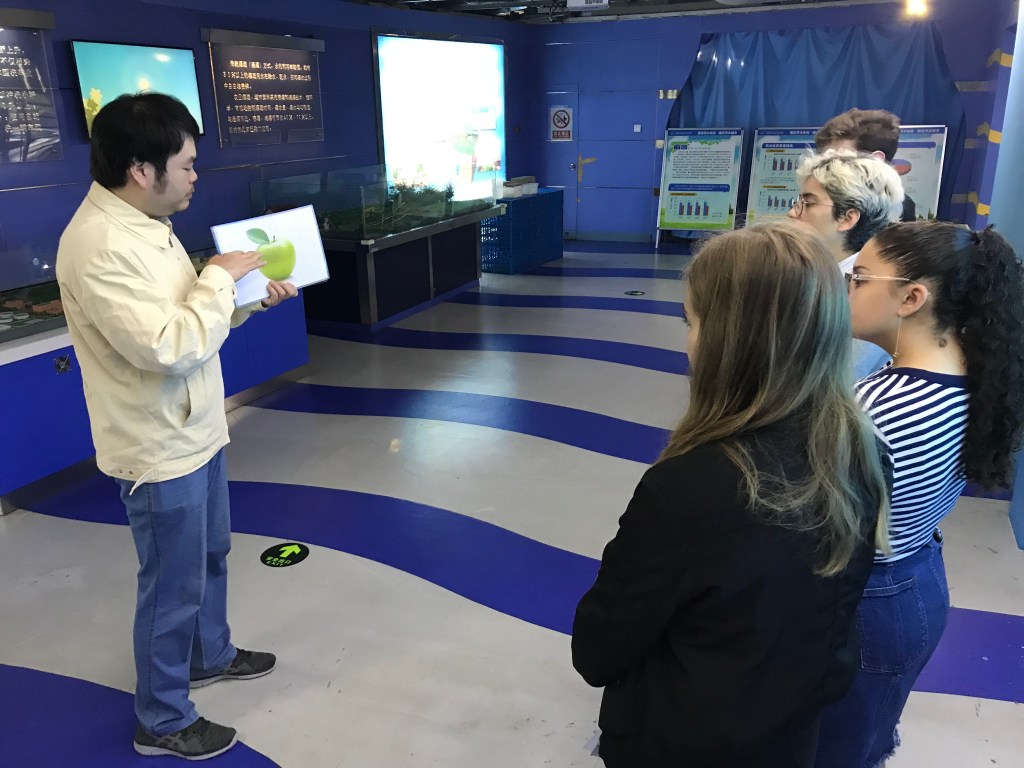
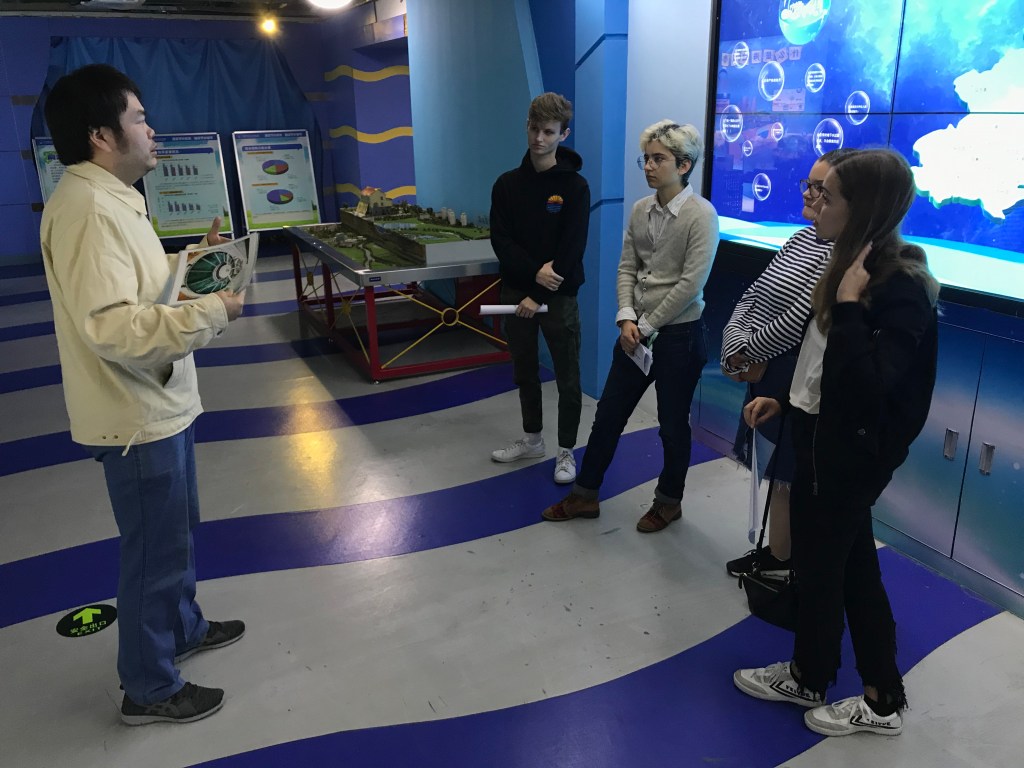
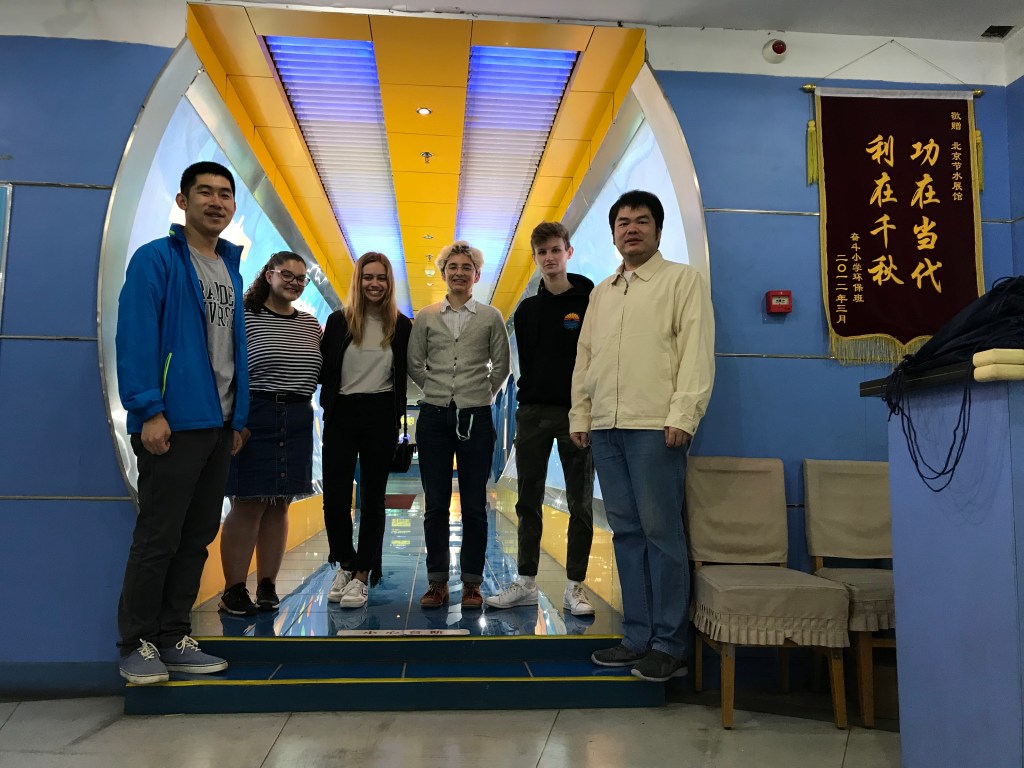
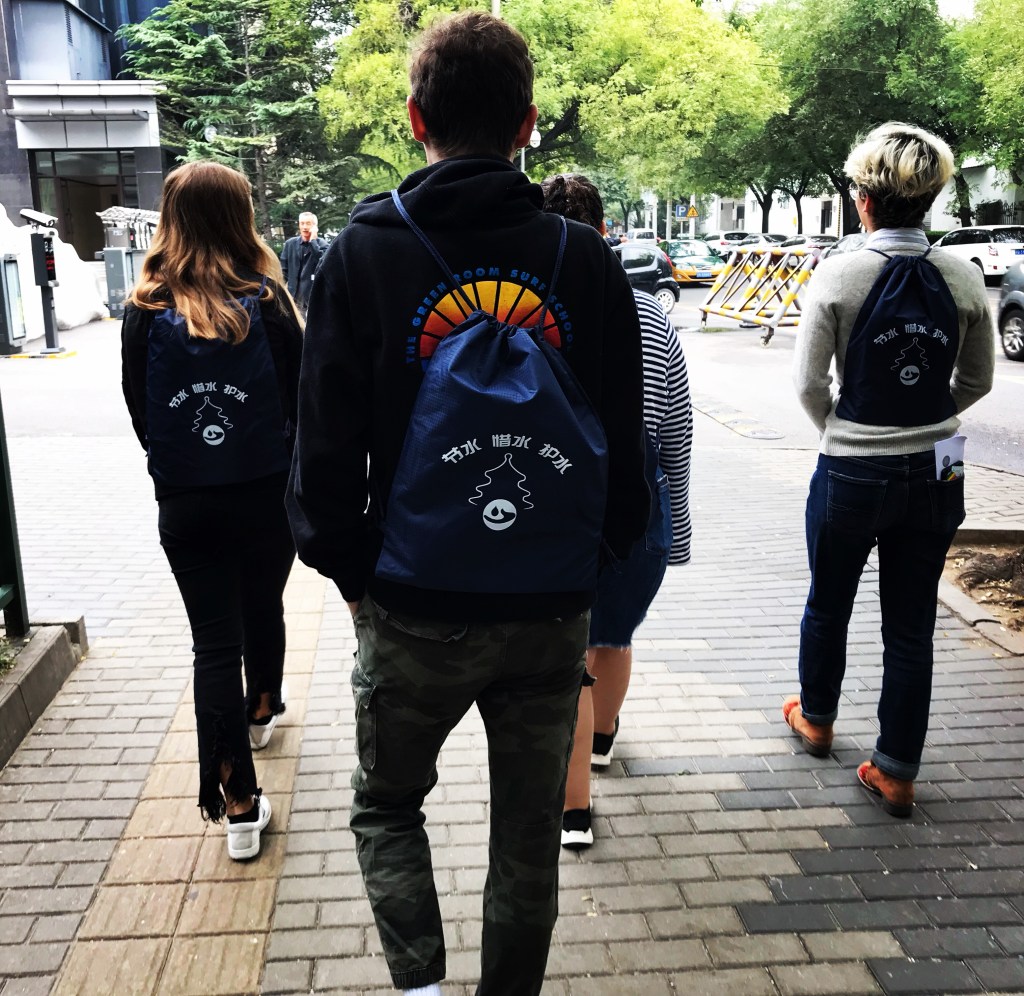
However, it’s relatively easy to reduce your environmental impact in China other ways. For example, reducing use of energy and water is quite easy, especially because many Chinese people already do this. For example, not leaving lights on or things plugged in while you’re gone from the room. And while saving water seems simple, I learned that it’s not as simple as it seems. On Thursday, my classmates and I went to the Beijing Water Conservation Exhibition Hall to learn more about Beijing’s water crisis and how much water is used in our daily lives and normal activities.
I often find myself facing an internal battle: should I let my guilt stop myself from buying something I want? Most of the time, I don’t. This only leads to more guilt. I’ve found myself caught in this cycle recently, every time I buy a packaged snack, a bottled drink, order takeout. If you have any suggestions, I’d gladly appreciate them!
 travelingtresses.travel.blog